
What Painting Prices Often Exclude
Crack repairs, damp treatment, old paint removal, scaffolding, and the access items that raise the final price
Quick answer
What painting prices often exclude in South Africa – major crack and damp repairs, paint stripping, scaffold hire, high access and heavy prep.
14 min read
On this page
Have you ever wondered why a quote for your house turns out cheaper than the final bill?
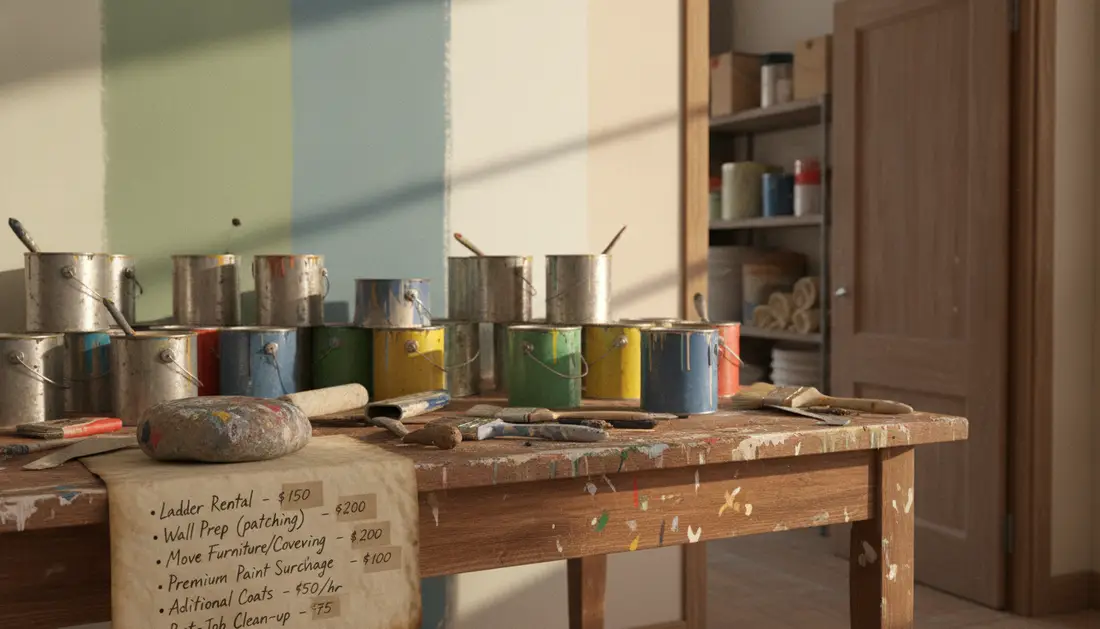
You need clear figures for house painting in south africa, and that starts with what a quote actually includes.
Prices advertised—often shown per square metre—range widely, typically R60 to R200+ in 2026. Our platform, paintingpricepersquaremeter.co.za, helps you make sense of those numbers.
Look beyond the headline price. Many quotes skip proper preparation, repairs to surface or roof details, labour for hard-to-reach areas, and the finish quality that affects longevity.
This introduction explains why a standard room job can vary from about R1,000 to R6,000, and how our pricing guidance helps you compare fair estimates and avoid mid-job surprises.
Understanding Painting Cost Exclusions South Africa
A headline price often leaves out remedial work and access charges that add up fast. The phrase painting cost exclusions South Africa sums what many quotes omit: specialist repairs, testing and the large-equipment hire behind what double-volume painting costs.
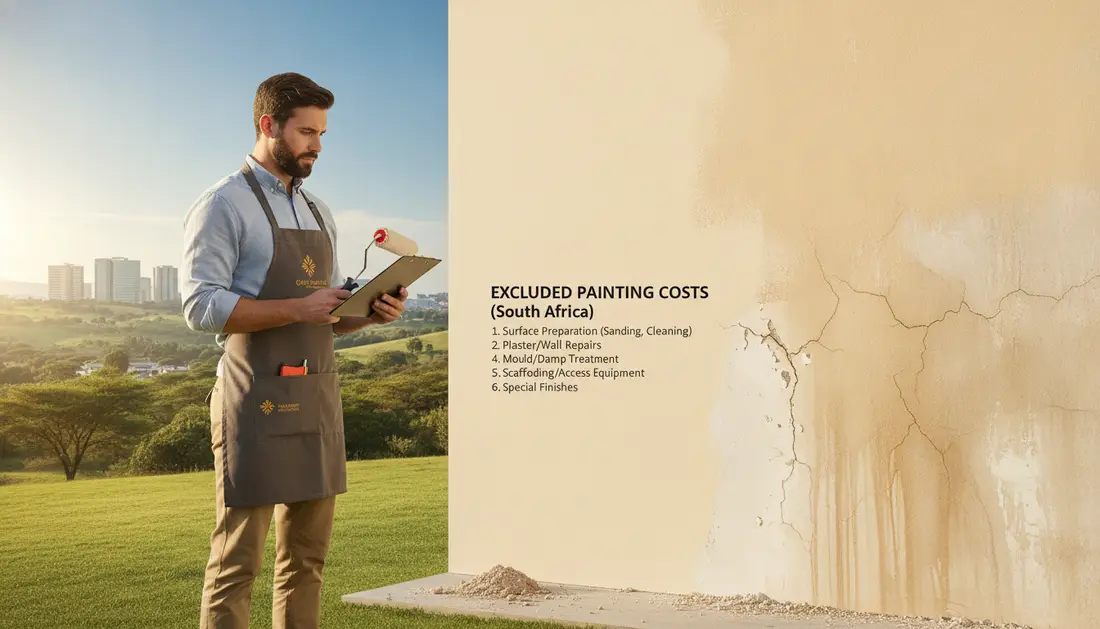
Commonly excluded items include structural crack repair and major plaster work; crack repair pricing covers that work. Those need masonry or remedial trades, not a standard paint job.
- Damp treatment is usually separate because it requires moisture testing and chemicals.
- Full paint stripping is labour-intensive and often charged as a distinct service.
- Scaffold or cherry-picker hire is billed extra for high-reach exterior or roof work.
- Burglar-bar removal and refit is treated as metalwork, not a painter’s task.
- Roof waterproofing uses specialised UV-resistant coatings and is excluded from wall work.
Why this matters: knowing these typical exclusions helps you budget accurately and compare realistic estimates for a house or room project; the platform behind the prices explains our approach. Confirm in writing what a quote includes for surfaces, preparation and labour before you accept any price.
Why Standard Quotes Often Fall Short
Many written quotes look neat on paper but miss the practical details that change a job’s final price. Contractors use a typical 60/40 split between labour and materials, yet few quotes show that breakdown.
What to watch for:
- Omitted primer coats for bare plaster or stained surfaces.
- Textured walls need roughly 20–25% more paint than smooth surfaces.
- No brand named = risk of poor-quality paints and a short-lived finish.
- Scaffolding or ladders may be extra for exterior or roof work.
- Labour should be itemised per room or area to spot hidden overheads.
| Quote element | What to confirm | Impact on final price |
|---|---|---|
| Labour/material split | Show 60/40 breakdown | Reveals hidden low labour or cheap materials |
| Number of coats | Primer + finish coats specified | Affects durability and paint use |
| Access equipment | Scaffold or ladder included? | Major variable for exterior jobs |
Essential Surface Preparation Requirements
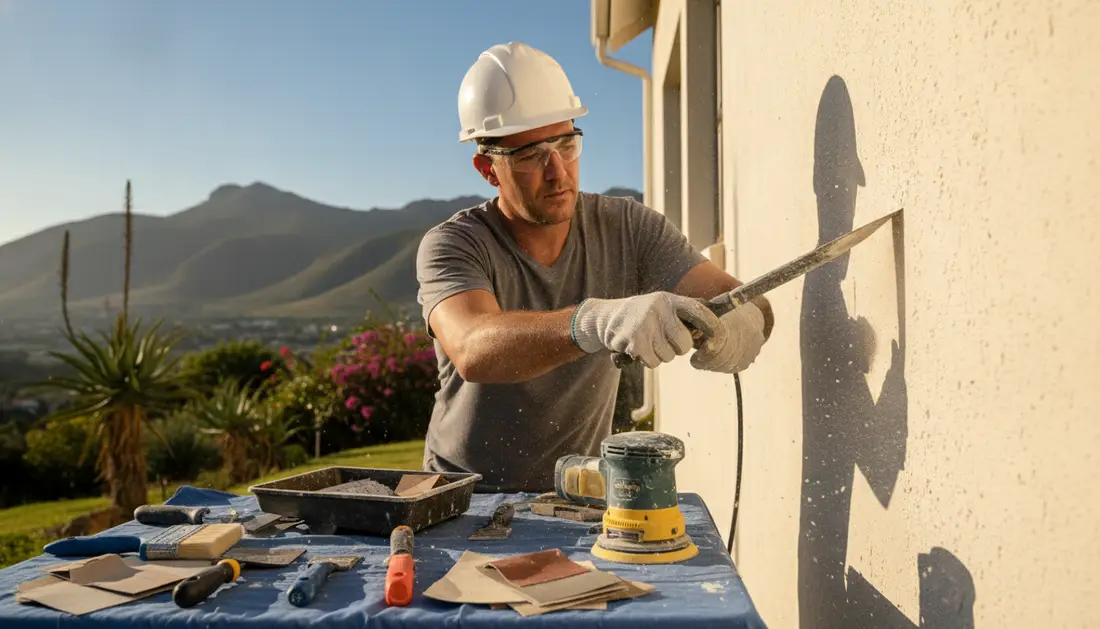
Surface preparation separates a quick tidy-up from a durable, high-quality finish. This phase sets how long your house paint will last and how well the finish will perform outdoors.
The Importance of Priming and Sealing
Priming bonds paint to sun-weathered or bare plaster and prevents premature failure. Without a sealer coat, the topcoat will not adhere and may peel in months, not years; peeling paint repair pricing covers stripping and recoating.
- Preparation typically runs between R20 and R50 per square metre for cleaning, sanding and basic repairs.
- Priming and sealing are essential on bare or damp-affected surfaces to ensure long-term adhesion.
- Poor-condition walls need extra time for crack filling and sanding before any paint is applied.
- Low-priced contractors often omit these steps; that is why their work can fail within a year.
Always ask for a written surface assessment before work starts. Confirm which surfaces, primers and labour are included so your project pricing reflects true preparation time and materials. Investing in prep protects your home against the harsh South African exterior climate and improves finish longevity.
The Reality of Mid-Job Exclusions
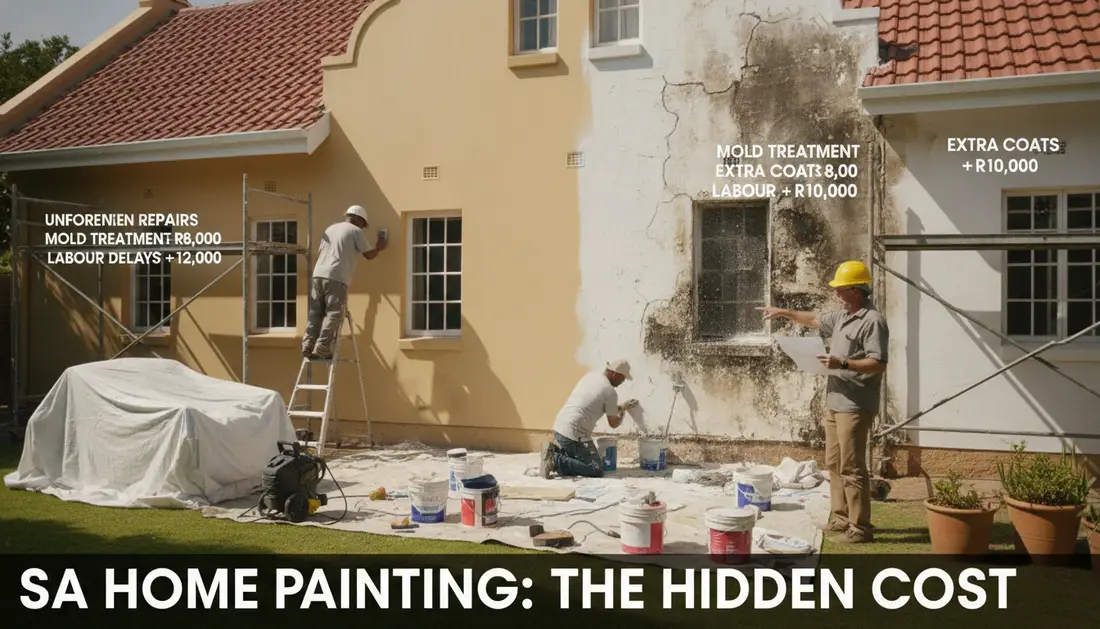
Washing down walls often uncovers failed coatings or hidden damp that change a job’s scope; damp repair pricing covers that remedial work. When this happens, a contractor will start a variation conversation to explain what is needed and why.

Expect transparency: tradespeople should document discovered surface or roof damage and supply a written cost update before any extra work begins.
- Hidden damp or failed layers often arise only after cleaning the wall surface.
- Contractors will discuss additional preparation, remedial labour and the effect on finish quality.
- Always ask for a signed variation and an itemised price before work proceeds.
- Keep a contingency budget of 10–15% to cover unforeseen conditions during the project.
Red flags: if a contractor demands immediate payment for extra work with no written explanation, treat this as a serious warning. Proper documentation keeps your home project on track and protects the long-term finish.
Structural and Remedial Work Limitations
Large remedial repairs are a separate discipline and should be budgeted before any surface finish work begins.
Damp Treatment and Waterproofing
Damp needs specialist treatment to stop salt marks and bubbling on exterior walls.
Waterproofing uses chemical systems and trades that go beyond a normal painting job. Many contractors will refuse to paint over damp surfaces because the finish will fail quickly.
Major Plaster Repairs
Significant plaster repairs are typically excluded from standard quotes. Plaster that is loose, deep-cracked or delaminated must be rebuilt by a plasterer before any paint or sealer is applied.
Structural Crack Remediation
Structural crack remediation requires masonry or structural trades, not simple filler. Fixing these defects first protects the finish and the long-term stability of your house walls.
“Address structural issues before cosmetic work; it saves time and prevents repeated repairs.”
What to confirm during the initial visit:
- Which remedial items are excluded from the quote.
- Whether damp testing or waterproofing is required.
- Who will handle major plaster or masonry repairs and the expected timeframe.
| Remedial type | Handled by | Impact on job |
|---|---|---|
| Damp treatment | Waterproofing specialist | Prevents recurring blistering on exterior walls |
| Major plaster repair | Plasterer / remedial trades | Requires downtime before priming and paint |
| Structural crack remediation | Masonry/structural contractor | Essential for wall stability and finish longevity |
Tip: Ask your contractor to note any structural concerns on the site report. If defects exist, hire the right specialist first to protect your finish and your budget in south africa.
Access Equipment and Height Premiums
Working at height changes a simple exterior job into one that needs specialist access and planning.
Scaffolding hire commonly adds between R3,000 and R8,000 to a painting project. For double-storey houses you should expect a height premium of roughly 15–25% because of safety and assembly time.
Why this matters: reputable contractors include scaffold, boom-lift or pro ladder hire in their quote to cover safety gear and extra labour. If a quote for an exterior job omits access equipment, ask how they will reach high gable ends and roof areas.
- Access equipment is a major variable for exterior and roof work on tall homes.
- Height premiums reflect the extra time, risk and safety training required.
- Including these items up front prevents surprise additions mid-job and protects finish quality across all surfaces.
Tip: verify a contractor’s safety credentials and ask for an itemised line showing scaffold or lift hire. That clarity helps you compare prices and ensures full coverage for quality work on high walls and roofs in south africa.
Paint Quality and Application Standards
Choosing the right paint and application method directly affects how long your home’s finish will last.
Selecting premium versus budget brands matters for both interior and exterior work. In south africa, professional painters often recommend reputable paint brands for UV resistance and consistent colour.
Selecting Premium Versus Budget Brands
Premium tins give better coverage and weather protection. They usually need two coats where budget tins may need three or more. That extra labour can raise the overall job price.
- Longevity: premium products reduce repaint frequency and long-term costs.
- Coverage: better pigments mean fewer coats and less labour time.
- Specify brand: always name the exact product in your written quote to avoid substitutions.
| Feature | Premium | Budget |
|---|---|---|
| Typical coats | 2 | 3+ |
| UV resistance | High | Low–Medium |
| 5L price gap | R150–R300 more | Lower upfront |
“A high-quality paint job is defined by the skill of application as much as the quality of the paint itself.”
What to confirm in writing: brand and product line, number of coats, and that manufacturer’s application standards will be followed. This protects your wall finishes and any product guarantees.
Navigating the Quote Request Process
Start with a documented brief so every contractor prices the same surfaces and preparation. Use our quote request process to gather up to three independent quotes from contractors in your area.
A professional quote must be in writing. It should show a detailed scope, a breakdown of labour and materials, the exact paint brand, the number of coats and the surface preparation included.
Never accept a verbal estimate. A signed document protects you if the contractor fails to deliver the agreed quality or timeline.
- Our quote request process connects you with contractors who provide transparent, itemised pricing.
- Check that each quote lists painting costs by labour and materials and names the product to be used.
- Request up to three quotes to compare scope, quality and overall price for your home.
- Ask contractors to note explicitly what is excluded so there are no surprises mid‑job.
- Use references and ask for prior work examples to confirm quality and reliability.
A well‑documented quote is the best safeguard. It ensures both parties share the same expectations and helps you select the right contractor for interior or exterior work.
Evaluating Independent Contractor Estimates
Well-documented estimates reveal the contractor’s standards and how they manage surprises.
Start by checking references and viewing recent work at nearby homes. Ask to see photos or visit a completed job to confirm finish and durability.
Compare the detail in each written estimate, not just the final figure. Confirm whether the scope covers both interior and exterior preparation, number of coats and the expected timeline.
- Look for a clear payment schedule and written contract; avoid contractors who want full payment upfront.
- Be wary of estimates far lower than others—this often signals corner-cutting or omitted tasks.
- Ask how the contractor handles delays and unforeseen repairs; a good one will explain contingencies.
Tip: Verify professional references and insist on an itemised estimate. By comparing detail, you protect your home, assess true prices and secure long-term quality against short-term savings in house painting and future painting costs.
Finalising Your Painting Budget Strategy
**,**Plan your budget around durable products and professional teams to avoid repeat work on exterior surfaces.
Balance quality and labour: choose better materials and an experienced crew, and price jobs per square metre so you can compare like‑for‑like quotes.
Prioritise essential exterior repairs to protect your house from weather damage. Confirm a written warranty for both workmanship and the products used to secure long‑term value and quality.
For detailed pricing and to start comparing quotes, visit paintingpricepersquaremeter.co.za and request options that suit your house and home project.
FAQ
What painting prices often exclude – hidden scope?
Most standard quotes leave out remedial work and access costs. Expect exclusions such as damp treatment, major plaster repairs, roof or gutter repairs, removal of loose render, and specialised primer or sealer. Labour for scaffolding, boom lifts or hiring an abseil team is often billed separately. Always check whether colour changes, paint brand upgrades and final protective coats are included.
How should I understand painting cost exclusions South Africa?
Read a quote line by line. Confirm whether the price covers surface preparation, primer, two finishing coats, and waste removal. Ask if the contractor includes high-traffic wall protection, gloss paint on trim, or anti-mould additives in bathrooms. Get clarity on who pays for access permits, lifts, or site insurance. Request the exact products and quantities specified.
Why do standard quotes often fall short?
Quotes are typically conservative to win the job. They may assume good surface condition, single-level access and no hidden repairs. Once work begins, contractors find damaged plaster, wood rot or rusted metal—these items are treated as extras. That’s why initial prices can rise during the project.
What is the 60/40 labour-material split I keep hearing about?
A common rule of thumb is about 60% of the total price goes to labour and 40% to materials and consumables, but this varies by job. High-access exterior projects push labour higher. Premium paints or extensive remedial work increase the material share. Use this split to spot unusually low labour rates or cheap materials in a quote.
How can I identify incomplete scopes in a quote?
Look for vague terms like “prepare as necessary” or “all materials supplied.” Check that the scope lists primer, number of topcoats, and surface prep steps. Confirm which surfaces are included — eaves, fascias, garage doors, metalwork and window frames are often omitted. Ask for itemised pricing per area or room.
What surface preparation requirements are essential?
Good prep makes paint last. Essential steps are cleaning, sanding, filling cracks, removing loose paint, knot-priming timber and treating rust on metal. For masonry, cleaning and repointing where needed. Ensure the quote specifies these actions, including products like PVA or specific primers for tricky substrates.
Why is priming and sealing important?
Primers improve adhesion, block stains and equalise porosity so the topcoat covers evenly. Sealing prevents moisture migration and reduces blistering and flaking. Without proper priming the finish will look patchy and fail sooner, costing you more in the medium term.
What mid-job exclusions should I expect?
Mid-job findings often trigger extra charges. Expect additional fees for rusted flashings, hidden timber rot, unexpected mould, or revisions to colour that require extra coats. Request a written process for mid-job discoveries so you approve costs before work continues.
Which structural and remedial works are usually limited in quotes?
Most painters exclude structural repairs. Items usually outside a paint quote include full roof repairs, structural timber replacement, major plaster re-skims and long-term waterproofing systems. Contractors may offer these as add-ons or recommend specialised trades.
Do quotes normally include damp treatment and waterproofing?
No. Damp remediation and membrane waterproofing are specialist works and are usually quoted separately. A painter can identify symptoms and suggest test or treatment options, but you should engage a damp specialist for comprehensive waterproofing and long-term guarantees.
Are major plaster repairs covered?
Minor filling and patching are often included. Full re-skims, replacement of plasterboards or major render repairs are typically excluded. Confirm whether the price includes levelling, sanding and priming of repaired areas to the same finish as surrounding surfaces.
Will structural crack remediation be part of the job?
Structural cracks need assessment by a structural or building professional. Painters usually treat cosmetic cracks with flexible fillers or jointing compounds, but they do not take responsibility for load-bearing repairs. Ask for referrals to qualified repair specialists.
What about access equipment and height premiums?
Access affects price. Scaffolding, mobile towers, cherry pickers or rope access add hire costs and sometimes labour premiums. Steep roofs, multi-storey blocks and difficult-to-reach eaves usually have an access surcharge. Confirm who arranges and pays for this equipment.
How does paint quality affect the final price?
Premium reputable paint brands cost more but generally cover better and last longer. Budget paints lower initial outlay but require more coats and earlier redecoration. Confirm brand names, sheen levels and recommended number of coats in writing.
How do I choose between premium versus budget brands?
Balance expected lifespan with budget. For exposed exteriors, select high-durability formulations and UV-resistant emulsions. For interiors, choose low-VOC options for living areas. Ask contractors to show product data sheets and provide a lifecycle comparison.
How should I navigate the quote request process?
Request up to three written quotes, or up to five where available, from independent contractors. Ask for site visits, ask for itemised scopes, and confirm product names, coat counts and timelines. Check public liability insurance, trade references and a written warranty period.
What should I look for when evaluating independent contractor estimates?
Compare like-for-like items: surface prep, primer, number of topcoats, brand names, access costs and site clean-up. Low bids may cut corners on prep or materials. Verify contractor reputation, ask for a portfolio of recent work and confirm payment milestones.
How do I finalise my painting budget strategy?
Build a buffer for extras (typically 10–20% of the quote) and prioritise must-have repairs. Choose paint quality based on exposure and expected tenure. Get written confirmation of scope, exclusions and warranty before work starts. That keeps surprises to a minimum and helps you make a cost-aware decision.
Related painting cost guides
Ready to compare?