
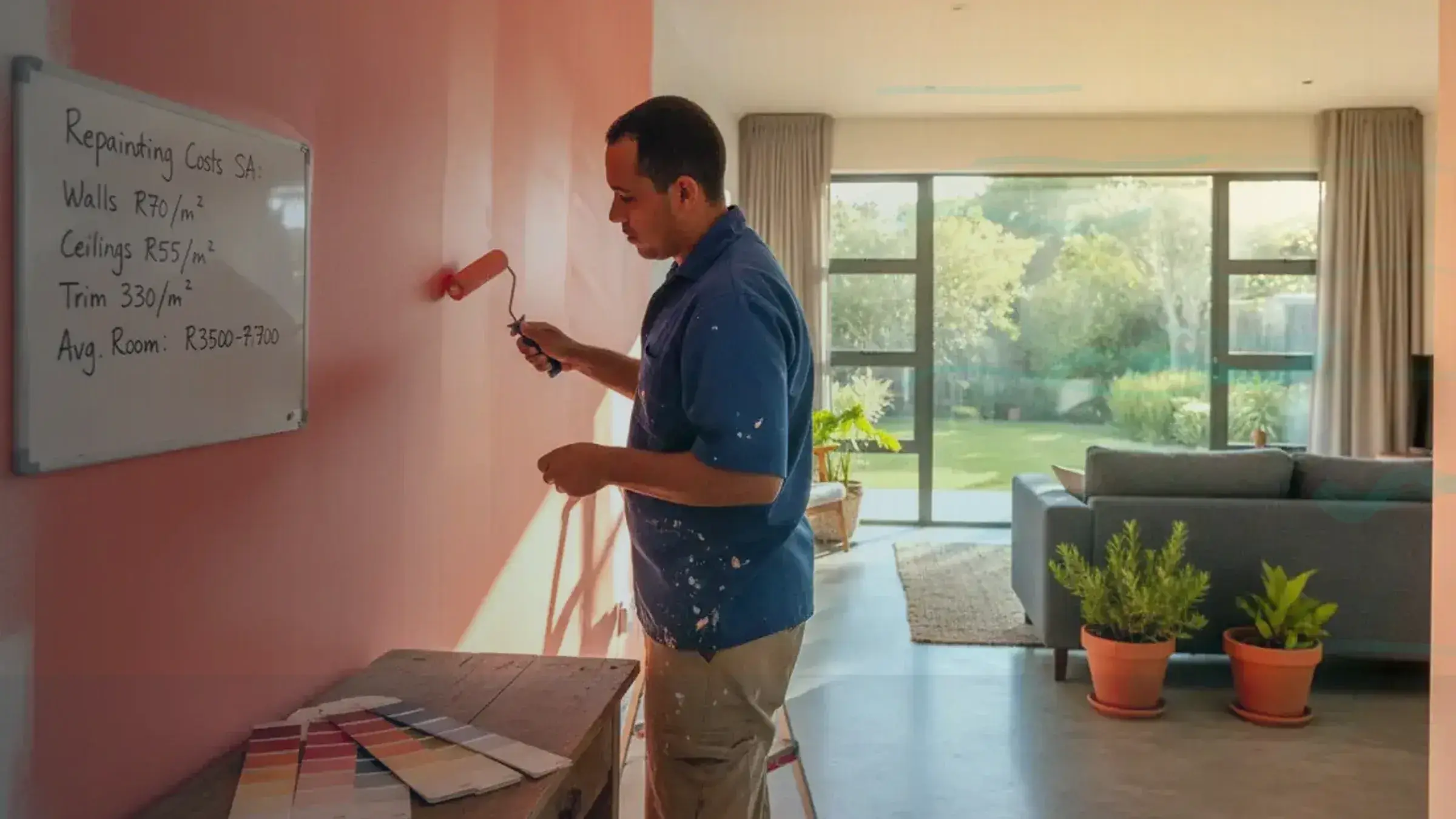
Interior Repainting Costs in South Africa
Lived-in walls, colour changes, scuffs, and Prestik marks – what refresh repaints really cost
Quick answer
R10 200–R13 800 project totalR80/m² · 150 m²
Interior repainting costs in South Africa – lived-in walls, colour changes, scuffs and filled holes priced for whole-home and per-room refreshes.
Instant estimate
Interior repainting calculator
Estimate an interior repaint by area, coats and prep — walls and ceilings.
12 min read
On this page
Wondering whether you can freshen a room without overpaying? Painting in South Africa typically ranges from R63 to R100 per square metre, so a clear budget helps you decide fast.
Our platform gives you access to up to 3 quotes from independent contractors. That makes it easier to compare labour, paint type and the price per square metre for your home or house.
Knowing the average helps plan for a single room or a full-house job. Confirm the scope, warranties and timeline in writing before any work starts.
You can use paintingpricepersquaremeter.co.za to compare prices and find local painters who match your needs.
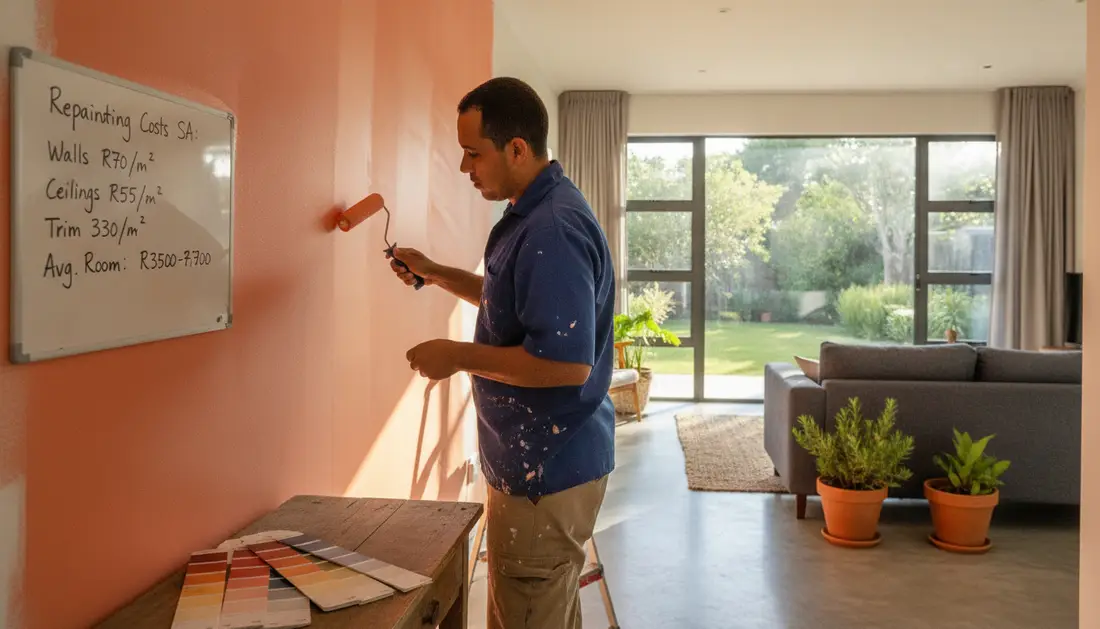
Which interior guide do you need? This page is about repainting an existing interior — prep, lived-in conditions and tenant-turnover work, not a new build. For the new-paint rate per square metre, see interior painting cost per m²; for whole interior-wall budgets, see interior wall painting costs.
How much does interior repainting cost in South Africa?
Understanding how painting prices form helps you plan a realistic budget for your home.
Our pricing guidance shows that the final price varies with the wall condition and the type of paint you choose; what interior painting costs per square metre sets the baseline. Minor cracks, damp patches or heavy patching will raise the final charge.
The table below compares common scenarios and what to expect per room. This helps you see how material quality, labour and access affect the overall cost.

- Certain rooms, such as kitchens and bathrooms, need moisture-resistant paint for durability.
- Professional painters quote higher for tall ceilings, large rooms and complex trims.
- Regional market differences in South Africa influence prices, so always compare quotes.
| Scenario | Work included | Paint type | Typical note |
|---|---|---|---|
| Small bedroom | Wash, patch, two coats | Standard emulsion | Per room price often lowest |
| Kitchen or bathroom | Prep, moisture seal, two coats | Moisture-resistant | Higher due to product type |
| Large lounge | High ceilings, trim work | Premium emulsion | Labour and access add to price |
| Exterior painting | Pressure wash, patch, two coats | Weatherproof | Different materials change painting costs |
What affects interior repainting costs?
Expect the final price to hinge on three main areas: surface prep, paint grade and access; painting price guides cover each surface in turn.
Surface Condition
The state of your walls drives prep work and the overall price; comparing repainting and painting new surfaces shows why old walls cost more. Damaged or damp surfaces need patching, sanding and a primer for a lasting finish.
Tip: Larger patching jobs add hours to the job and increase the amount of paint and primer required; preparing a room for painting shows what you can do first.

Paint Quality
Choosing a higher-grade paint raises the upfront cost but cuts maintenance over time, and getting clean coverage over dark walls can need extra coats. Premium products often cover better, so you may need fewer coats.
Ask about type paint and finish to balance longevity with your budget.
Labour and Access
Labour rates typically range from R450 to R900 per hour depending on complexity, and how many coats of paint you need affects the materials. Expect extra charges if movers, high roofs or detailed trim slow the team down.
- Size of the home and number of coats affect total paint volume.
- Doors, cornices and ceilings increase labour time and the final price.
What is the typical price for an interior repaint?
Market pricing varies by the type of paint, the amount of preparation and the size of the area to be painted.
Average figures: Interior painting averages around R81 per square metre. Typical interior ranges sit between R63 and R100 per square metre, depending on work scope and wall condition.
For exterior work and roof painting, labour-only rates generally fall between R50 and R100 per square metre. These figures exclude materials and specific paint types.
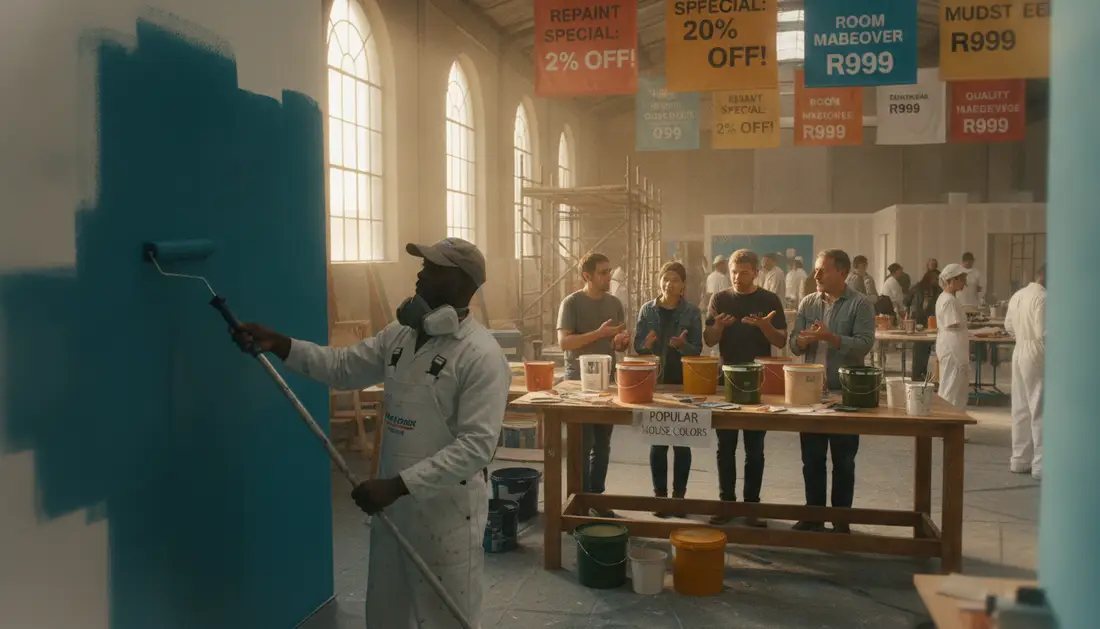
Professional painters often charge R450–R900 per hour for labour, reflecting experience and job complexity.
- Use our quote request process to get a clear breakdown by area and finish.
- Subtract window and door areas when you calculate the per square price for your home.
- Higher preparation needs or a premium finish will raise the final price.
- Obtain multiple quotes to confirm fair market pricing for the job or per room work.
| Service | Typical rate (labour) | Notes |
|---|---|---|
| Interior walls | R63–R100 / sqm | Depends on prep and paint type |
| Exterior walls | R50–R100 / sqm (labour) | Materials excluded; access affects price |
| Roof painting | R50–R100 / sqm | Varies by roof type and pitch |
| Hourly labour | R450–R900 / hour | Painter experience and complexity |
Essential Surface Preparation and Lived-in Maintenance
A thorough clean and correct priming are the practical steps that make a paint job last.
Proper preparation is the foundation of a long-lasting painting job in any house. In lived-in rooms, walls collect dust, grease and scuff marks that prevent new paint from adhering evenly.
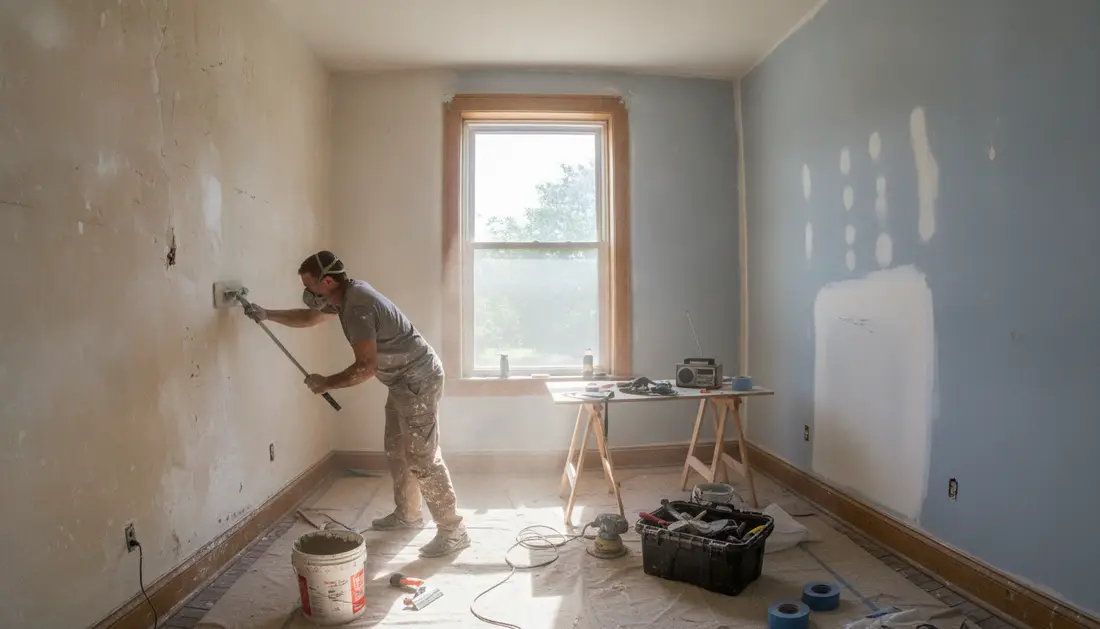
Cleaning and Residue Removal
Start by washing walls with a mild detergent solution and removing loose residue. This reduces the chance of lifting or blistering once the paint dries.
Tip: Pay special attention to kitchen splashbacks and high-traffic corridors where grime builds up faster.
Patching and Priming
Fill holes and sand rough patches before you apply primer. A high-quality primer seals the wall and gives the top coat a uniform base.
For both interior and exterior painting, more prep time means higher labour and a better finish over the years. When you request a quote, ask contractors to list prep work, primer type and the number of coats in writing.
“A well-prepared surface not only looks better but also extends the life of a paint job.”
- Include cleaning, patching and primer in the written quote to avoid surprise charges.
- Use the right primer for the wall type to prevent peeling and ensure good coverage by the top coat.
Distinguishing Between Tenant Turnover and Owner-Occupier Needs
Deciding between a quick turnover paint job and a long-lasting home refresh changes how you plan time and budget.
For tenant turnover, you want a fast, cost-effective painting solution. Painters usually use neutral paint and standard wall preparation to keep the price manageable.
Landlords often accept one or two standard coats and minimal patching so the room is ready quickly for new occupants.
Owner-occupiers tend to prioritise quality. You may choose premium paint, extra preparation and additional coats to get the look and durability you want.
A professional painter can advise which type of product and how much preparation suits your goal. Clear instructions help them give a precise quote and timeline.
- Rental work: neutral colours, basic patching, faster turnaround.
- Owner work: thorough preparation, premium paint, multiple coats for finish.
- Both: size of the room and condition of surfaces dictate labour and final price.
| Scenario | Focus | Typical approach | When to choose |
|---|---|---|---|
| Tenant turnover | Speed & affordability | Neutral paint, standard prep, 1–2 coats | Short vacancy windows or rental changeover |
| Owner-occupier | Quality & longevity | Premium paint, full prep, 2+ coats | Long-term living, bespoke colour choices |
| Hybrid (investment) | Balance | Targeted prep, mid-range paint, 2 coats | Manageable spend with decent finish |
The Reality of One-Coat Coverage Claims
A single coat may sound like a quick win, but it rarely delivers the depth and protection you need.
Manufacturers often advertise one-coat coverage. In practice, the porosity of your walls and the scale of a colour change mean a follow-up coat is usually needed.
Why Two Coats are Standard
Two coats provide consistent colour and a durable finish. A quality primer plus two coats helps seal surfaces and reduce future touch-ups.
- One-coat claims ignore wall porosity and patching needs.
- Professional painters include extra time and material for a second coat when they quote a room or house.
- For exterior painting, two coats give better weather resistance and longer life for the finish.
“Budgeting for two coats now generally saves you money on maintenance later.”
| Scenario | Recommended approach | Why it matters |
|---|---|---|
| Light colour refresh | Primer + 2 coats | Even depth and fewer touch-ups |
| Dark-to-light change | Primer + 2–3 coats | Better coverage, less show-through |
| Exterior walls | Primer + 2 coats (weatherproof) | Improved longevity against elements |
Ask your painter to list primer type, number of coats and any extra labour in writing. That clarity protects the quality of the paint job and the price you pay per area.
Connecting with Independent Contractors for Accurate Quotes
A clear site assessment lets you compare quotes that match the true scope of work.
Use our quote request process to invite local painters to evaluate your walls and offer written prices. A site visit ensures the quote reflects prep, paint type and any extra labour needed.
A trusted, established provider illustrates how an experienced painter will outline scope, warranties and timelines.
- Ask contractors to list surface preparation, primer and number of coats in the quote.
- Compare multiple painters to assess workmanship, references and previous work photos.
- Confirm a written agreement that details the service, start date, warranty and final payment terms.
- Ensure the painter conducts a site visit so the final price matches your home’s needs.
| Step | What to check | Why it matters |
|---|---|---|
| Site visit | Measure walls, note repairs, access needs | Prevents underquoted labour and surprises |
| Written quote | Scope, paint brand, coats, labour | Provides clarity and a reference for work |
| Compare options | Experience, references, warranty terms | Choose the best value and quality for your project |
“A professional painter will assess your property, explain prep needs and give a detailed, no-obligation quote.”
Final Steps for Planning Your Home Refresh
Begin your home refresh by fixing a realistic budget and a practical timeline for the painting work ahead.
Important: use the resources at paintingpricepersquaremeter.co.za to gather facts and request up to three written quotes from local painters.
Confirm the quality of the paint, expected finish and all prep work in a signed quote. Proper preparation of your walls will extend the life of the paint and protect your home for years.
Remember that the painting cost for a house is an investment in value and protection. With clear planning and the right painter, you can complete the job on time and on price.
FAQ
What is a typical price per square metre for interior repainting in South Africa?
Prices vary by city, paint type and surface condition. Expect a range roughly from R35–R120 per m² for labour and standard paint on sound plaster. Higher-quality paints, complex access, or extensive prep can push the total toward R150–R250 per m². Always request up to 3 quotes from independent contractors to compare exact pricing.
How does wall condition affect the final quote?
Wall condition is one of the biggest cost drivers. Cracked plaster, mould, grease or loose paint needs repair, which adds labour and materials. Simple touch-ups keep costs low; patching, re-plastering or damp treatment will be itemised separately in a professional quote.
Do painters include primer and number of coats in the price?
Good quotes specify primer, full coats and finish. Two coats on the wall are standard for even coverage and durability. Primer is charged when required — for new plaster, stained surfaces or drastic colour changes — so confirm this in writing before work starts.
Can I rely on one-coat coverage claims to save money?
One-coat claims are usually marketing. In practice, one coat may hide slight blemishes but rarely provides long-term, even coverage, especially over dark-to-light colour changes. Budget for two coats for a durable, professional result.
How much does preparation work add to the price?
Preparation ranges from minor cleaning to full surface repairs. Cleaning and residue removal for lived-in homes is low cost, while extensive patching, sanding and priming can add 10–40% to the job price. Quotes should list prep tasks and costs separately.
What influence does paint quality have on the bill and longevity?
Premium paints cost more per litre but cover better and last longer, reducing repaint frequency. Trade or contractor-grade mid-range paints offer a balance. Ask for brand names (reputable paint brands) and check warranties or expected lifespan in the quote.
How do room size and layout affect labour charges?
Larger areas often reduce per-m² labour costs due to economies of scale. Small rooms, many doors and windows, or built-in cabinetry increase time and precision work, raising the per-room price. Access issues like high ceilings or scaffolding needs also add labour and safety costs.
Should landlords and body corporates expect different pricing than homeowners?
Tenant-turnover jobs often require faster turnaround and more patch work; owner-occupier projects may include higher-spec finishes. Body corporates and property managers commissioning bulk or recurring work can negotiate rates, but ensure each quote details scope, timelines and warranties.
What must I confirm in writing before work begins?
Insist the quote includes total price, breakdown of labour and materials, paint brands and sheen, number of coats, prep work, timeline, warranty period and payment terms. Independent contractors should clarify who supplies paint and whether site visits are included in the final quote.
How many quotes should I request and why?
Request up to 3 quotes — or up to 5 where available — to compare pricing, scope and contractor responsiveness. Multiple quotes help you spot under- or over-pricing and ensure contractors price for identical scopes and paint types.
Will painters charge extra for doors, skirtings and ceilings?
Yes. Doors, skirtings, window frames and ceilings are usually quoted separately or as add-ons because they require different prep, paint and techniques. Confirm whether those items are included in the per-room price or listed as extras.
How long does a typical repainting job take for a standard three-bedroom house?
Timing depends on scope and prep. A straightforward repaint with minimal repairs can take 3–6 days. More extensive prep, multiple rooms, or high ceilings can extend the job to a week or more. The contractor should give a realistic timeline in the written quote.
Are warranties common and what should they cover?
Many professional painters offer warranties that cover workmanship for a specified period, typically 6–24 months. Warranties should cover peeling, flaking or workmanship defects, not normal wear or damage from neglect. Get warranty terms in writing.
Does access and site logistics add to the price?
Yes. Restricted access, secure estates with intercoms, waste removal, furniture moving and protection of surfaces add time and therefore cost. Scaffolding or elevated work for double-height rooms will also increase the quote.
How can I reduce my painting bill without cutting quality?
Prepare by decluttering, moving small furniture, and repairing minor holes yourself. Agree on standard paint brands and finishes, and group rooms to reduce travel/setup time. Comparing detailed quotes ensures you avoid hidden extras that raise the final price.
Related painting cost guides
Ready to compare?