
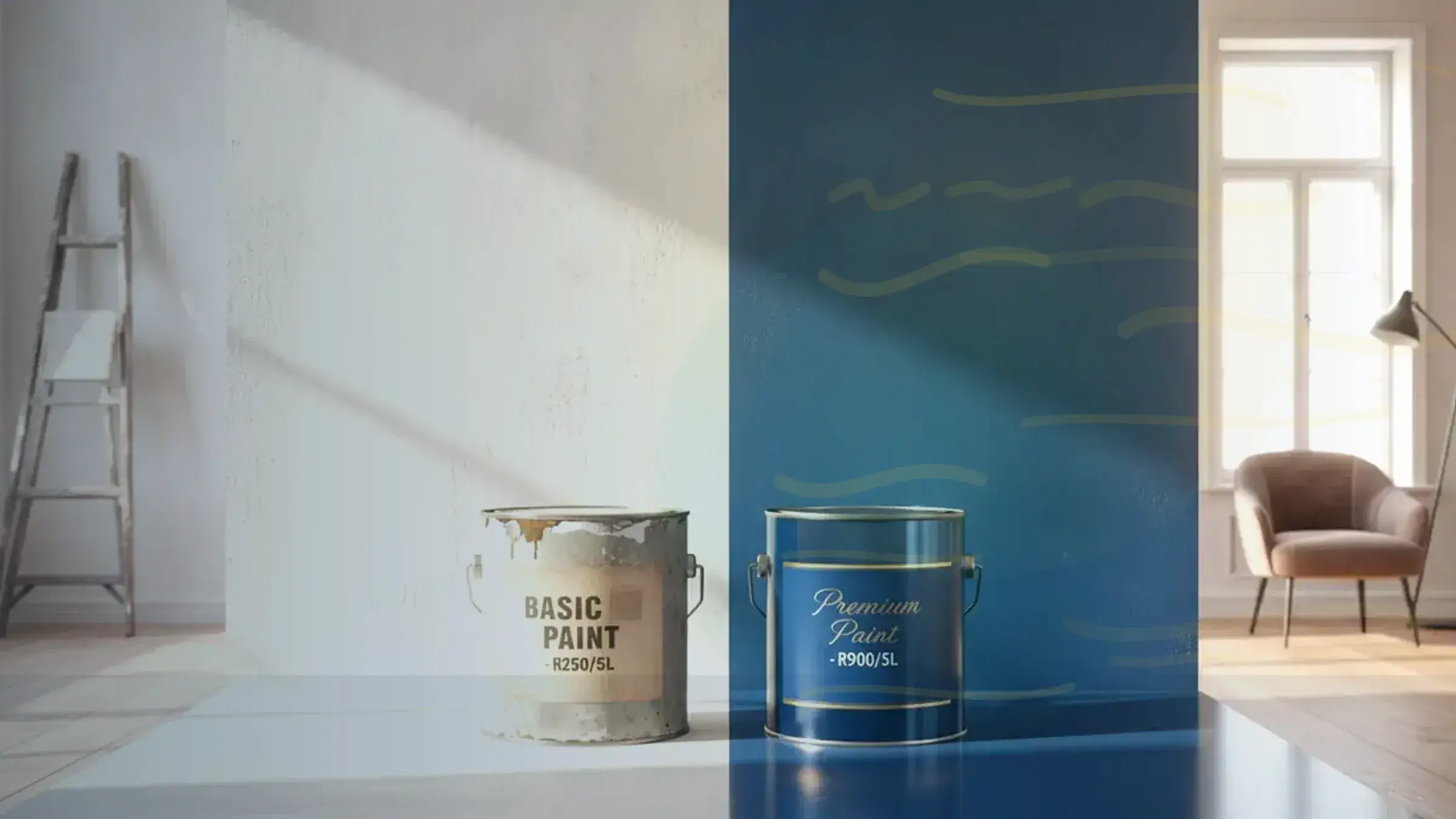
Basic vs Premium Paint: When the Expensive Tin Wins
Coverage, scrub resistance, UV life, and repaint cycles – total cost of ownership, not tin price
Quick answer
Basic vs premium paint compared on total cost – coverage per litre, scrub resistance, UV life and repaint cycles, not just the price on the tin.
11 min read
On this page
Which choice really saves you money over time — a cheaper option now, or a higher-quality finish that lasts? That question matters if you plan a home renovation. It shapes your budget and the longevity of your walls.
On our platform we explain the key differences and run the numbers for basic paint vs premium paint cost South Africa. Use paintingpricepersquaremeter.co.za to compare realistic figures and local contractor options.
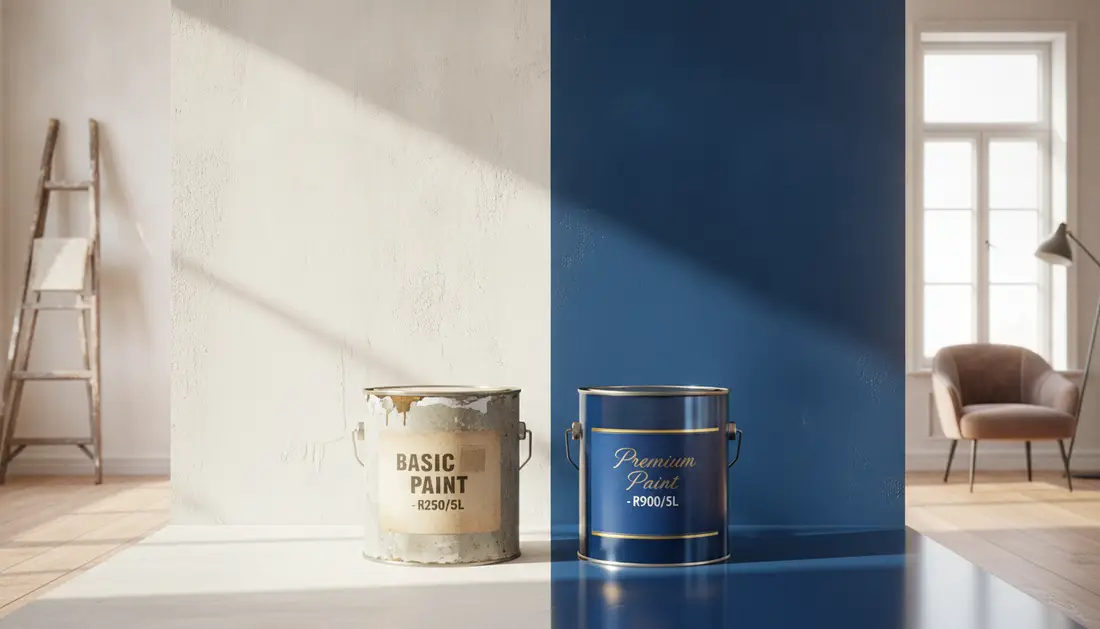
Established local contractors help frame what to expect. In major cities, professional painters typically charge between R450 and R900 per hour for labour. These hourly rates affect total painting costs, along with surface prep, access and product choice.
Before you hire, confirm scope, surfaces and warranties in writing. Visit paintingpricepersquaremeter.co.za to request up to 3 competitive painting quotes and use our pricing guidance to choose the best value for your project.
Understanding basic paint vs premium paint cost South Africa
Which paint tier you choose directly affects the price per square metre and the lifespan of your walls.
Low-end estimates with minimal prep range from R60–R80 per square metre. Mid-range options with standard prep sit at R80–R120 per square metre. High-end finishes, including extensive surface work, start at R120 and can exceed R200 per square metre.
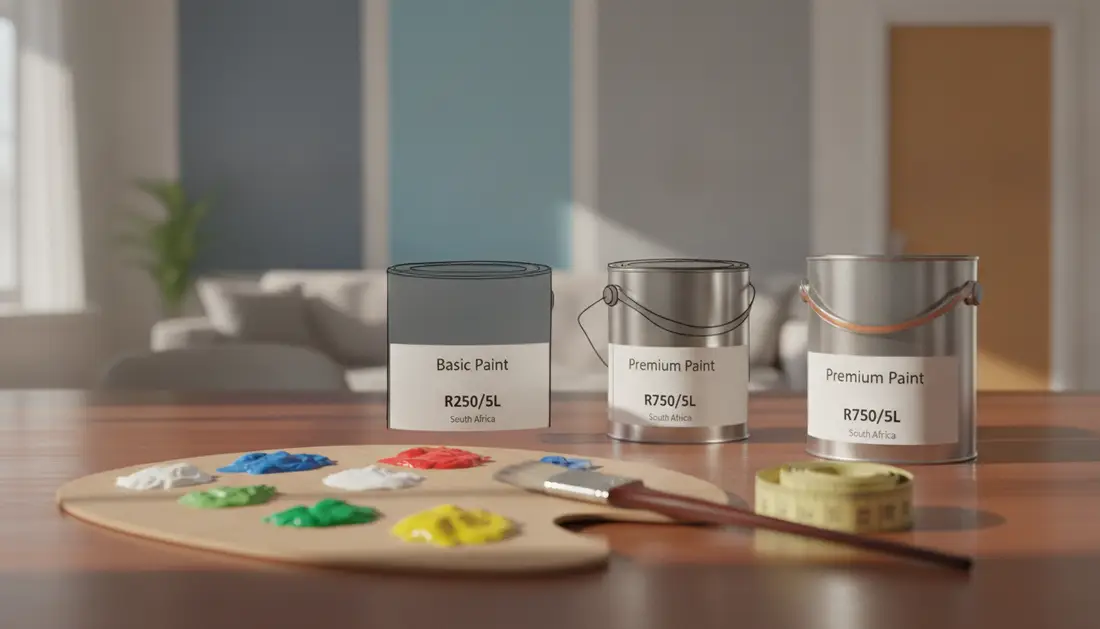
In South Africa the overall painting cost depends on the type of paints, the condition of the surface and the number of coats required; cheap paint that fails early shows as what causes chalky exterior paint outdoors. Cape Town painters often base their pricing on house size and the complexity of interior or exterior areas.
- Finish and coats: More coats and specialised finishes raise the price per square.
- Prep and surface: Extensive preparation can outweigh savings on cheaper products.
- Labour: Skilled labour forms a large share of total costs for a quality finish.
When you request a quote, confirm surface condition, the number of coats and any warranty in writing.
Key variables influencing your total painting budget
A clear view of labour, surface condition and access helps you predict painting costs; our other painting cost comparisons tackle the related trade-offs.
Surface preparation requirements
Surfaces that are cracked, dusty or uneven need more work before a new finish will bond correctly.
Filling, sanding and sealing can add significant time and materials to a house painting job. This is why materials only make up about 40% of the budget while labour is roughly 60%; the cost of paint and materials breaks down the product side.
Tip: Dark to light colour changes often require three coats for a professional result; ask your contractor for the number coats expected in writing.

The impact of labour and access
Experienced painters in Cape Town price by house size, wall height and accessibility. Complex jobs take more time and raise the price per square metre.
High-access exterior work may need scaffolding, which can add between R3,000 and R8,000 to a quote. Always confirm whether the quote includes this hire.
“Always ensure your quote specifies scope, preparation and any extra equipment needed.”
- Check that the quote lists preparation for your specific surfaces.
- Expect interior rooms to show higher cost per square due to detail work.
- Labour rates vary with skill level; meticulous teams cost more but deliver better quality.
Comparing paint formulations and long-term performance
Different formulations change how many coats you need and how well the finish withstands sun and weather; PVA vs acrylic paint explains the two main types.

Distinguishing between budget and premium tiers
Premium brands such as reputable premium paints include advanced binders and higher pigment loads.
They give better UV resistance and coverage, often reducing the number of coats on interior walls. This lowers long-term labour and maintenance costs for your home.
| Feature | Budget range (5L) | Premium range (5L) |
|---|---|---|
| Typical price (R) | 160–240 | 420–650 |
| UV resistance | Low–moderate | High |
| Recommended coats (interior) | 2–3 | 1–2 |
| Longevity on exterior | Shorter | Longer |
- Water or oil formulation affects application and exterior performance.
- Specify the exact brand and product line in your quote to protect surfaces and labour.
- Even quality paint will fail on damp or poorly prepared surfaces; prep matters.
Environmental factors affecting exterior paint choices
Local weather shapes how well exterior coatings perform on your walls. Schedule painting in the Western Cape between September and May to avoid winter rains.
Temperatures must stay above 10°C for the finish to cure correctly. If it dips lower, you risk premature peeling and poor adhesion.
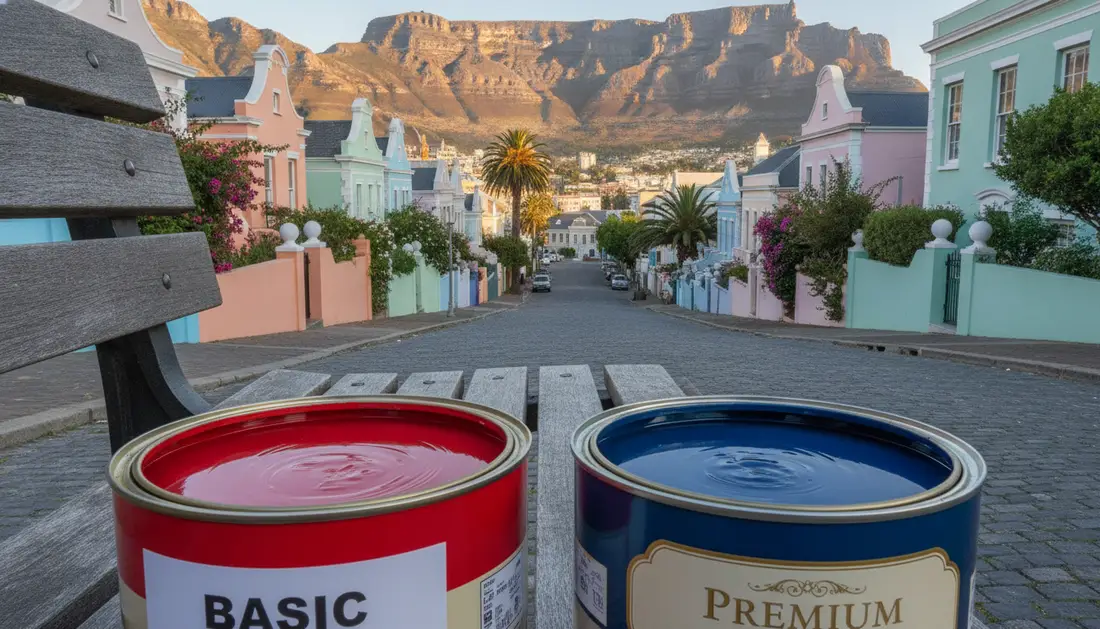
The intense sun around Cape Town needs UV-resistant exterior paints to stop rapid fading and surface degradation. Moisture in walls during winter can also stop new layers bonding, even when surfaces look dry.
Proper preparation matters more outdoors. Damp-stained or salt-affected surfaces need sealing before applying any high-quality coating.
- Exterior painting usually costs more than interior work because of weatherproof formulations and extra surface prep.
- Professional teams often advise against painting during rainy months to protect finish quality.
- Agree a timeline in writing with your contractor so work runs in optimal conditions for your house.
| Environmental factor | Risk to finish | Recommended action |
|---|---|---|
| Rainy season (winter) | Failed bonding, staining | Paint between Sept–May; avoid rainy forecasts |
| Low temperature | Poor cure, peeling | Only paint when >10°C consistently |
| Strong UV | Colour fade, binder breakdown | Use UV-resistant formulations and higher-quality coats |
Total cost of ownership for residential painting
Long-term maintenance, not just the initial hire, determines the true value of any painting project. Consider regular upkeep, recoat cycles and roof work when you plan your budget for the house.
Interior room-by-room estimates
Typical labour for a standard bedroom runs R1,200–R2,000. A living room usually sits between R2,200–R3,500.
Tip: Ask for a detailed quote that lists the cost per room, the number of coats and the brand of paints to be used.
| Area | Labour range (R) | Notes |
|---|---|---|
| Bedroom | 1,200–2,000 | Size and wall condition affect final price |
| Living room | 2,200–3,500 | Higher for feature walls and trims |
| Whole house (3-bed) | See roof painting line | Combine rooms for better pricing |
Exterior surface condition pricing
Exterior prices vary widely with surface condition. Poor or weathered surfaces need more prep and higher-quality paints, raising the overall costs.
Roof painting considerations
Roof painting for a 3-bedroom house typically falls between R10,000 and R28,000 depending on roof type and material.
Roof work demands safety measures and specialised products. In Cape Town many painters use a specialised roof coating for durability.
“A detailed quote should itemise room pricing, number of coats and brand to avoid surprises.”
Strategic approaches to material and labour selection
Ask for line-item quotes so you can compare brand, labour and preparation at a glance. A clear quote lets you spot substitutions and hidden charges before work begins.
Reputable painters usually request a deposit of 20%–30% rather than full payment. This protects both you and the contractor and signals commitment to the project.
Always insist the written quote lists the brand, product line and colour code. That prevents cheaper materials being used without your consent.
- Verify painter experience and ask for recent references from similar jobs.
- Buy paints in bulk for large areas to reduce the cost per litre when sensible.
- Prioritise high-quality paint for main interior rooms and more economical options for outbuildings.
- Confirm labour covers all prep: filling cracks, sanding and sealing before the first coat.
- Ask painters for a timeline that includes weather contingency for exterior work and roof access.
“A signed quote that names brand and colour code is your best defence against surprise charges.”
Tip: When comparing quotes, favour transparency. A clear split of materials and labour helps you decide which offer gives the best long-term quality for your home.
Achieving the best value for your property investment
Balancing material quality with skilled labour delivers the longest-lasting finish for your walls and roof.
Choose a brand and surface preparation that suit the exposure of each room and exterior area. Good prep and the right number of coats reduce future painting costs and rework.
Always review a written quote to check it covers trims, doors, roof work and colour codes. The cheapest price often skips essential prep or uses lower-quality paints.
Visit paintingpricepersquaremeter.co.za to request up to 3 painting quotes and compare independent contractors in South Africa and Cape Town.
Make decisions on price and quality with the aim of a durable finish that protects your house and limits ongoing labour and maintenance.
FAQ
What is the typical price range for basic vs premium paint options in South Africa?
Prices vary by brand and formulation. Expect economy-quality cans from R80–R150 per litre and higher-performance acrylics or elastomeric products from R180–R450 per litre. Factor in primer and special finishes separately — a quality primer or sealer can add R50–R150 per litre.
How do I calculate total painting costs for a room?
Calculate surface area in square metres, add 10–20% for waste, then multiply by the number of coats. Include material cost (paint + primer + caulk), labour (typically charged per m² or per day), and preparation. For an interior room, a rough guide is R35–R90 per m² for materials plus R40–R120 per m² for labour depending on finish and access.
What surface preparation is normally required and how does it affect price?
Preparation ranges from light cleaning and filling to full sanding, plaster repair, or re-plastering. Light preparation may be included; medium work (patching, sanding) adds labour and materials. Major repairs or damp treatment can double the prep cost. Always ask contractors for a written scope listing prep tasks and costs.
How much does labour add to my quote and what affects labour rates?
Labour rates depend on region, complexity and access. In metropolitan areas like Cape Town or Johannesburg expect higher rates. Factors increasing labour include high ceilings, scaffolding, multiple colours, intricate trim work and tight timelines. Confirm whether quotes are per square metre or fixed-day rates and whether they include assistants and equipment.
What are the main differences between budget and premium formulations?
Budget formulations give acceptable coverage but lower durability, thinner film build and less stain resistance. Premium products contain better binders, more pigments, UV stabilisers and fungicides; they give stronger adhesion, longer life, fewer coats and easier cleaning. Over time premium finishes often lower repaint frequency.
How do different paint types perform long term on exterior walls?
Exterior acrylic and elastomeric products resist UV, rain and minor substrate movement. Premium elastomeric paints can bridge hairline cracks and protect for longer, reducing maintenance. Lower-tier emulsions may chalk and require repainting sooner, especially in coastal or high-UV areas.
Which environmental factors should influence my exterior product choice?
Consider sun exposure, wind-driven rain, salt spray (coastal), humidity and temperature swings. Coastal properties benefit from anti-corrosive primers and mould-resistant topcoats. For high-UV inland areas choose UV-stable pigments. Local weather affects frequency of maintenance and product selection.
What is total cost of ownership when choosing paint for a house?
Total cost includes initial material and labour, frequency of repainting, maintenance and potential substrate repairs. A higher up-front spend on quality products and proper prep usually reduces lifetime costs by extending intervals between repaints and lowering repair bills.
Can you give rough interior room-by-room estimates per square metre?
Typical material plus labour ranges (indicative): bedrooms and living areas R80–R200 per m²; kitchens and bathrooms R110–240 per m² due to moisture-resistant products; ceilings R60–150 per m². Final quotes depend on number of coats, surface condition and chosen finish.
How are exterior surface-condition differences priced?
Smooth, sound plaster costs less per m² than surfaces needing sanding, rendering or rust treatment. Paint on new plaster needs curing and priming; older façades with flaking coatings require stripping and consolidation. Contractors should itemise prep, primer, topcoats and any repairs.
What should I expect for roof painting and its cost drivers?
Roof work involves access, safety equipment and specialised coatings (metal or tile primers, anti-corrosive paints). Costs increase with steep pitches, roof condition, moss or rust removal and scaffold hire. Expect a higher per m² rate than walls because of safety and preparation needs.
How should I choose between cheaper materials and hiring trusted contractors?
Balance product quality and workmanship. Cheaper materials lower immediate spend but can raise repaint frequency. A reputable contractor who specifies suitable products, warranties and clear prep work often delivers better long-term value. Request up to three quotes and compare itemised scopes.
What should be listed in writing on a painting quote?
Ensure the quote states scope of work, surface preparation, number and type of coats, brand and product names, colour codes, labour inclusions, access or scaffold costs, start and completion dates, warranty terms and any exclusions. Clear written items reduce disputes.
Are there local brands you can rely on for mid-to-high end finishes?
Look at established South African paint brands. These manufacturers offer both economy and high-performance ranges; check product data sheets for coverage, recommended coats and maintenance advice.
How many quotes should I request before deciding?
Request up to three independent quotes, or up to five where available, to compare pricing, materials and timelines. Ensure all quotes are based on the same scope so you can compare like-for-like.
Does colour choice change price significantly?
Strong or dark colours often need extra coats or a tinted primer, which increases material and labour. Specialist metallics or textured finishes add cost. Ask for a mock-up or small test area to confirm coverage and final look before committing.
How long does a typical interior and exterior job take?
Small interior jobs (single room) can take 1–3 days. Whole-house exterior repaints often take several days to a few weeks depending on size, prep and weather. Allow contingency for drying time, repairs and colour changes.
Related painting cost guides
Ready to compare?