

Stain Blocking and Painting Costs in South Africa
Water marks, smoke, soot, and crayon – sealing primers and repaint pricing for stained walls and ceilings
Quick answer
R1 722–R2 478 project total15 m² · R60/m² repair
Stain blocking and painting costs in South Africa – water marks, smoke, soot and crayon sealed with the right primers and repainted, priced per room.
Instant estimate
Stain-blocking & painting calculator
Estimate stain-blocking primer over water / nicotine / damp marks, then topcoats.
11 min read
On this page
How much should you expect to pay to refresh your home and still protect it for years?
You want a reliable number up front. A typical three‑bedroom property ranges between R25,000 and R50,000 for interior and exterior work, and our platform helps make sense of that span.
We show averages per square metre — roughly R60–R120/m² for interiors and R50–R100/m² for exteriors — and explain what affects the final figure. Use paintingpricepersquaremeter.co.za to compare quotes and check itemised rates for labour, materials and prep.
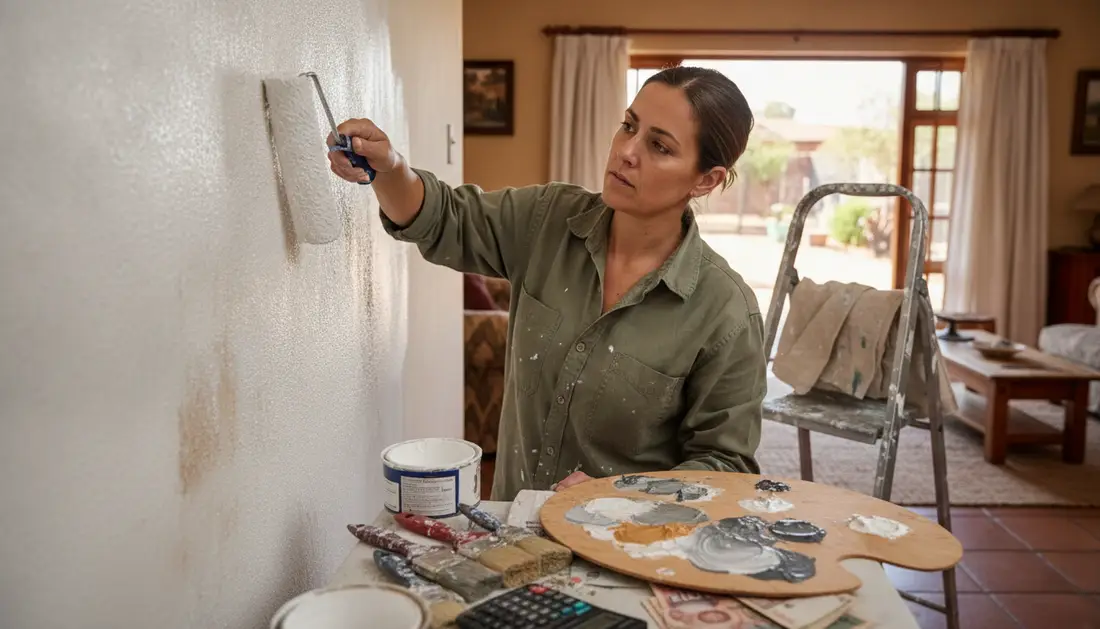
Expect clear comparisons: you can request up to three quotes, see the likely number of days for a job, and judge whether higher quality paint and better prep will save you money over the coming years.
How much does stain-blocking and painting cost in South Africa?
Choose the right pricing model — contractors commonly quote per square metre, per room, or as a fixed project price. Each method changes how extras are billed and how you compare offers.
Labour and materials split matters. Expect labour to make up roughly 60% of the total with materials at about 40%. That split shows up whether you price by room or per square metre.
Interior walls and ceilings need close attention — see ceiling painting rates per m² for overhead work. Older plaster or damaged surfaces demand more prep time and may add a primer coat before the finish coat.
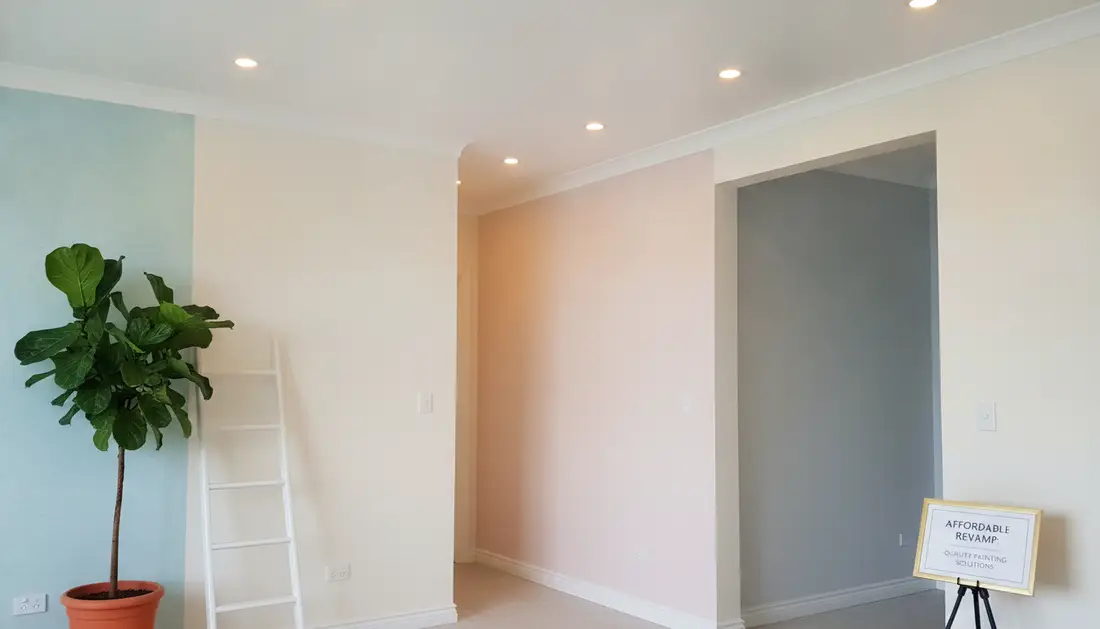
- Smaller rooms with many windows and doors take longer for masking and detailed work.
- Confirm the quote includes a primer and the paint brand used for the finish.
- Standard projects usually take 3–5 days, depending on coats and drying time.
| Pricing model | When it suits | Quick note |
|---|---|---|
| Per square metre | Large, uniform areas | Easy to compare price per m² |
| Per room | Small homes or detailed rooms | Includes extra time for edges and trim |
| Fixed project | Full-house or complex repairs | Good for a single agreed scope |
What affects stain-blocking and painting costs?
A realistic budget depends on the amount of prep the surfaces need and whether scaffolding is required; budgeting for prep work breaks the prep down.
Labour and Material Variations
Labour usually makes up the bulk of a quote. Time on site, the number of coats and the chosen paint quality all change the final price. A premium brand can add R2,000–R5,000 for a full exterior home project, while basic materials reduce upfront spend but may shorten life.
Surface Condition and Access
Your walls and ceilings drive prep work, and choosing the right ceiling paint affects the result. Filling hairline cracks and patching plaster take additional time before the primer and first coat.
Access matters. Scaffolding hire for double‑storey homes can add R3,000–R8,000 depending on scale and days on site.
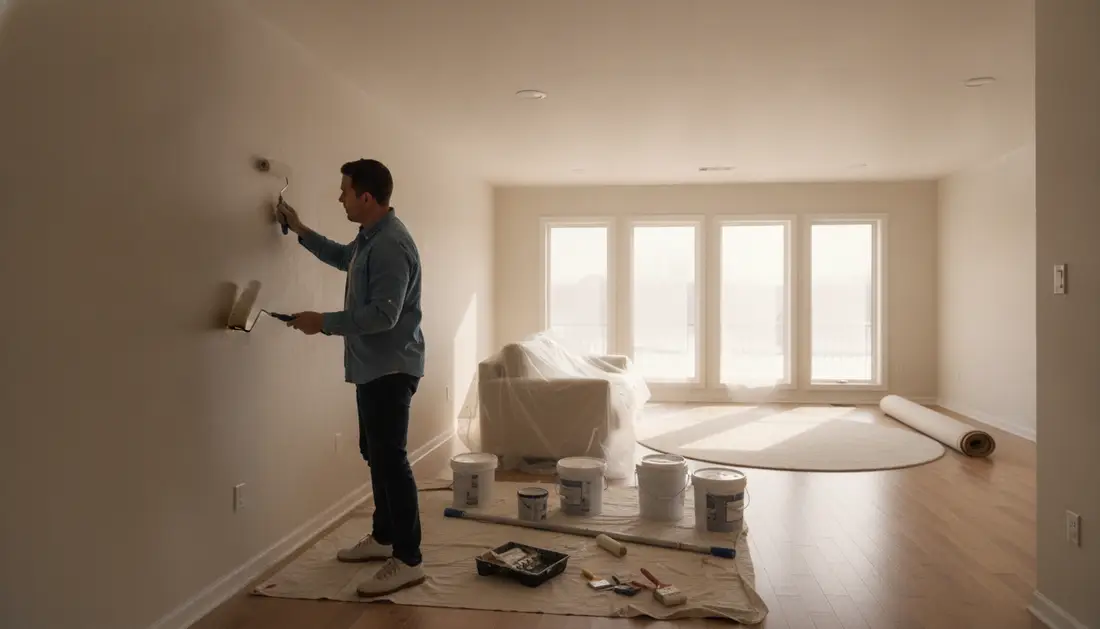
- Request an itemised quote that separates labour materials to avoid hidden fees.
- Number of coats and the need for specialist roof painting are priced separately.
- Proper sanding and filling are the best value for a lasting finish.
| Factor | Typical impact | What to confirm |
|---|---|---|
| Surface condition | High – more prep equals higher labour | Scope for plaster repairs and filler |
| Access / height | Medium–High – scaffolding adds R3k–R8k | Hire duration and safety measures |
| Paint quality | Medium – affects materials by R2k–R5k | Brand, warranty and expected life |
How do you prep stained surfaces before painting?
Proper prep determines whether your new paint keeps its colour and hides old marks. Treating marked walls and ceilings before you start saves extra coats and keeps the finish durable; what causes ceiling water stains shows what to look for.
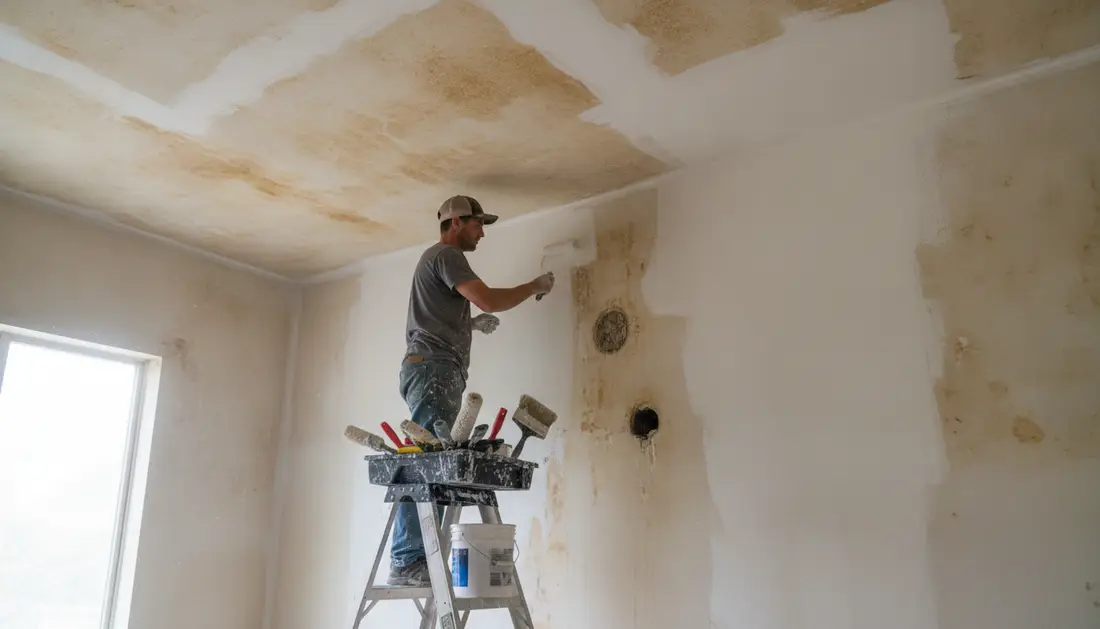
Soot and Nicotine Removal
Begin with a thorough clean. Soot and nicotine need a degrease and light sanding so the primer bonds; what is plaster primer explains the right one.
Use a waterborne Stain Blocking Primer WB. This self‑cross linking acrylate clear coating stops nicotine, soot, water marks, tea and food stains from migrating through the paint film.
- Contractors typically spend several days on prep work to remove residues and repair plaster where needed.
- The flexible, waterborne primer resists brittleness and gives a solid adhesive surface for the finish coat.
- Sealing wet‑prone surfaces is vital in South Africa to prevent stains reappearing due to moisture.
| Issue | Prep action | What to confirm |
|---|---|---|
| Nicotine / soot | Degrease, sand, prime | Primer brand and adhesion test |
| Water marks | Dry, repair, seal | Plaster repairs and moisture fix |
| Food stains | Clean, spot prime | One coat primer before topcoat |
Managing Moisture and Structural Repairs
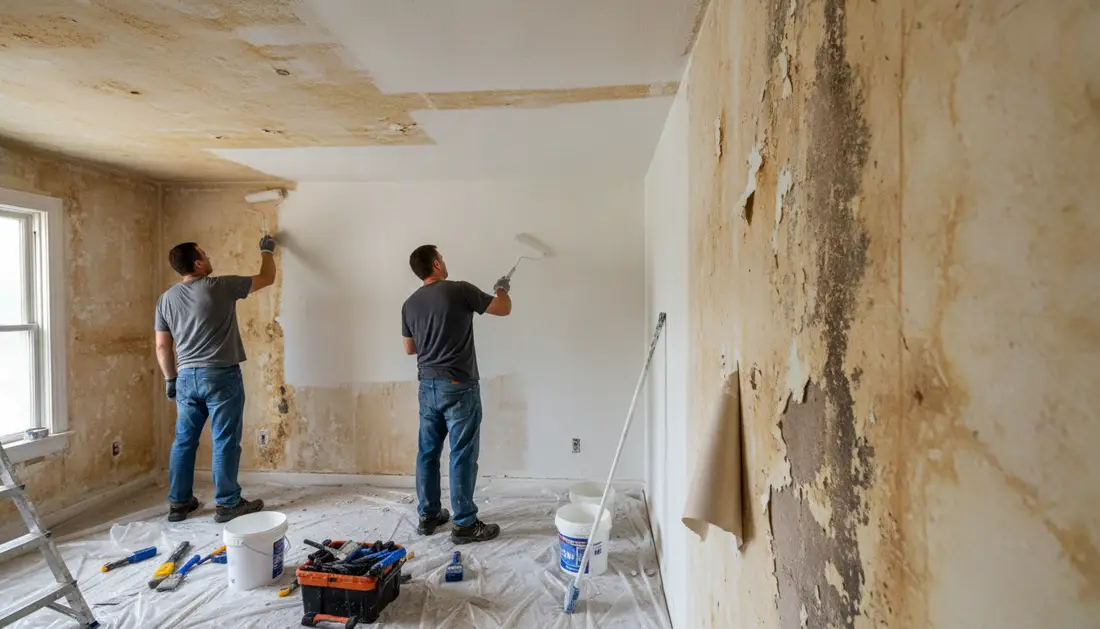
Moisture and structural repairs set the stage for a durable interior finish. Before any primer or finish coat, you must stop leaks, repair plaster and let surfaces dry. This avoids the common failure of painting over damp walls during winter in the Western Cape.
Leak Fixing Before Sealing
Fix water entry first. Patch roof and plumbing leaks and resolve rising damp before work begins — roof painting vs roof waterproofing covers the roof side. Contractors will delay application until plaster reaches acceptable moisture levels.
Allow sufficient time for evaporation; rushing adds the risk of peeling and discolouration that raises future painting costs.
Stain Blocker Application
Once dry, apply a professional-grade primer designed to seal problematic areas. A quality primer helps the finish coat sit evenly across interior walls and ceilings.
Confirm primer brand and compatibility with your finish. Proper application reduces rework and protects your home investment.
Blending Limits
Large areas, such as a 3‑bedroom home with up to 400 m² of surface area, need careful planning for colour mixing and coating sequence.
Work in manageable sections and flag blending limits with your contractor to avoid visible shade differences across walls and ceilings.
| Task | Typical time impact (days) | What to confirm in writing |
|---|---|---|
| Leak repair and drying | 2–10 days (depending on severity) | Repairs completed and moisture test result |
| Plaster repair and sanding | 1–4 days | Plaster finish spec and approved surface |
| Primer and finish application | 2–5 days | Primer brand, number of coats and finish spec |
Selecting the Right Paint for Challenging Conditions
UV-resistant, acrylic-based systems suit exposed exteriors and high-sun interiors near large windows.
Choose product types by exposure: use weatherproof, salt-resistant coatings for coastal walls and specialised roof paint for exposed roofs. a specialised roof coating and a specialised roof paint are industry-standard options for roof painting and should be quoted separately from standard wall paint.
For interior surfaces that face humidity, confirm the primer and finish coat are compatible. A good primer improves adhesion and reduces rework in damp rooms.
- Pick UV-resistant exterior paint for long life under sun and rain.
- Use weatherproof products on coastal walls to limit salt damage.
- Specify roof painting separately; roof products differ from wall paint.
| Condition | Recommended product | What to confirm in the quote |
|---|---|---|
| High sun exposure | UV-resistant acrylic exterior paint | Brand, expected life, warranty |
| Coastal / salt air | Weatherproof, salt-resistant coatings | Corrosion resistance and adhesion test |
| Roof surfaces | a specialised roof coating or a specialised roof paint | Roof painting costs, application method, and primer |
Navigating the Quote Request Process
Request clear, line‑by‑line quotes so you can compare what each contractor will do for your home. A good document lets a second painter understand the full scope for any room or exterior work.
Comparing Multiple Quotes
Our platform lets you request up to 3 quotes from independent contractors across South Africa. Use those quotes to compare price, time and the exact brand of paint specified for your interior walls and other surfaces.
- Ensure each quote lists prep work, number of coats and the exact materials to be used.
- Confirm labour materials are itemised so you can check the split between labour and materials.
- Verify the time in days, the size of areas covered and whether windows, doors and trim are included.
- Be wary of quotes that are significantly cheaper than the rest — they often omit proper prep work.
- Never accept full payment upfront; tie payments to progress milestones in writing.
“A professional quote is specific enough that another contractor could pick up the job and carry on without guesswork.”
| Item | Why it matters | Confirm in writing |
|---|---|---|
| Prep work | Prepares the surface for lasting finish | Type of repairs, primer, number of coats |
| Schedule | Sets realistic time and weather allowances | Days on site, start date, delay terms |
| Price breakdown | Shows transparency and avoids surprises | Labour materials split, brand and warranty |
Achieving Long-Term Value for Your Property
To keep your home looking fresh, choose quality products and insist on correct application for every surface. Good products and careful work give a lasting finish that saves money over time.
Simple maintenance keeps results strong. Clean walls, check ceilings and repair hairline cracks in each room to extend the life of your paint and preserve colour.
Plan the project well: allow adequate days for prep and curing, confirm the number of coats, and use proper application techniques for each coat.
Start with our resources at paintingpricepersquaremeter.co.za and, when ready, return to paintingpricepersquaremeter.co.za to request quotes for interior work or roof painting. Focus on paint quality and professional execution to protect your investment and improve resale appeal.
FAQ
What affects stain blocking and painting prices in South Africa?
Several factors change the final figure. Labour rates, paint quality and brand, primer and finish needed, surface condition (plaster, peeling, soot), access (scaffolding or ladders), and the size of rooms and ceilings all matter. Prep work such as filling, sanding and moisture remediation adds to the estimate. Always ask contractors for a per square metre breakdown for walls and ceilings, plus materials and days required.
How much should I budget per square metre for interior walls and ceilings?
Expect a wide range depending on paint quality and prep. Low- to mid-range projects with minimal prep and standard emulsion may be priced per square metre, while high-quality finishes, specialist primers, or difficult access cost more. Request quotes that separate labour and materials so you can compare like for like.
Do I need a special primer for stained or sooty surfaces?
Yes. Heavily marked surfaces often need a sealing primer designed for stains and nicotine. The primer prevents marks bleeding through the finish and reduces the number of topcoats. Confirm product brand and the number of primer coats with your contractor before work starts.
What preparation is required for soot, nicotine or greasy marks?
Surfaces must be cleaned with degreaser or trisodium phosphate solutions, then rinsed and fully dried. Loose paint is removed, and small repairs are filled and sanded. For extensive deposits, several cleanings and specific primers are necessary. Good prep reduces the chance of reappearing marks and improves durability.
How do moisture and leaks affect the job and the quote?
Active leaks must be fixed before sealing and decorating. Damp or mould requires drying, treating with fungicidal wash and possibly replastering. These repairs can add days and cost. Contractors should list repair work separately from decoration so you know what’s included.
Can stain-blocking primers always guarantee a perfect colour match?
No. Blocker primers stop bleeding but they don’t always hide dark or saturated colours completely. Some areas may need extra primer coats or local feathering and repainting. Large or heavily marked patches sometimes require a full wall coat to blend seamlessly.
Which paints work best for kitchens, bathrooms and high-moisture areas?
Use acrylic or alkali-resistant emulsions with mould-inhibiting additives for bathrooms and kitchens. Satin or eggshell finishes clean better than flat matts. For ceilings, a quality flat ceiling paint helps hide imperfections. Confirm brand and performance guarantees with your painter.
How many quotes should I get and what should I compare?
Obtain up to three independent quotes, or up to five where available. Compare labour rates, material brands, primer and topcoat specifics, number of coats, surface repairs, access costs, warranty period and estimated days on site. Check that each quote lists per square metre rates for walls and ceilings.
What warranty or guarantee should I expect?
Independent contractors may offer workmanship warranties from 6 months to several years, depending on the work and paint used. Product manufacturers sometimes provide paint guarantees. Ensure any warranty covers agreed prep work, number of coats and identified repairs in writing.
Will repainting extend the lifespan and value of my property?
Quality preparation and durable paint finishes improve longevity and market appeal. Properly sealed and repainted interiors resist staining, mould and wear, which helps maintain rental returns and resale value. Prioritise reputable brands, correct primers and documented repairs for best long-term value.
How should I confirm pricing and scope before work starts?
Get a written quote that itemises labour, materials (brands), primer and finish, number of coats, prep tasks, access requirements and timeline. Ask for a start date, approximate days required and any payment milestones. Keep communication clear to avoid price changes once work begins.
Are there cheaper alternatives to full redecoration for minor stains?
Yes. Spot-priming and targeted repainting can work for small areas, reducing material and labour. However, if surrounding paint is aged or the colour differs, a full wall or room coat may look better. Request a contractor’s recommendation and cost comparison.
What health and safety considerations apply during interior work?
Ensure good ventilation, use low-VOC or water-based paints where possible, and protect furniture and floors. Contractors should follow safe ladder and scaffolding practice. Discuss site protection, dust control and cleanup before work starts.
How long does a typical interior room job take from prep to finish?
A single average-sized room usually takes 1–3 days including prep, primer and two topcoats. Larger rooms, high ceilings or extensive repairs extend the schedule. Ask contractors for a day-by-day outline so you can plan occupancy.
Related painting cost guides
Ready to compare?