
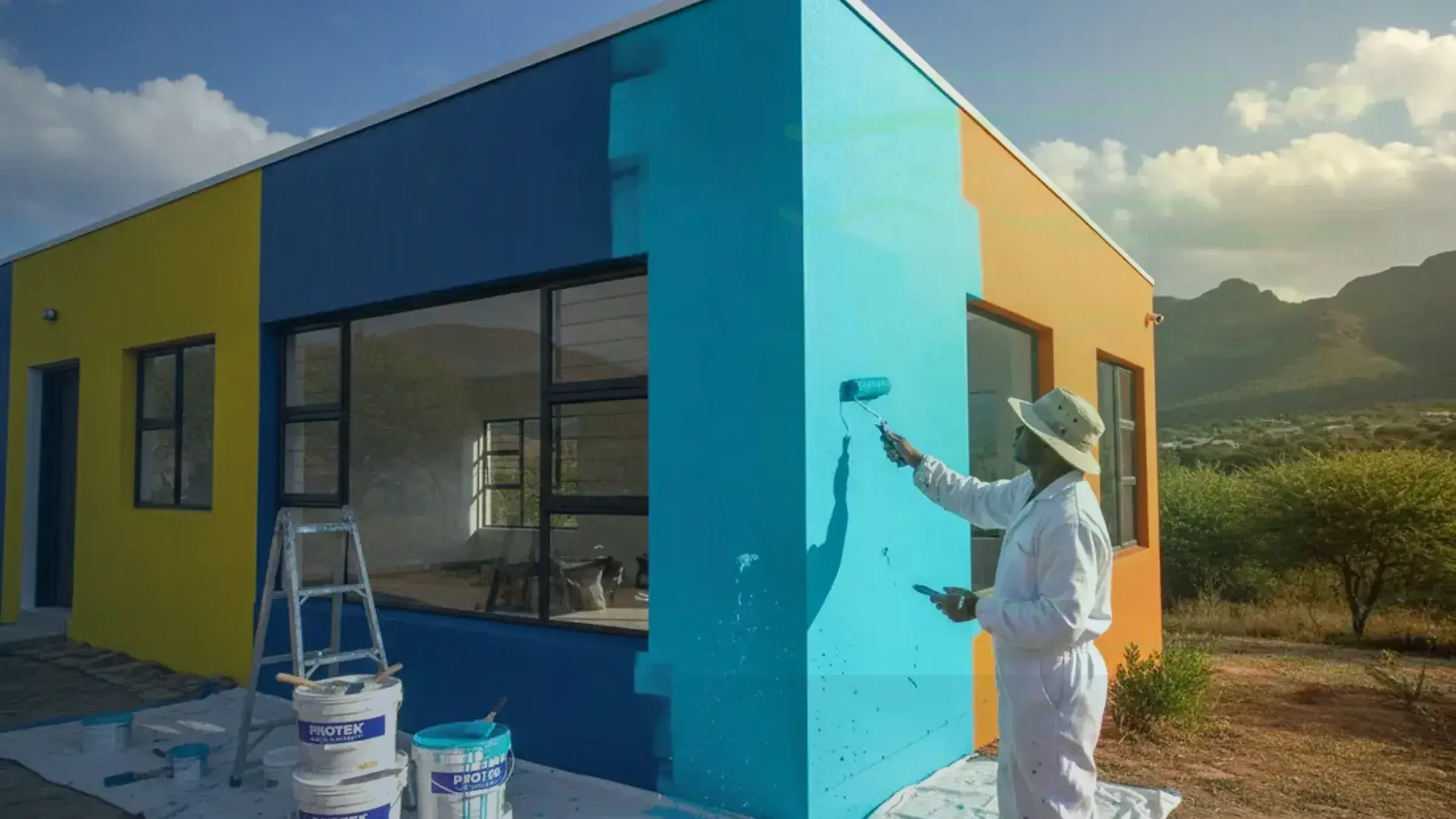
Exterior Painting Cost Per Square Metre in South Africa
Outside repaint rates shaped by weather exposure, wall prep, and coating-system choice
Quick answer
R11 475–R15 525 project totalR90/m² · 150 m²
Exterior painting cost per square metre in South Africa – weather exposure, prep intensity and coating systems, with access and repaint-cycle notes.
Instant estimate
Exterior painting cost calculator
Estimate exterior wall painting by area, coats and prep — weather-grade acrylic.
12 min read
On this page
How much should you expect to pay to refresh your home’s look — and where can you avoid common pricing traps?
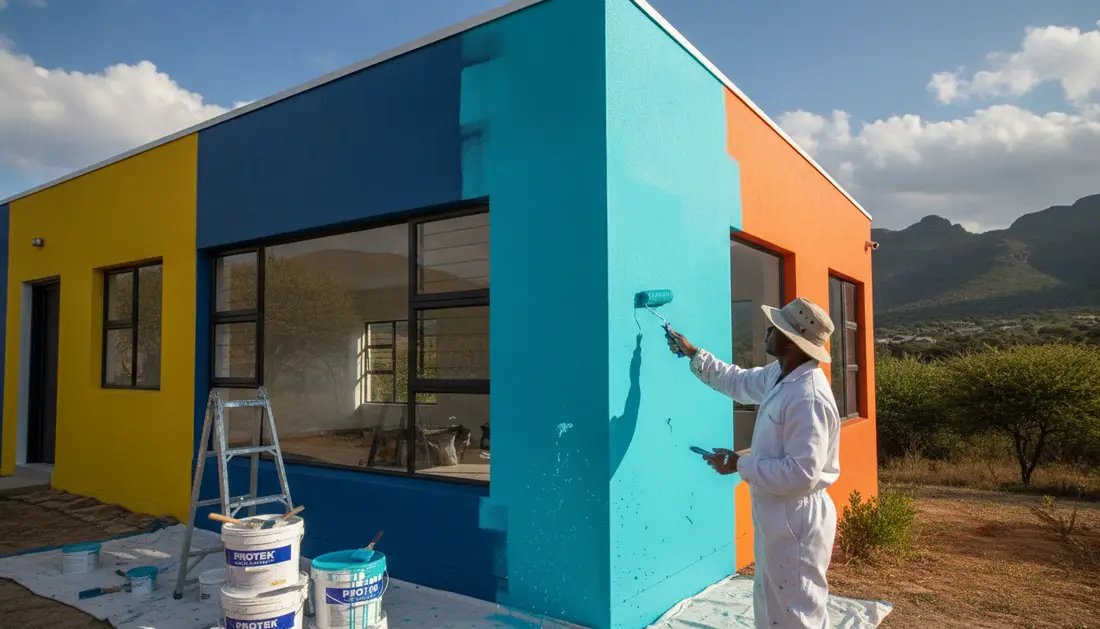
Understanding the average price helps you plan a sensible renovation budget. A typical three‑bedroom house in South Africa often falls between R25,000 and R50,000 for a full job.
Rates for external surfaces generally range from R45 to R100 per m², depending on surface condition, preparation and the type of paints and coats chosen.
Our pricing guidance at paintingpricepersquaremeter.co.za explains the main factors that influence final figures: labour, quality of paint, access and the amount of prep work needed.
Get clear estimates, compare contractor quotes, and confirm the scope in writing to avoid rushed work or low‑quality finishes that cost more in the long run.
How much does exterior painting cost per square metre in South Africa?
Knowing typical rates for a job lets you compare contractors with confidence. Prices vary because weather‑resistant paints and extra prep are needed for outside walls. That makes this work pricier than interior room jobs; for the full picture see what painting costs per square metre across every surface.

Key points to check before you request quotes:
- The condition of surfaces — poor walls need more preparation and raise the final price.
- Number of coats and type of paints — premium products cost more but last longer.
- Labour rates — skilled teams typically bill between R450 and R900 an hour for complex jobs.
Size and design complexity of the house affect total costs. Roof trim, fascia and other areas may be quoted separately from standard wall work, as can a perimeter wall — see what boundary wall painting costs.
Always ask contractors for a written breakdown showing materials, labour and preparation so you can compare quotes fairly.
What affects your exterior painting price?
Several practical factors directly shape how much you’ll budget for a house refresh.
Labour and material costs are the starting point. Skilled labour rates and the type of paint you choose influence the final price more than most people expect.
High‑quality paints give better coverage and usually need fewer coats for a lasting finish. That reduces time on site and can lower overall costs.
Labour and Material Costs
Contractors price jobs on hourly labour and the paints and sundries used. Ask for a breakdown that lists paint brands, litres required and the expected time to complete the job.
The Role of Surface Condition
Surface preparation has a big effect on pricing. Cleaning, sanding, filling cracks and priming add time and materials, especially on chalky, powdery exterior walls that must be stabilised first.
“Proper preparation prevents peeling and saves money over time.”
- Porous or damaged walls need more coats and more preparation.
- Large or hard‑to‑access walls and roof trim push the price higher.
- Confirm that quotes include surface preparation and the number of coats.
What do exterior paint systems cost per square metre?
Price differences often come down to the coating system you choose and how the work is supplied. Standard acrylic systems are generally the most economical option for many homes in south africa, while premium UV-stable or textured Micatex-type products raise the overall price; wall painting rates per m² covers the generic wall figure.

Supply-and-fit versus labour-only
Supply-and-fit quotes include both the paint and labour. That means contractors select compatible paints for the surface and handle all materials. This reduces the risk of mismatch and often saves you money on high-quality brands.
Labour-only offers lower visible charges, but you must buy paints and sundries yourself. Factor in the number of coats, brand choice and any special roof coatings needed for durability.
- Standard acrylics = cost-effective for walls and general house work.
- Premium systems = higher prices but better long-term protection.
- Always confirm brand, number of coats and labour included in writing.
How do coastal, Highveld and UV conditions affect exterior painting costs?
The environment around your home directly affects which paints, primers and treatments will last longest.
Highveld regions face intense UV exposure and occasional hail. North-facing walls take the worst of this stress.
Use high-quality, UV-resistant systems on those surfaces to avoid premature failure and extra painting costs.
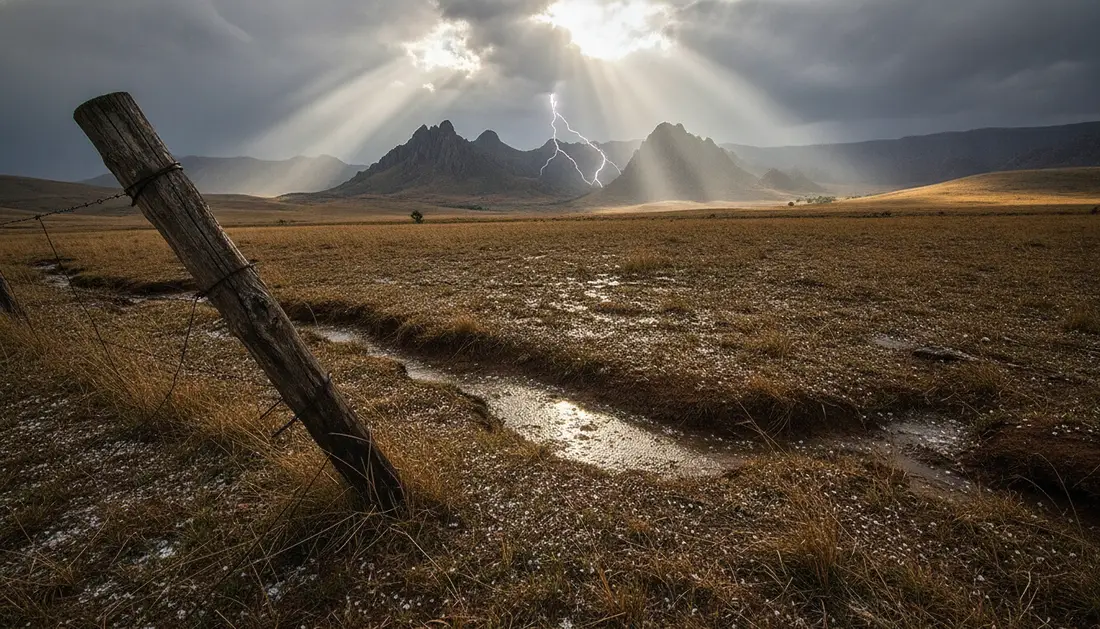
Highveld UV and Hail Exposure
On the Highveld, bright sun and sudden hail can break down binders in paint faster.
That raises long-term maintenance and labour needs unless you specify resilient paints and good surface preparation.
Coastal Salt and Wind Damage
Coastal areas suffer salt-laden wind that speeds corrosion and fading. Expect a shorter repaint cycle — often 5–7 years; how long exterior paint lasts covers what to expect by region.
Roof painting is especially important near the shore to prevent rust and moisture damage.
- Inland homes usually enjoy 8–10 years between major repaints with the right system.
- Factor in slightly higher prices for weather-resistant coatings when you budget per square measures.
- Professional contractors will recommend specific paints and the number of coats you need for your area.
Choose materials and preparation to match local conditions — it reduces repaint frequency and protects your house investment. Timing matters too: the best time of year to paint outside helps you avoid weather delays.
Essential Surface Preparation and Access Requirements
Before a brush touches a wall, you must confirm surface condition and access needs. Proper surface preparation is the single most important step for a durable, high-quality finish.
Standard preparation ladder includes cleaning, sanding and applying the correct primer so new paints bond correctly. Professional teams normally apply two coats after priming.
- Cleaning removes salts, mould and loose material that cause peeling.
- Sanding evens the wall and improves adhesion.
- Correct primer matches the surface type and the chosen paints.
Access affects labour and final costs. High walls or a roof often need scaffolding or specialised access equipment. Ask for these items in writing so you avoid hidden charges.
If walls are damaged, repair time will be added to the quote. Quality surface preparation prevents blistering and early failure — as does treating efflorescence (white salt deposits) before painting — and makes your paint job last the expected time.
Property Façade Condition Tiers
A simple grading system for your façade reveals why two quotes for the same house can differ widely.
- A tier-one façade is in good order and needs minimal preparation before high-quality paint goes on.
- Tier-two shows minor cracks or blemishes; extra filling and light sanding are needed for a neat finish.
- Tier-three requires deep patching, possible structural repair and heavy sanding — it raises labour and materials.
Contractors assess your walls and surfaces on site to decide the tier. They then quote for the number of coats, materials and any repairs; the choice between smooth vs textured exterior coatings affects both.
Knowing the tier in advance helps you budget better. It also prevents surprises when the team begins work and shows you where the main price drivers are: preparation, size and surface type.
How Our Platform Simplifies Your Quote Request Process
Use our platform to gather up to three independent quotes quickly, so you can compare real offers for your home project.
What we do: we connect you with local contractors who carry out site visits, provide final quotes and complete the work; what exterior painting involves sets out the scope. You remain in control and choose the contractor that best fits your budget and quality needs.
Why this helps: comparing bids makes pricing clear and reduces the risk of hidden extras. Independent contractors know local conditions and give realistic prices based on surface condition, prep work and access requirements.
- Request up to 3 quotes to compare services and quality.
- Receive transparent bids after a site visit by a professional.
- Save time and avoid sourcing multiple contractors yourself.
| Feature | What it shows | Why it matters |
|---|---|---|
| Number of quotes | Up to 3 independent bids | Compare prices, paint systems and timelines |
| Site visit | Contractor assesses surface and access | Ensures accurate pricing and fewer surprises |
| Final quote breakdown | Materials, labour, prep and warranties | Transparent pricing so you can decide with confidence |
Best Practices for Long-Lasting Exterior Finishes
A durable finish starts with the right materials and a clear specification from your contractor. Choose products and methods that suit your local climate in south africa and the specific areas of your house.
Importance of Written Warranties
Why a written warranty matters
Insist on a written warranty that names the scope, duration and what the contractor will repair or replace. A clear warranty protects your investment and shows the contractor stands by their workmanship.
- Use UV‑resistant, premium paints suited to coastal or inland conditions to reduce fading and failure.
- Ensure surfaces are clean and fully dry before any paint is applied to prevent bubbling or poor adhesion.
- Apply at least two coats of quality paint for even coverage and longer life.
- Follow manufacturer drying times between coats to achieve the intended finish and durability.
- Plan regular maintenance such as washing walls and roof checks to extend longevity and lower future painting costs.
Choose quality materials and skilled labour rather than the cheapest price. It reduces repaint frequency and delivers a better long-term value when you calculate per square prices for your job.
Final Thoughts on Securing Professional Painting Services
Choosing the right team can make the difference between a short-term fix and a lasting finish.
Use paintingpricepersquaremeter.co.za to collect and compare quotes from independent contractors in south africa. This helps you see realistic prices and what each job includes.
Prioritise quality paint and thorough surface preparation so your walls last longer and need less maintenance. Check product names, number of coats and any written warranty.
Balance cost against workmanship. Lower bids sometimes omit access, repairs or proper priming and raise long-term costs for your home.
Compare multiple offers, confirm the scope in writing and choose professionals who guarantee a durable house painting result. This will protect your house and give you confidence to proceed.
FAQ
What influences exterior painting price estimates in South Africa?
Several factors shape the final price: the type and brand of paint chosen, the number of coats required, labour rates in your area, the condition of the façade, access and scaffolding needs, and local climate exposure such as UV or coastal salt. Confirm whether quotes are for supply-and-fit or labour only and ask contractors to itemise materials, prep work and warranty terms.
How do supply-and-fit quotes differ from labour-only quotes?
Supply-and-fit quotes include paint, primers, consumables and application, so you get one total price. Labour-only quotes cover application and often surface preparation but expect to buy paint separately. Always check who sources paint, the product specifications, and whether the quote covers waste and touch-ups.
What surface conditions add to the job size and price?
Damaged plaster, peeling coatings, efflorescence, mould or significant rust require extra prep such as patching, sanding, anti-carbonation treatment or rust conversion. Poor drainage and previous inferior coatings can increase labour time. Contractors usually list these as separate line items on a quote.
How does climate affect the longevity and pricing of work?
Highveld areas with strong UV and hail need UV-resistant and tougher film paints, while coastal properties need anti-corrosive systems and frequent maintenance due to salt. These specialised products and extra coats cost more but reduce repaint frequency and long‑term repairs.
What surface preparation should I expect before repainting a façade?
Expect pressure washing, mould or salt removal, scraping loose paint, sanding, filling cracks, priming bare areas and treating metalwork. Access setup—scaffolding, ladders or lifts—also forms part of prep. Good preparation typically extends the finish life and is worth the investment.
How are property façade condition tiers used in quotes?
Contractors often use tiers (good, fair, poor) to standardise pricing for prep and materials. A “good” façade may need cleaning and one or two coats; “fair” may need repairs and priming; “poor” often requires major remediation and more coats. Ask to see the criteria used for each tier on your quote.
What should I check in writing before hiring a contractor through the platform?
Confirm the scope (supply-and-fit or labour only), specific paint brand and sheen, number of coats, surface prep details, access provision, start and completion dates, payment terms and any warranty. Our platform helps you request up to 3 quotes, or up to 5 where available, from independent contractors for comparison.
How long do quality exterior finishes typically last in different regions?
With correct preparation and good products, expect 5–10 years in coastal zones and 7–12 years in inland areas, depending on exposure and paint system. High-quality acrylic or elastomeric systems last longer on porous substrates, while specialised anti-corrosive systems suit metalwork.
Are written warranties important and what should they cover?
Yes. A written warranty should state the period, what it covers (flaking, peeling, adhesion), exclusions (mechanical damage, incorrect maintenance), and steps for claim resolution. Check whether the warranty is backed by the contractor or the paint manufacturer and get the terms in writing.
How much should I budget for access and scaffolding on a two-storey home?
Access costs vary by region and site complexity. Standard scaffold hire for a two‑storey façade can be a significant portion of the total. Ask contractors to include scaffold, boom-lift or rope access costs as separate line items so you can compare quotes accurately.
Which paint types give the best value for long-term protection?
High-quality acrylic elastomeric coatings work well on plaster and cementitious surfaces for flexibility and water resistance. 100% acrylic is versatile for many walls, while specialised anti-corrosive primers and polyurethane topcoats suit metal. Balance product life expectancy against upfront price when comparing value.
How should I compare multiple quotes to choose the best option?
Compare scope, product specifications (brand and product code), number of coats, surface prep details, access inclusions, warranty and total price. Cheaper quotes can omit crucial prep or use low-grade paint. Prioritise clear, itemised quotes and contractor references over the lowest headline price.
Can bad preparation void a paint manufacturer’s warranty?
Yes. Manufacturers often require specific primers, prescribed film thickness and approved application methods. If preparation is inadequate or an incorrect system is used, a manufacturer may not honour the warranty. Ensure the quote references the manufacturer’s system and application guidelines.
What timelines should I expect for a typical house repain?
Timelines depend on size, prep scope and weather. A small single-storey home with minor prep can take 3–5 days. Extensive repairs, multiple coats and adverse weather can extend this to 2–3 weeks. Ask contractors for a start date, sequence and realistic completion window in writing.
Are there seasonal times to avoid for exterior work in South Africa?
Avoid heavy rain seasons and excessively cold or humid periods. Coastal wind and salt spray seasons can also affect application quality. Contractors generally recommend scheduling work in dry, moderate conditions to ensure proper curing and adhesion.
Related painting cost guides
Ready to compare?