
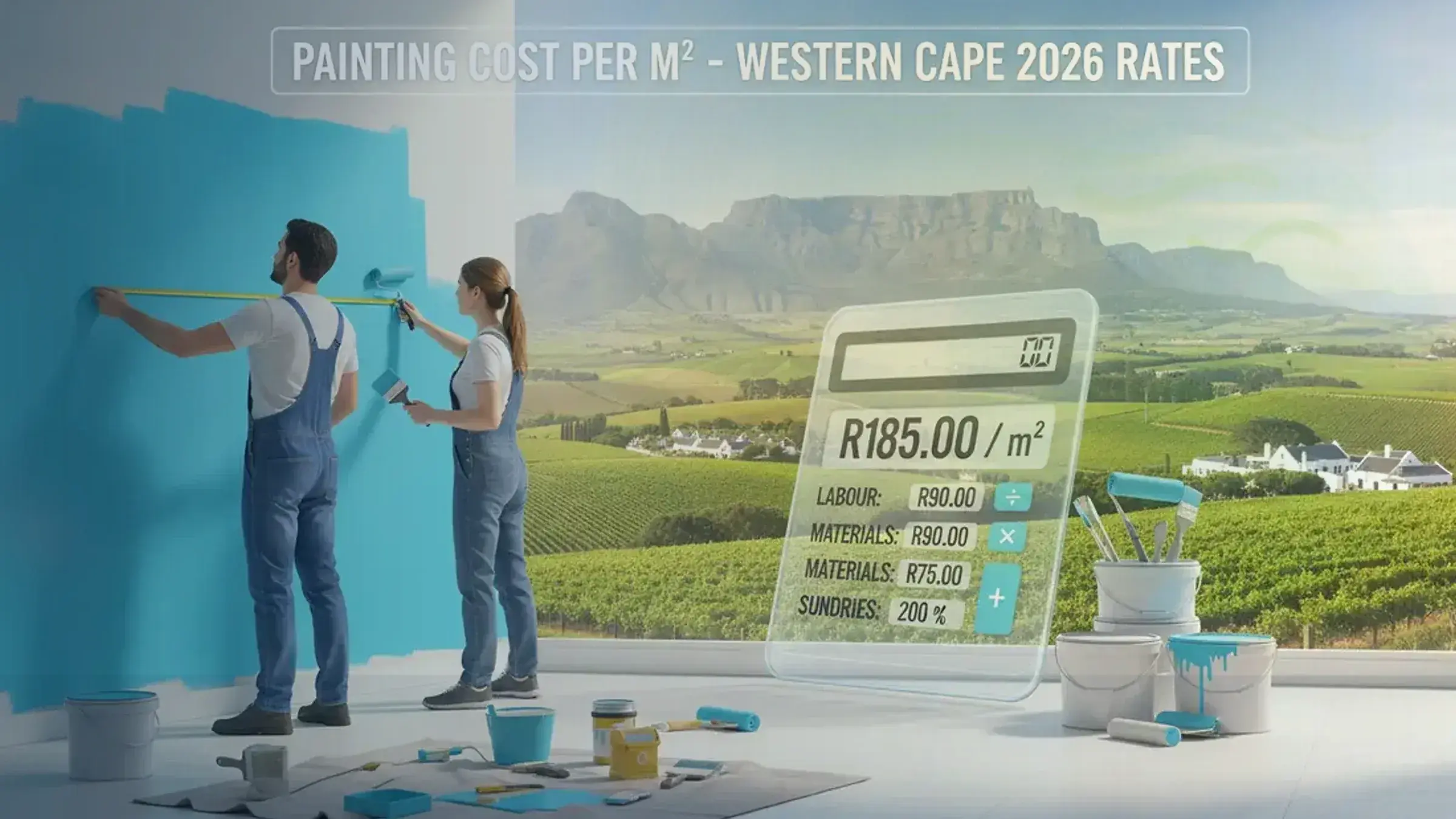
Painting Cost Per Square Metre in the Western Cape
Cape Town, the Winelands, and the coast – winter rainfall, salt air, and southeaster realities priced in
Quick answer
Painting cost per square metre in the Western Cape – Cape Town, Winelands and coastal rates, with winter rainfall and salt-air prep priced in.
Cities & areas

11 min read
On this page
Painting cost per square meter Western Cape South Africa provides essential price guidance for your 2026 renovation. Use paintingpricepersquaremeter.co.za to access our platform for accurate market data.
Curious which factors will push your home quote higher: material choice, prep work or tricky access?
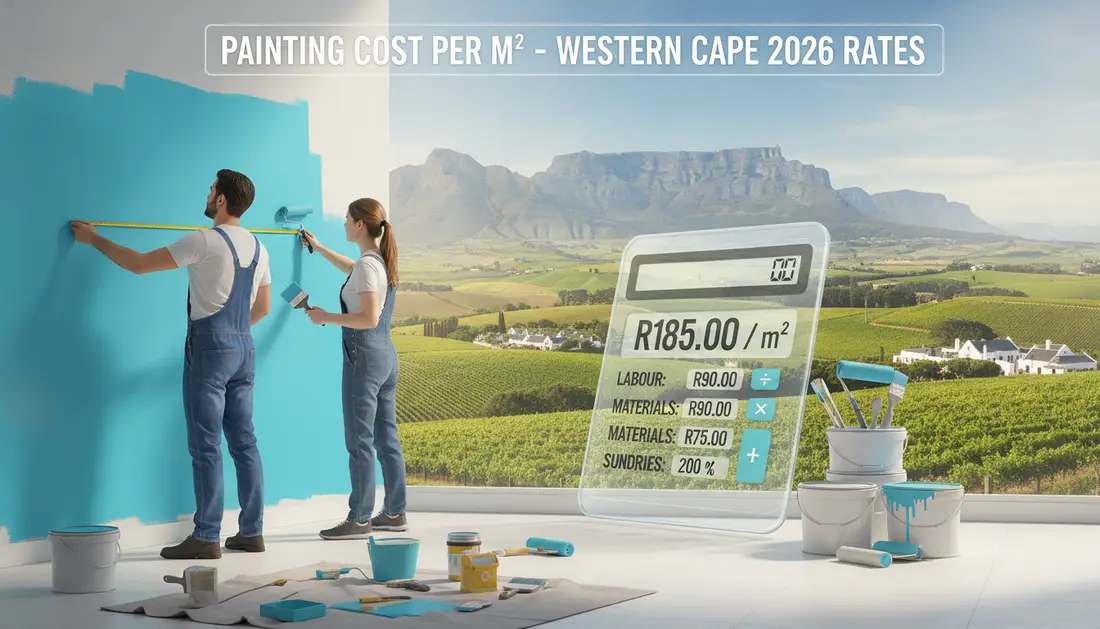
Our pricing guidance helps you navigate the local market before you request up to 3 quotes. We connect you with independent contractors who handle site visits and the actual work.
Market snapshots matter: industry surveys show interior work ranges from R63 to R100 per square metre. The South African coatings market continues to grow, signalling strong demand for quality finishes.
Use our guide to compare labour rates, materials and surface preparation. Confirm quoted hours, the number of coats and warranty terms in writing so you avoid surprises.
How much does painting cost per square metre in the Western Cape?
Understanding local demand helps you predict realistic prices for a typical room or full-house job; how provincial cost differences work explains why the Cape differs.
The regional market shifts with season and tourism. Labour availability rises in high season and that can push prices up for interior and exterior work.
Typical pricing for a standard room sits between R750 and R1,400 depending on scope and access. For labour only, South Africa ranges from approximately R40 to R100 per square metre.
Surface type matters. Rough or heritage walls need extra preparation and special paint selection. Roof work and exterior surfaces often add time and materials, which affects the final quote; what exterior painting costs per square metre sets the baseline.
- Size and area: larger houses usually benefit from scale but raise the total price.
- Preparation: patched walls or sanding increase labour and coats required.
- Quality: premium paint and extra coats improve durability and long-term value.
| Item | Typical Range | Notes |
|---|---|---|
| Standard room | R750 – R1,400 | Depends on access and wall condition |
| Labour (interior) | R40 – R100 / square metre | Does not include materials or special prep |
| Heritage preparation | Higher | May require specialist painter and materials |
Use our guide to compare up to three quotes, and weigh local rates against painting costs across the provinces. Confirm the number of coats, warranty and final services in writing so you get the quality finish you expect.
What affects painting costs in the Western Cape?
Your final quote depends on a handful of predictable site and material conditions. These factors determine how much labour, prep and product you will need for a quality finish.
Surface Condition and Preparation
Poor walls need extra work. Repairs, sanding and filling often add 10–20% to the overall project price.
Interior surfaces generally need more detailed prep than exterior work to achieve a smooth finish. Always ask for a written breakdown that shows prep work and any specialist repairs.
Paint Quality and Material Tiers
Budget-friendly paint starts around R60 per litre; premium options exceed R200 per litre.
- Higher-quality paint often covers better and needs fewer coats, which saves time and labour.
- Ceiling work typically adds R500–R1,500 per room — include this when you compare quotes.
- Labour for a standard room in South Africa can range from R1,000 to R6,000 depending on complexity and access.
Checklist before you accept a quote:
- Confirm the number of coats and brand of paint in writing.
- Ask for a separate line for prep work and repairs.
- Check whether roof, exterior surfaces or ceilings are included in the services.
Regional Challenges and Environmental Considerations
Seasonal inversion and salt-laden breezes make scheduling and material choice essential for durable results; painting prices in Cape Town reflects those coastal conditions.
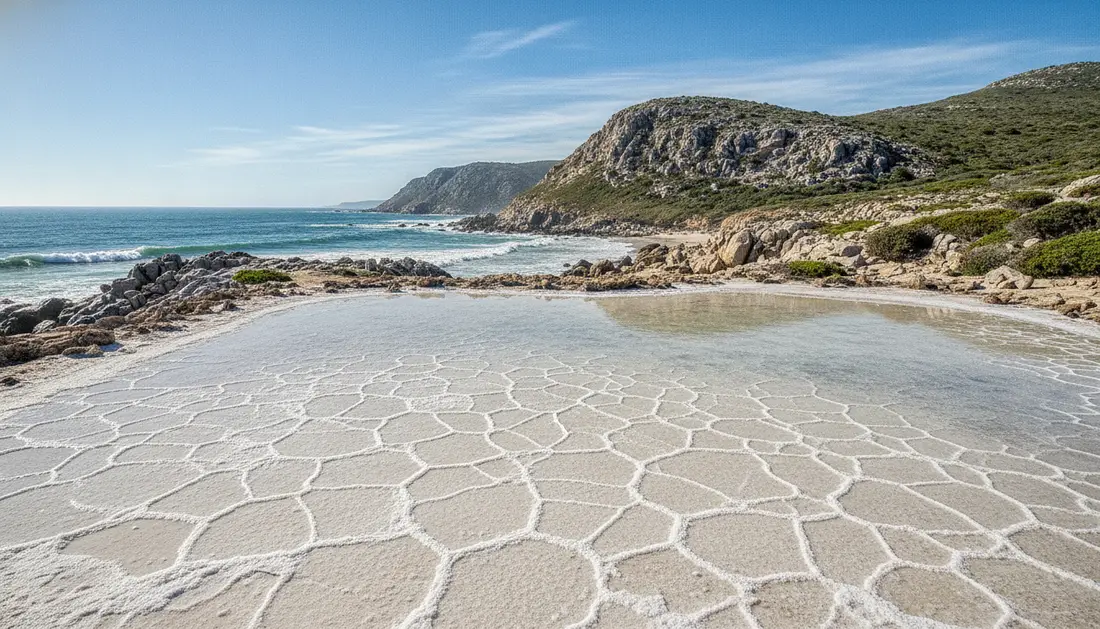
Western Cape Coastal Salt Cycles
Coastal salt cycles demand high-quality, salt-resistant paint for exterior surfaces to avoid premature wear; how long does exterior paint last in South Africa is shorter at the coast.
Proper preparation is vital: remove salt deposits from walls before applying new coats to ensure adhesion and longevity.
Heritage Home Requirements
Older houses often fall under stricter rules for types of paint and preparation methods.
Confirm approved products and methods with your local authority and ask a painter for documented compliance before work begins.
Wind and Weather Planning
Wind-day planning keeps the project safe and protects fresh finishes from debris and overspray; when to paint outside in South Africa helps with the Cape’s wet winters.
Scaffolding and access for high roofs add to labour and costs, and our guide factors these elements into local pricing estimates.
- The winter-rainfall inversion limits ideal days for exterior work.
- Salt-laden winds require durable products and extra prep.
- Ask contractors how they manage wind days and scaffold use when you request up to 3 quotes.
Comparing Professional Services and DIY Approaches
Deciding between a contractor and a DIY approach affects your budget and the long-term value of your house. Consider both immediate savings and future returns when you plan interior and exterior work.
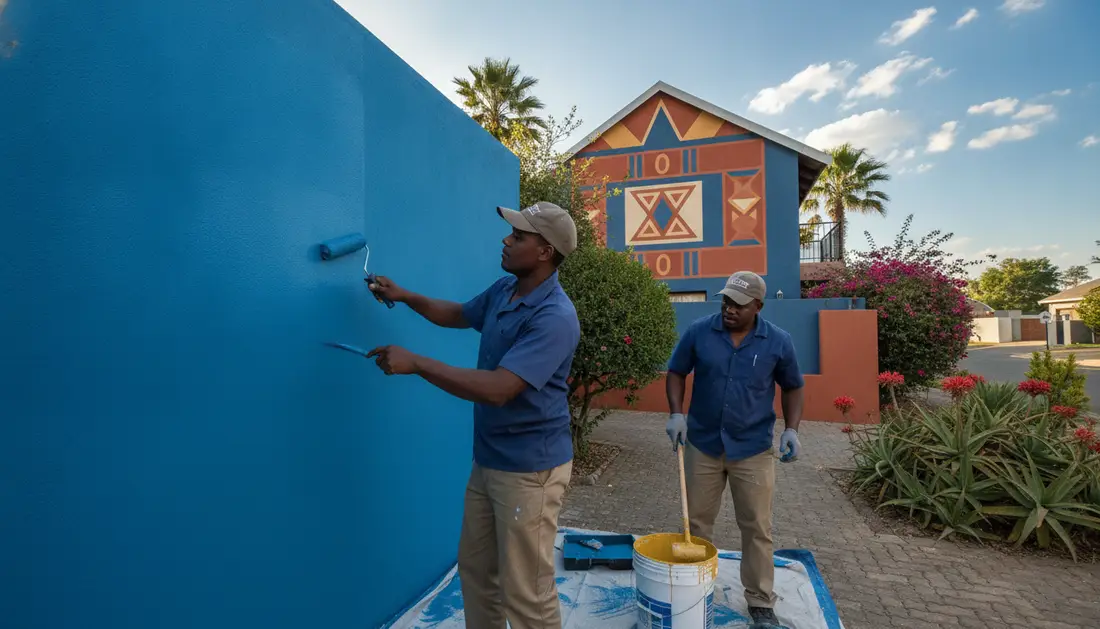
Long-term Value and Property Appreciation
Professional services in South Africa typically range from R150 to R500 per square metre depending on complexity. These jobs often come with a higher satisfaction rate and longer life span than DIY attempts.
“Professional work usually lasts longer and supports resale value, despite higher upfront prices.”
- Hiring skilled painters improves finish quality and can increase the market appeal of your home.
- DIY may save on labour today, but mistakes can add 10–25% to your total project costs later.
- Professionals finish a room in 1–3 days and have trade access to premium paint and tools.
- Request up to 3 quotes on our platform to compare long-term value against DIY risks.
| Criteria | DIY | Professional services |
|---|---|---|
| Upfront price | Lower (labour saved) | Higher (labour included) |
| Finish quality | Variable; risk of errors | Consistent; higher quality |
| Time to complete | Longer for non-experts | 1–3 days per room |
| Long-term value | May reduce resale appeal | Often adds market value |
Navigating Our Quote Request Process
Submitting project details online helps you receive up to three tailored quotes quickly.
How it works: complete the form with room sizes, surface condition and whether the job is interior or exterior. Add photos and a brief brief of any repairs needed.
Why accuracy matters: precise information helps contractors produce realistic prices and reduces the chance of surprise charges during site visits.
- Our process is simple and transparent so you can compare local painters and services.
- Independent contractors will visit the site to confirm final labour and paint requirements.
- Request up to 3 quotes to see current market prices and choose the best balance of quality and price.
- Always confirm the number of coats, warranty and the project timeline in writing before work starts.
What we do not do: we do not perform the work. We connect you with independent contractors across South Africa so you can evaluate painting costs and make an informed choice.
Essential Preparation and Maintenance Strategies
Simple, regular upkeep extends the life of exterior and interior finishes across South Africa’s varied climates.
Preparation starts with cleaning walls and repairing cracks so new paint adheres properly. Do this before any labour begins to avoid rework and higher painting costs later.
Interior paint normally lasts 5–10 years; exterior work often needs repainting every 3–7 years depending on exposure. Use 0.1–0.15 litres of product to cover one square metre for a single coat as a guide.
Reduce prices by doing simple prep yourself: move furniture, cover floors and wash surfaces. Ask the painter for a written maintenance plan when you request quotes through our platform.
- Always plan for at least two coats for even coverage and protection.
- Regularly wash exterior surfaces to delay repainting and protect the finish.
- Confirm recommended paint type for ceilings, walls and roof with your painter.
| Task | Frequency | Benefit | Estimated material use |
|---|---|---|---|
| Wall cleaning | Annually (exterior) | Removes salt and grime; improves adhesion | 0.02–0.05 L/m² |
| Minor repairs (cracks, holes) | Before every major job | Prevents flaking and uneven finish | Depends on area |
| Recoat | Interior: 5–10 years; exterior: 3–7 years | Restores protection and appearance | 0.1–0.15 L per coat / m² |
Final Thoughts on Achieving a Quality Finish
Delivering a lasting finish comes down to skilled trades, correct materials and careful prep. Aim for clear scope and a written brief so the painter understands the surface, the number of coats and any roof access needs.
Our guide helps you compare prices and estimate likely painting costs per square metre before you request a quote. Use paintingpricepersquaremeter.co.za to start with current market data in South Africa.
Request up to 3 quotes from independent contractors, confirm brands and warranty in writing, and plan simple prep tasks yourself to reduce risks. Good planning delivers a better finish and protects your long‑term value.
FAQ
What are typical painting rates per m² in the Western Cape for 2026?
Rates vary by job size, surface condition and finish. Expect lower-end interior jobs using economy paint to be cheaper, while high-end coatings, extensive prep or exterior work near the coast command higher rates. Request up to three quotes from local contractors to compare labour, materials and warranty terms.
Which key factors most influence your final price?
Major drivers are surface condition and preparation, number of coats, paint quality, access (scaffolding or height), and whether ceilings, trims or woodwork are included. Also factor in time for repairs such as rust removal, plaster patching or mould treatment.
How does surface condition and preparation affect the job?
Poor or damaged surfaces demand more prep: sanding, filling, priming and, sometimes, re-plastering. Prep time increases labour and materials. Always get written details on prep levels quoted and sample photos where possible.
Does using premium paint make a measurable difference?
Yes. Higher-tier paint gives better hide, longer life and improved resistance to fading and mould — important in coastal zones. It can raise upfront spend but lowers maintenance frequency and total lifecycle spend.
Are there extra charges for coastal properties in the Western Cape?
Properties near the ocean often need specialised anti-corrosive primers and more durable systems to tackle salt spray and humidity. Expect higher material and labour line items to reflect those treatments.
Do heritage homes need special attention and adds to the budget?
Heritage properties may require matched profiles, lime washes or specific paint types and council approvals. Specialists and longer lead times increase fees. Confirm any statutory requirements before work starts.
How should wind and weather be planned for when scheduling exterior work?
Painters avoid high winds and wet forecasts. Coastal wind can force temporary delays or require protective sheeting and additional fixing — which affects timing and price. Ask contractors about weather contingency plans in writing.
What are the pros and cons of hiring pros versus DIY for a full house?
Professionals deliver speed, finish quality and warranty cover; they handle prep, access and complex substrates. DIY saves on labour but can cost more if remedial work is needed later. For whole-house jobs, pro value usually outweighs short-term savings.
Will a professional paint job add value to my property?
A quality finish improves curb appeal and helps with resale. Neutral, well-executed schemes and durable coatings can increase buyer perception and reduce pre-sale repair requests, offering good return on investment.
How does your quote request process work and how many quotes can I request?
You may request up to three independent quotes, or up to five where available. Contractors conduct site visits, assess surfaces, specify materials and supply a final written quote with timelines and warranty details. Independent contractors handle all on-site decisions.
What should be included in a written quote to avoid surprises?
Ensure the quote lists scope (rooms, ceilings, trims), prep work, paint brands and colour codes, number of coats, access requirements, start and completion dates, exclusions, payment terms and any warranty offered.
How do I prepare my home before painters arrive?
Clear walls of pictures and furniture where possible, secure valuables, move potted plants and protect carpets. Confirm on-site parking and access. Contractors will usually handle masking, dust sheets and basic furniture protection.
What maintenance should I plan after completion to protect the finish?
Regular washing of exterior surfaces, prompt repair of leaks, and checking for mould in shaded, damp areas will prolong finishes. Keep touch-up pots of the exact paint for spot repairs; note the brand and batch on handover.
How long does a typical interior room job take from prep to finish?
A single average bedroom usually takes one to three days, depending on prep needs and drying times. Larger or multi-room projects have economies of scale but require staging to allow for drying and access.
Can contractors provide warranties and what should I verify?
Many contractors offer workmanship warranties; paint manufacturers offer product warranties. Verify the duration, what it covers, and any maintenance conditions required to keep the warranty valid.
Start with certainty