
South Africa Paint Calculator – How Much Paint Do You Need?
Litres, coats, and coverage maths from your wall sizes – with realistic SA spreading rates built in
Quick answer
R1 697–R2 074 paint cost17.1 L · 4 × 5L tins
Work out how much paint you need in South Africa – enter wall sizes, surface type and coats for litres required, with realistic spreading rates.
Instant estimate
Paint calculator — litres & tins
How much paint to buy: enter area and coats, pick the paint, and we work out litres, 5L tins and paint cost.
8 min read
On this page
How many litres will actually cover your living room and avoid costly overbuying?
Get a clear starting point. A typical living room wall project needs about 7.6 litres for two coats, so buying 8 litres is the safest option.
Manufacturer guidance recommends primers and undercoats to improve adhesion and secure a long-lasting coating system.
Our platform gives you the core data to estimate litres, the number of coats and area coverage for any room or exterior wall; browse all our cost guides once you know the quantity.
Use paintingpricepersquaremeter.co.za to access the tool and check how colour choice, doors, windows and the chosen system change the final finish.
Our website uses cookies for basic functions and we keep a strict privacy policy about how we handle your data.
Whether you tackle a single wall or whole-house work, this practical guidance helps you avoid excess while keeping enough colour for touch-ups; pair it with per-square-metre painting rates for the labour side.
How much paint do you need?
Start by measuring each wall’s height and length, then record doors and windows so your calculations match the real area.
Calculating Surface Area
To find the total surface area, enter wall lengths and height or the room’s total m² into the calculator; how do painters measure square metres explains the method. Subtract the area of doors and windows to avoid overestimating how much paint you need.
Include these inputs: wall lengths and height (or total m²), surface type (new plaster, previously painted, textured), number of coats, and the count of doors and windows.
Determining Spreading Rates
Check the product data sheets or labels for the theoretical spreading rate; paint and materials pricing turns litres into rands. This key data tells you litres per square metre and helps convert area into a reliable quantity.
- Measure each wall and enter the exact dimensions.
- Account for surface type; porous or textured walls usually require more coverage.
- Enter the number of coats to factor in colour and finish changes.
- Use the product’s spreading rate from the data sheet to calculate final litres.
What affects how much paint you need?
Surface condition, texture and how many coats of paint do you really need greatly change how much product you will need for a proper finish.
Accounting for Surface Condition and Porosity
Porous or rough surfaces absorb more and often need extra coating to reach an even colour and finish; sealing them with the right primer helps, as our plaster-primer guide explains. Corrugated iron and textured plaster will use more product than smooth new plaster.
A common rule for roof work is to add 40% to the footprint area to allow for pitch, corrugations and soffit overhang.
- Expect a third coat when covering a dark colour with a lighter colour; this changes the total volume.
- The chosen coating system, including primer and undercoat, alters how much you must buy.
- Always check the product data sheet for the manufacturer’s recommended number of coats and spreading rate.
“Porous substrates and complex shapes require more material to achieve a durable, even finish.”
| Surface Type | Adjustment | When to Add |
|---|---|---|
| Smooth new plaster | 0–10% extra | Standard interior walls |
| Porous/textured walls | 10–25% extra | Uneven or aged surfaces |
| Corrugated roof | +40% to footprint | Roofs, ridges and troughs |
What affects a professional painting estimate?
Contractors base final costs on site-specific factors such as surface condition, scope and design complexity.
Independent assessors will check access, prep needs and regional labour when they visit. They confirm surface area, dimensions and the number of coats before they quote.
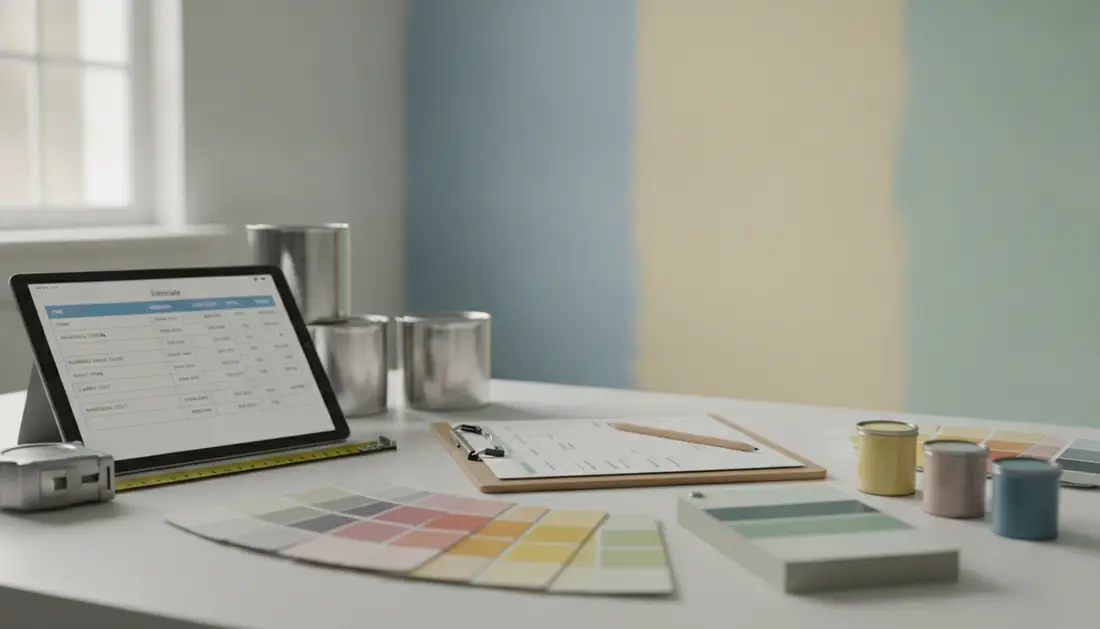
“A proper site assessment prevents surprises: access, prep and colour choice drive cost and time.”
- Our quote request process connects you with independent contractors who assess surface condition, prep work and labour to give accurate pricing.
- The total cost depends on scope, the type of product you choose and local labour rates in your region.
- Access (scaffolding or ladders) is a critical factor contractors consider when calculating final estimates.
- While the paint calculator gives a guide, professionals verify dimensions and surface requirements on site.
- Our policy ensures quotes come from independent contractors who manage timelines, warranties and the final work.
- When comparing quotes, confirm the number of coats and the colour system to avoid budget gaps.
Securing Accurate Quotes for Your Painting Project
Securing accurate quotes starts with good data and clear expectations.
You can request up to three quotes through our quote request process at paintingpricepersquaremeter.co.za to compare pricing from independent contractors in your region.
Provide precise project details — include the area, number of doors and windows, surface type and the number coats required. This helps contractors match product choices and prep work to your desired colour and finish.
Always confirm the terms of your agreement, including warranties and the specific paint system to be used, in writing before work begins. The final finish and longevity depend on the quality of the product and professional prep.
Our website uses cookies to improve guidance and ensure the quote process reflects real project data and local costs.
FAQ
What information do I need to use the Paint Calculator South Africa – Litres & Coats?
You’ll need the wall and ceiling dimensions (height x width), the number and size of doors and windows to subtract, the number of coats you plan to apply, and the product spreading rate in square metres per litre. Also note the surface type—plaster, concrete or timber—so you can allow for porosity and prep work.
How do I calculate the surface area for a room?
Measure each wall’s width and height, then multiply to get area. Add areas for the ceiling if needed. Subtract openings: doors and windows. For irregular shapes, split them into rectangles or triangles and sum the parts. Enter the total area into the tool to estimate litres required per coat.
How do I determine spreading rates for different products?
Check the product label or technical data sheet for the stated spreading rate (m² per litre). Manufacturers often give a theoretical rate and a practical rate. Use the practical rate for estimates—this accounts for normal application losses and surface texture.
How does surface condition and porosity affect the volume I need?
Rough, porous or new plaster will absorb more material. That raises consumption and may need a primer or sealer. Smooth, previously painted surfaces use less. Increase your litre estimate by 10–30% for highly absorbent or damaged surfaces, or include a dedicated primer coat.
How many coats should I allow for interior walls and ceilings?
Most interior jobs require two full coats after primer: one undercoat and one finish. Dark-to-light or big colour changes may need a third coat. For ceilings, one good undercoat plus a finish is common. Confirm with your chosen product’s coverage guidance.
What extra factors can change a professional painting estimate?
Labour rates, access and height, scaffolding or cherry picker needs, site preparation, repairs, masking and protection, special finishes, number of colours, and drying time windows all affect quotes. Local demand and contractor experience also influence final price per square metre.
How should I prepare surfaces before a contractor visits for a quote?
Clear furniture or move it to the centre and cover. Ensure easy access to power points and water. Note defects like cracks, damp or flaking paint and point them out. Accurate prep reduces surprises and gives contractors a realistic labour and material estimate.
Can I get multiple independent quotes through the platform?
Yes. You may request up to three independent painting quotes, or up to five quote options where available. Contractors will arrange site visits, final measurements, timelines and warranties. We don’t guarantee a specific number of quotes for every enquiry.
Which paint types affect how much product I need?
Emulsions, low-VOC and acrylics typically have different spreading rates. Higher‑quality, thicker finishes cover more evenly and may need fewer coats. Specialist products—eg. anti-mould or textured coatings—often have lower coverage and require more litres per square metre.
Should I include doors, skirtings and trims in my calculator totals?
Yes, if you intend to paint them. Measure each item separately or use standard sizes: a typical internal door is about 20m² for two sides combined. Use a separate spreading rate for timber primers and gloss finishes, which differ from wall emulsions.
How do I account for windows, sockets and cupboards when measuring?
Subtract the combined area of openings (windows, large built‑in cupboards) from the total wall area. For smaller items like sockets and small fittings, it’s simpler to leave a small contingency in your litres estimate rather than subtracting each one.
What should I confirm in writing before you order paint and start?
Request a written quote that lists scope of work, products and colours with brand names, number of coats, preparatory repairs, start and completion dates, total cost and payment terms, and any warranty details. Confirm access arrangements and who supplies materials.
How much extra product should I buy to allow for mistakes or touch-ups?
Buy an extra 5–10% of the calculated volume for touch‑ups and future repairs. For large or complex projects, keep a labelled can of each colour and batch number so touch‑ups match later on.
Do factors like weather and humidity change the amount I’ll need?
Yes. High humidity or cold slows drying and may increase product usage if coats need to be heavier. Exterior work is more affected—allow for extra labour and possible re‑coats if conditions are poor during the project window.
Where can I find reliable product data for accurate calculations?
Use the manufacturer’s technical data sheet available on the brand’s website (eg. reputable paint brands). These sheets give recommended spreading rates, recommended coats and application notes—essential for accurate litre estimates.
Related painting cost guides
Ready to compare?