
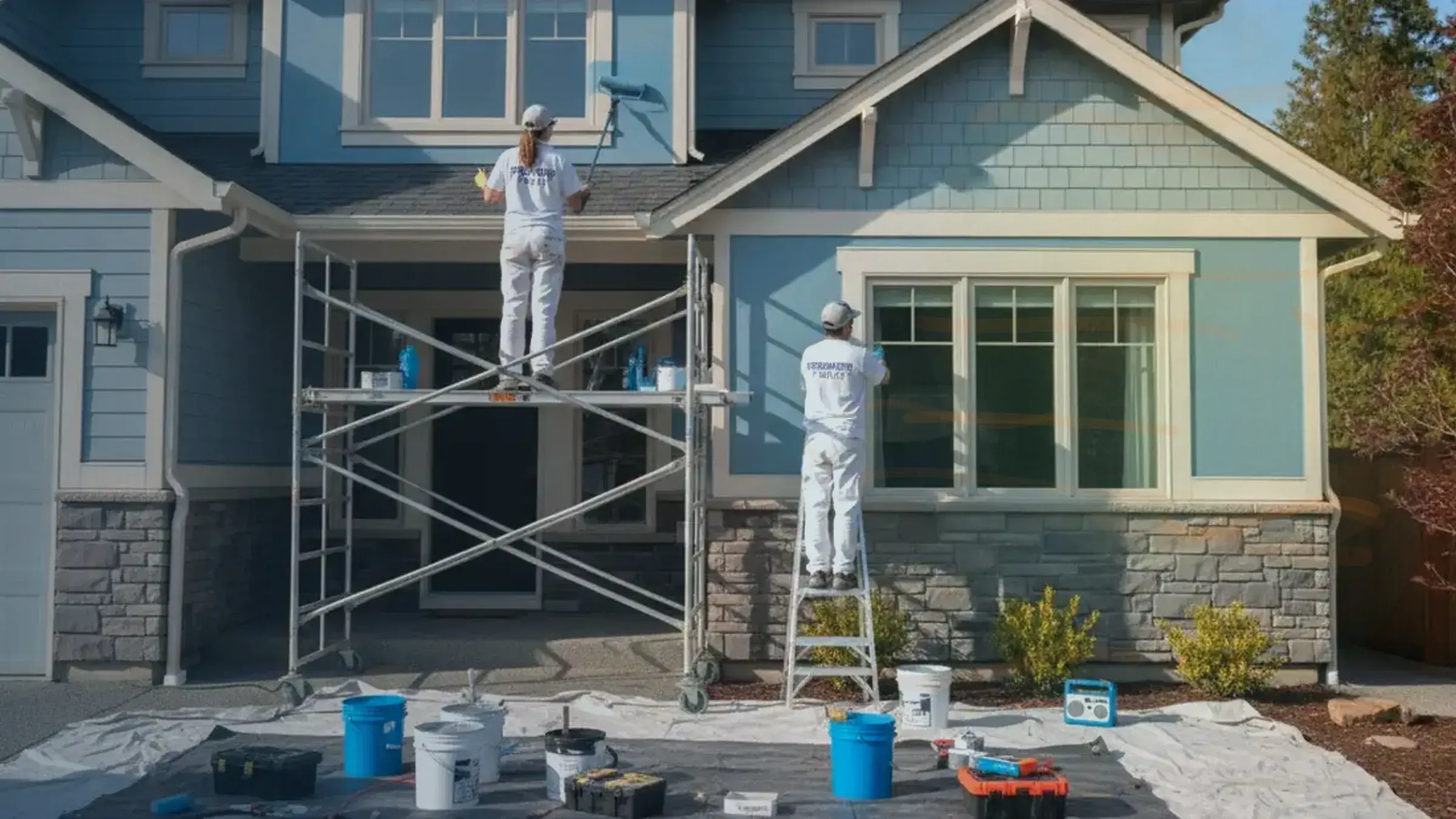
Painter Daily Rates in South Africa
Day rates for qualified painters and assistants – what a fair daily price buys, and when day rates beat m² quotes
Quick answer
R5 780–R7 820 labour total2 painter(s) · 4 day(s)
Painter daily rates in South Africa – fair day rates for qualified painters and assistants, what a day's output looks like, and when day rates beat m².
Instant estimate
Painter day-rate calculator
Estimate a labour-only job billed by the day: number of painters, days on site and the day rate.
9 min read
On this page
Painter daily rates South Africa are a key starting point when you want a clear picture of price and value for a project.
If you plan to refresh a 3‑bedroom house, expect typical painting costs of roughly R30,000 to R45,000 depending on prep work, paint quality and access.
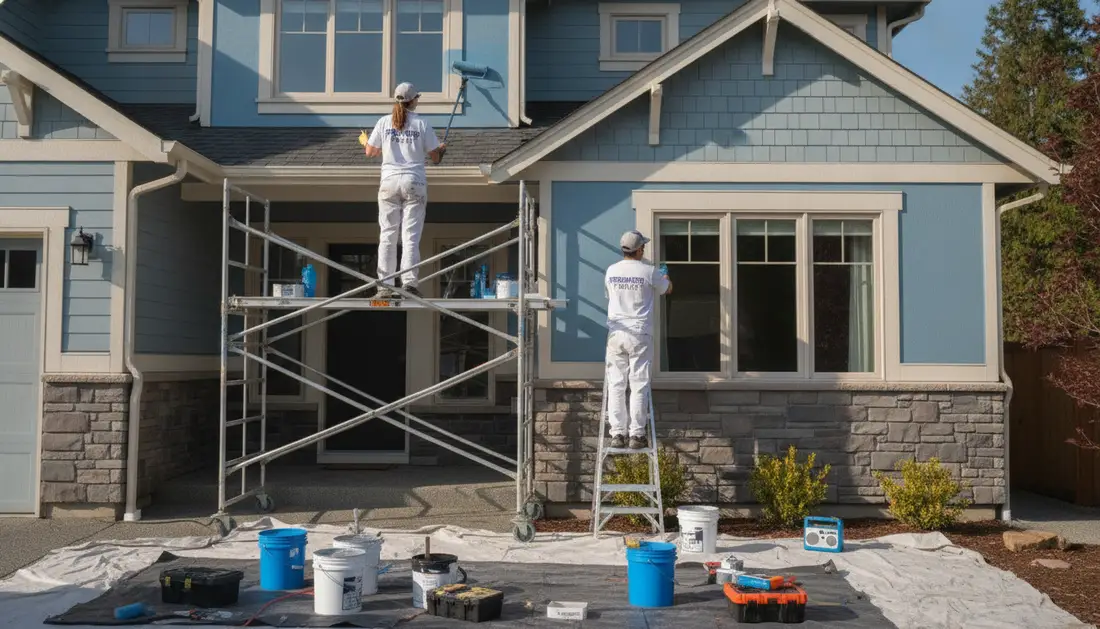
Our platform gives straightforward pricing guidance so you can compare labour and material costs with confidence. Visit paintingpricepersquaremeter.co.za for transparent data and per square metre examples.
Will you settle for the first quote, or will you use clear figures to negotiate a fair price? We connect you with independent contractors who specialise in interior painting and exterior painting, so you can manage total costs and check warranties before work begins.
How much do painters charge per day in South Africa?
Knowing local market norms makes comparing painting quotes much easier. Start by separating a defined daily charge from per square pricing. Some contractors work per square metre, others set a day rate that reflects crew size and site complexity; browse all our cost guides to see how both fit the bigger picture.
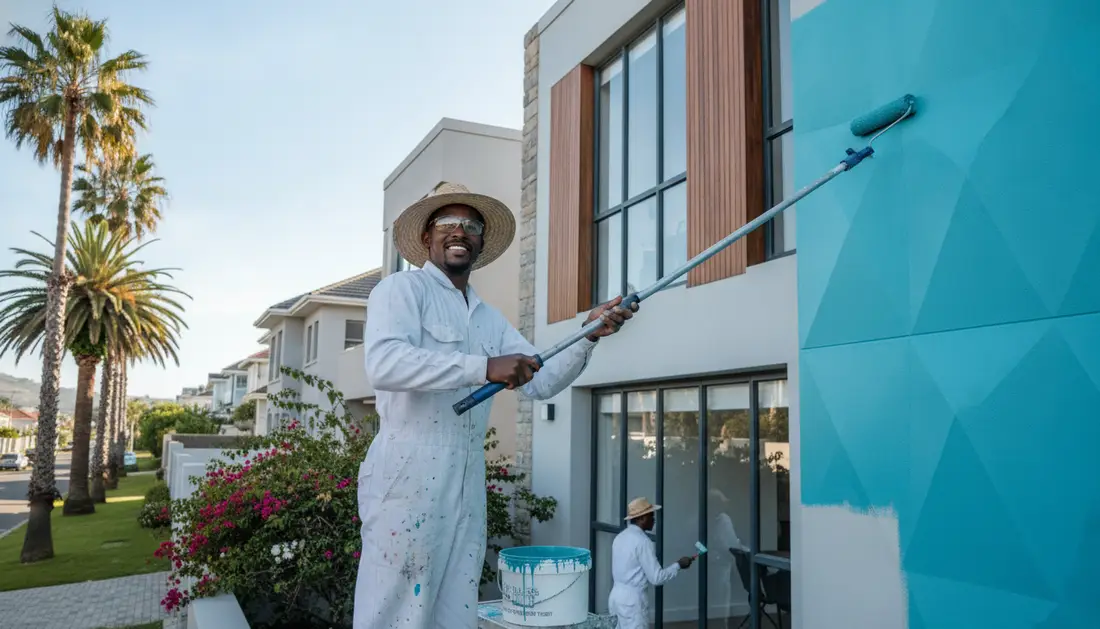
Defining the Daily Rate
Labour typically sits between R450 and R900 per hour — see what painters charge per hour for small jobs. That range drives final day prices and will change by region.
Regional Price Variations
Major urban centres often carry higher prices than smaller towns. Expect different price structures in Johannesburg compared with rural areas.
- Our pricing guidance notes a standard apartment can take 3–5 days of active work.
- Contractors may charge per square or per room depending on size and surface type.
- Textured walls, access issues or roof painting add preparation time and cost.
- Using a good primer and quality paint can extend interior finishes to 3–5 years.
Confirm in writing what preparation is included so you can compare true costs across quotes.
Day rate or per-square-metre — which works out cheaper?
Compare square metre pricing with time-based quotes to see which approach gives better value; per-square-metre or per-day pricing weighs them up.
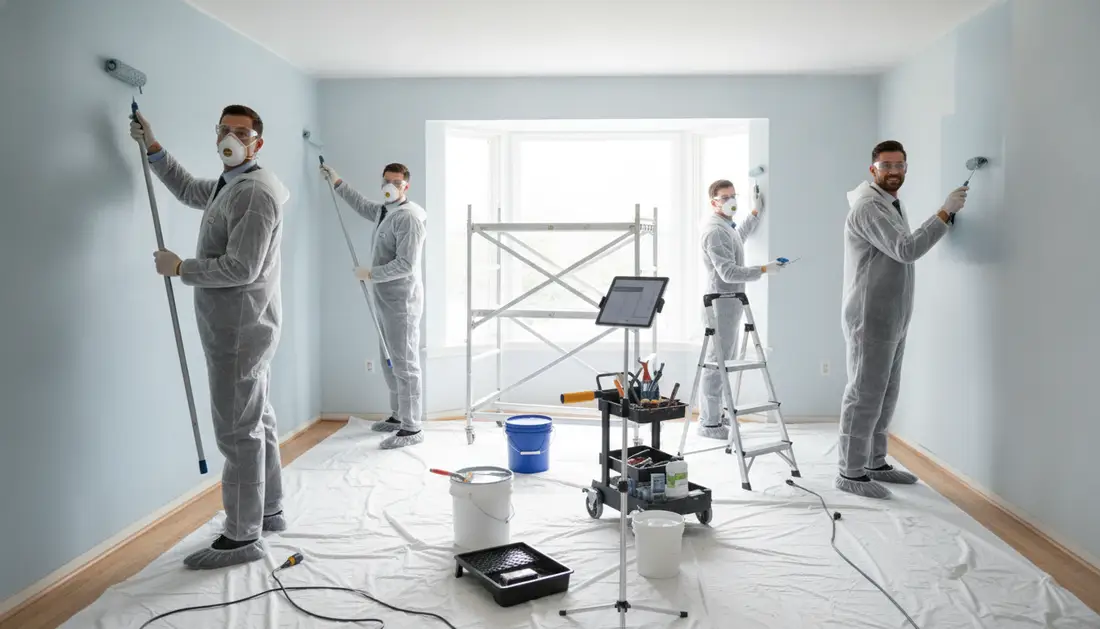
Interior painting commonly lands between R63 and R100 per square metre. That figure usually includes both labour and paint, so it is a useful baseline for standard wall work.
Exterior work is often quoted as labour-only between R50 and R100 per square metre; labour-only per-m² pricing covers that model. You will generally buy the paint separately for exterior surfaces.
Roof painting in South Africa typically follows the same R50–R100 per square metre band, with variations for pitch and material.
- Use our quote request process to compare how contractors break down costs for interior and exterior work.
- Square metre pricing suits a large house or open-area work; an hourly or site rate can be fairer for a small room with many windows.
- Always ask for an itemised quote that separates labour, paint type and the number of coats.
| Work type | Typical cost per m² | Includes |
|---|---|---|
| Interior painting | R63–R100 | Labour + paint |
| Exterior painting (labour) | R50–R100 | Labour only |
| Roof painting | R50–R100 | Labour (depends on pitch) |
What affects a painter’s day rate?
Small differences in surface condition and access often drive most of the final painting cost. These operational factors decide how much labour, time and product you will need. Read each heading and check what to confirm in writing.
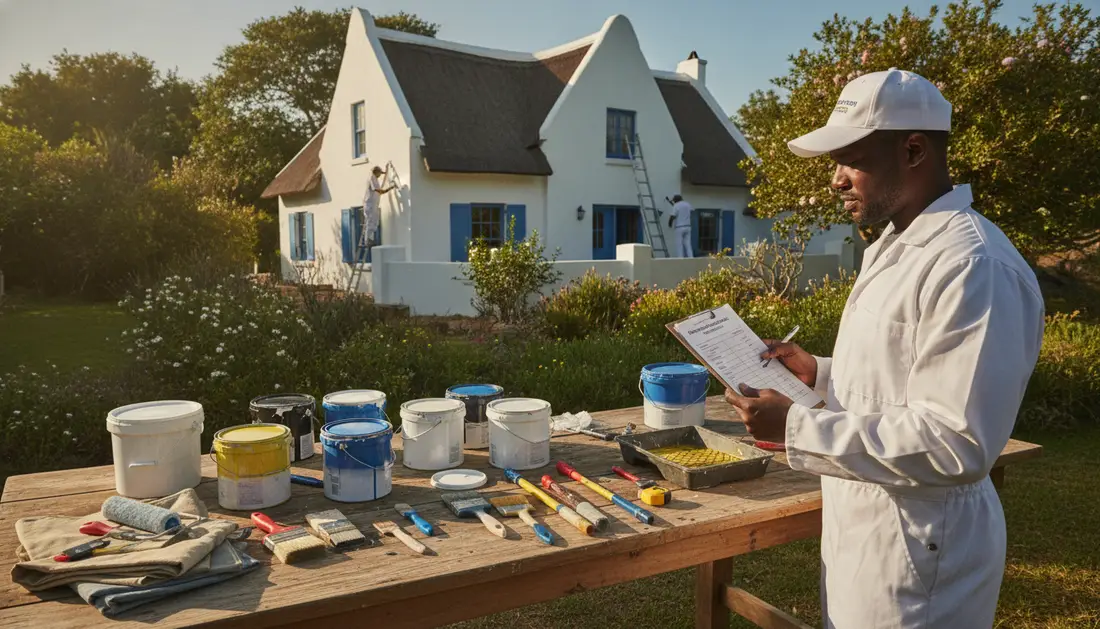
Surface Condition and Prep
The condition of your walls and other surfaces is a primary cost factor. Cracked plaster, flaking paint or stains require sanding, filler and a quality primer before any top coat.
Proper preparation prevents peeling and extends the life of the finish. Spending on prep now saves money over time by reducing repaint frequency.
Paint Quality and Type
Choosing a premium paint adds to upfront price but lowers long‑term costs; labour vs paint on a job shows how the split moves. Exterior coatings applied correctly should last between 5 and 7 years with UV‑resistant products.
Always agree the brand and number of coats with contractors. Two coats is standard for an even finish; specialised jobs may need more.
Access and Height Requirements
Scaffolding, lifts or extra safety gear increase labour hours and the cost per square metre. Complex architectural features in a room also take longer than large flat areas.
Confirm hourly or cost per metre assumptions in the quote so you know what influences final price and time on site.
Property Preparation and Supply Responsibilities
Agreeing supply responsibilities up front avoids delays and unexpected extra costs on site. Clarify who will supply paint, primer and protection for floors and furniture before work begins.
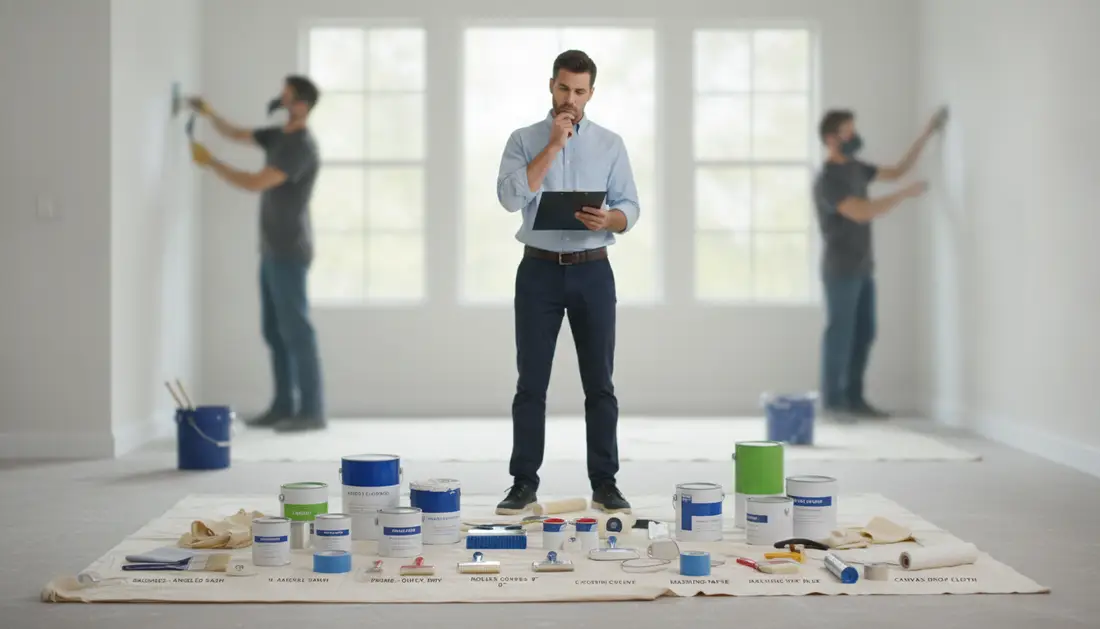
Material supply norms differ by project. For a 185 m² house plan on 90–110 litres for interior walls and ceilings. Buy an extra 10% to cover touch-ups and future colour matching.
What to confirm in your quote
- Who supplies the paint and primer and the agreed brand and type for specific surfaces.
- Whether brushes, rollers, drop sheets and scaffolding are included or provided by you.
- Who handles wall preparation such as cleaning, filling cracks and sanding.
“Clear supply terms keep the project on time and within the agreed price.”
| Item | Typical responsibility | Why it matters |
|---|---|---|
| Paint & primer | Owner or contractor (confirm) | Affects cost, finish and matching for later touch-ups |
| Preparation | Contractor (usually) | Proper prep extends the life of the coat and reduces future costs |
| Consumables (rollers, sheets) | Specify in quote | Prevents on-site confusion and delays |
Securing Professional Results Through Our Quote Request Process
Secure a clear, itemised quote to avoid surprises and to compare true painting prices for your home. Use our quote request process to connect with experienced independent contractors across South Africa.
Visit paintingpricepersquaremeter.co.za to start and receive up to three quotes from local professionals who understand size, surface condition and paint type. Compare how each quote breaks down labour, materials and time so you can judge value, not just the lowest price.
Always confirm the full scope of work, the exact paint brand and any provided warranties in writing before work begins; knowing what separates an estimate from a quote helps you read each one. A reliable painter will supply an itemised quote that reflects room size, walls and access factors, helping you protect your money and your property for years.
FAQ
What is a fair painting daily rate in South Africa and how does it relate to pricing per square metre?
A fair daily rate depends on location, complexity and experience. Many contractors quote either a day rate or a price per square metre. Day rates suit small jobs or where access and setup take time; square metre pricing suits whole-room or whole-house work. Always compare total quotes (labour plus materials) and ask for the assumed number of coats and surface prep included.
How do you define a daily rate for painting and what should be included?
A daily rate is the contractor’s charge for one worker for a standard workday. It should cover labour, basic tools, and on-site time. Confirm if the quote includes primer, number of coats, minor filler work, clean-up and VAT. If materials or specialised equipment are needed, these should appear as separate line items.
Why do painting prices vary by region and suburb?
Prices reflect local demand, cost of living and contractor overheads. Urban centres like Cape Town, Johannesburg and Durban often have higher labour and material costs than smaller towns. Travel distance, site access and peak-season demand will also affect the final price.
Is it better to pay per square metre or by the day?
Choose per square metre for predictable, larger projects where surfaces are uniform. Choose day rates for patchwork, repairs or jobs with hard-to-quantify access issues. Request both types of quotes when possible so you can compare total project costs.
How does surface condition and preparation affect cost?
Poor surfaces need extra prep: sanding, filler, mould treatment, rust removal or re-plastering. Prep can double labour time in some cases. Always have contractors inspect the site so you get a quote that reflects the real condition and required primer work.
How much does paint quality change the overall price?
Premium paints cost more upfront but often need fewer coats and last longer, reducing lifetime costs. Expect higher material costs for brand-name acrylics, low-VOC paints or specialist exterior coatings. Ask contractors to quote comparable brands so you can compare like for like.
What impact does height and access have on price?
High walls, multi-storey façades or difficult rooflines require scaffolding, cherry-pickers or extra safety measures, which increase cost. Include equipment hire, operator fees and additional labour time when evaluating quotes for elevated work.
Who normally supplies materials and who is responsible for ordering?
Practices vary. Some contractors supply paint and materials (added to the invoice), while others expect the client to buy specified products. Confirm who orders, who stores materials onsite and whether material guarantees apply. Get brands and quantities listed in writing.
What should I confirm in writing before a day-rate job starts?
Ensure the quote lists scope, number of coats, paint brands, primer use, surface prep, labour structure (per day or per m²), start and completion dates, warranty terms and payment schedule. A clear written quote avoids disputes and makes final comparisons straightforward.
How many quotes should I request and how does your platform help?
Request up to 3 quotes, or up to 5 where available, from independent contractors to compare pricing and scope. Our platform helps you collect these quotes but contractors handle site visits, final pricing, timelines and warranties. Use the quotes to check consistency on materials, coats and prep.
How long does a typical interior room paint job take?
A standard 3–4 metre room with two coats and minimal prep can take one to two days for a two-person team. Rooms needing patching, new skirtings or multiple colours take longer. Timing depends on drying time between coats and any required primer.
Are warranties and guarantees common for painting work?
Many reputable contractors offer a workmanship warranty ranging from one to five years, depending on the job and paint used. Material manufacturers provide separate guarantees. Confirm both types in your written quote and keep receipts and brand details for any claim.
How do labour-only quotes differ from full-supply quotes?
Labour-only quotes cover the cost of the crew and their time. Full-supply quotes include labour plus paint, primers and sometimes minor materials. Labour-only can be cheaper initially but requires you to source correct materials and manage deliveries.
What replacement or repair work commonly increases costs?
Replastering, timber rot repair, rust treatment on metal, replacing skirting or extensive filler work all add time and materials. These repairs should be itemised separately so you know what is repair work versus standard painting.
How should I budget per square metre for interior and exterior painting?
Budget varies by region, surface condition and paint quality. As a guide, expect lower per m² costs for simple interior walls and higher rates for textured exteriors, trims and specialised coatings. Use site inspections and multiple quotes to refine your budget for your specific property.
Related painting cost guides
Ready to compare?