
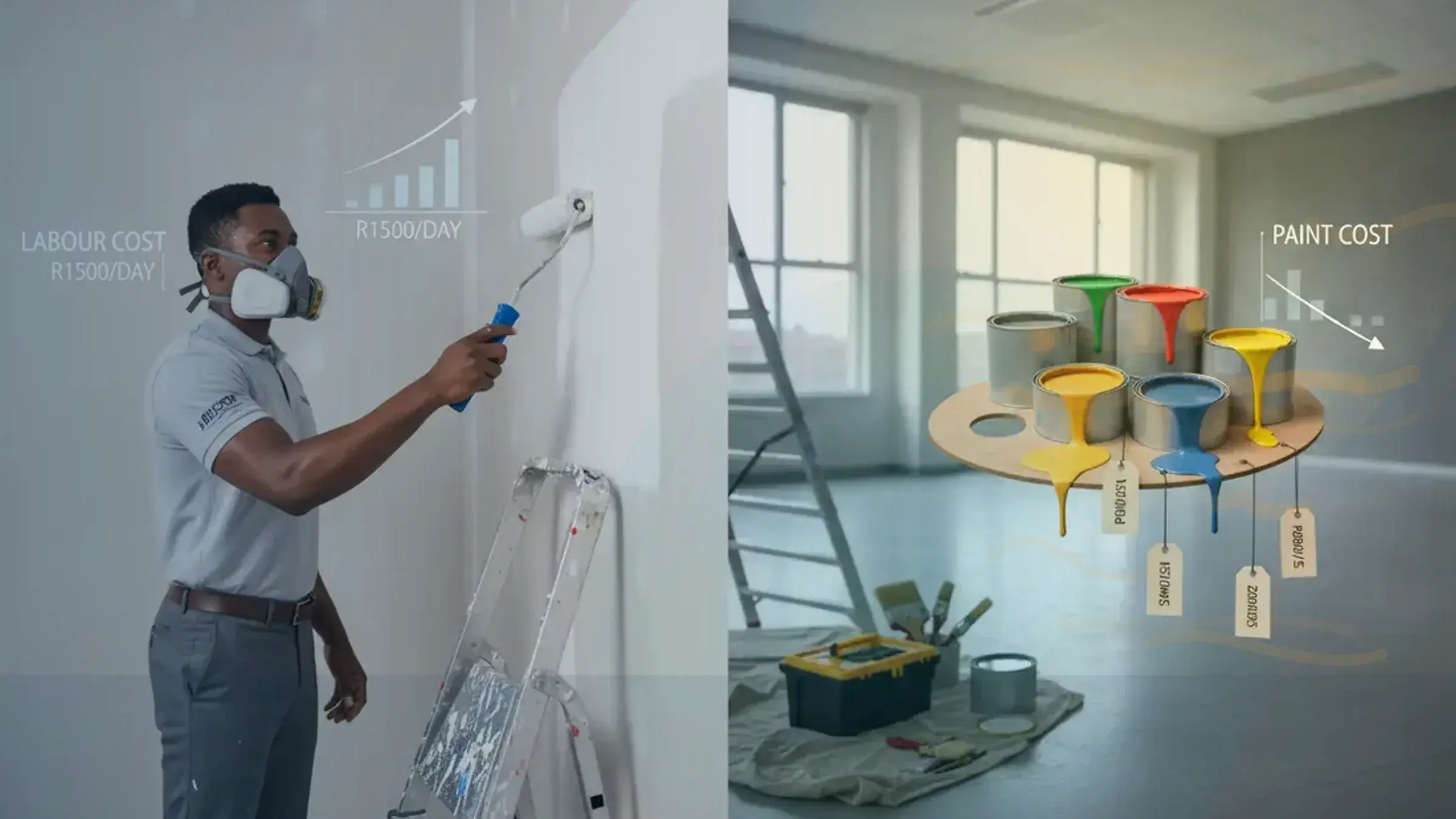
Labour vs Paint: Which Costs More on a Painting Job?
On most repaints the hands cost more than the tin – and prep hours are the reason
Quick answer
Labour vs paint – which really costs more on a South African painting job, why prep hours dominate, and when premium paint shifts the balance.
11 min read
On this page
Painting labour vs paint cost in South Africa is a critical factor for your renovation budget. Which of the two eats your money faster: the job itself or the materials?
Our platform gives clear per square metre figures so you can plan with confidence. Interior work typically runs between R63–R100 per square metre, while exterior labour-only ranges from R50–R100 per square metre. Roof painting sits in the same band of R50–R100 per square metre.
Visit paintingpricepersquaremeter.co.za to request up to three quotes from independent contractors. We connect you with local professionals and show the split between materials and fees so you can compare quotes and quality.
Ready to decide whether materials or services will take most of your budget for your house? This guide will help you compare prices, assess surfaces and choose the right number of coats to protect your walls for years to come.
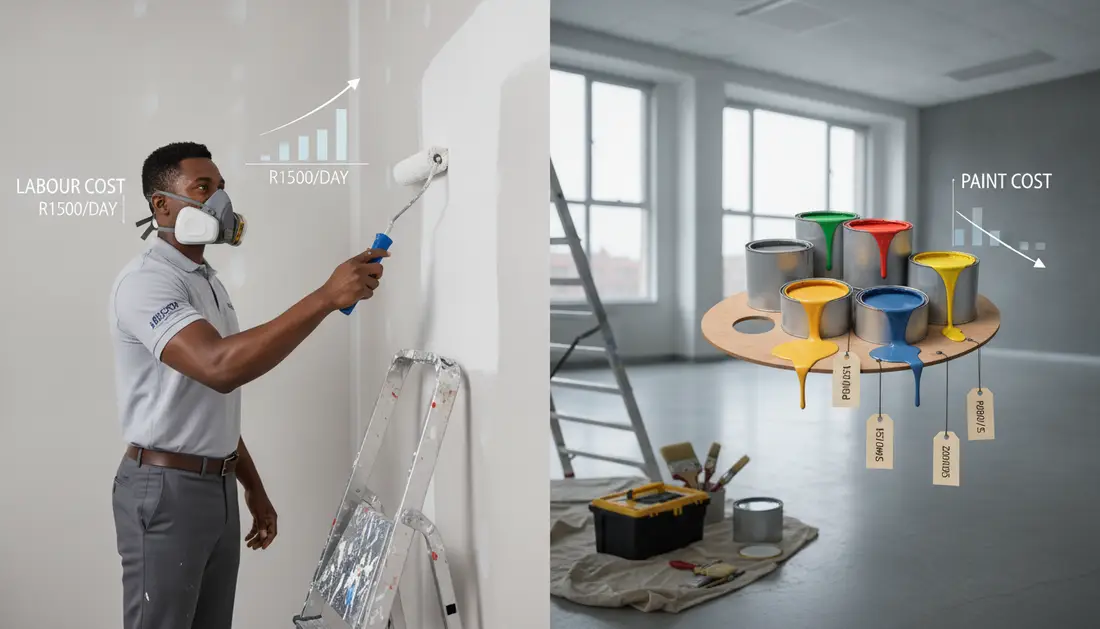
Understanding the Painting Labour vs Paint Cost Dynamic
Knowing how time and materials split on a quote makes it easier to compare painters in South Africa.
Professional painters typically charge between R450 and R900 per hour. That rate usually excludes materials, so the hourly fee can quickly become the biggest part of your bill.
A home’s size and the type of surfaces being prepared affect the final price; labour-only painting cost per square metre isolates the fees. Rough walls, high ceilings or a roof require more time and specialist access, which raises the labour portion.
Many contractors provide a clear breakdown per square metre, including paint and material costs. This shows you the cost per coat, the number of coats recommended and the material coverage for interior and exterior work.
Before a job starts, confirm the scope, timeline and any warranties in writing. Use our platform to request multiple quotes so you can compare how different teams structure their prices and services.
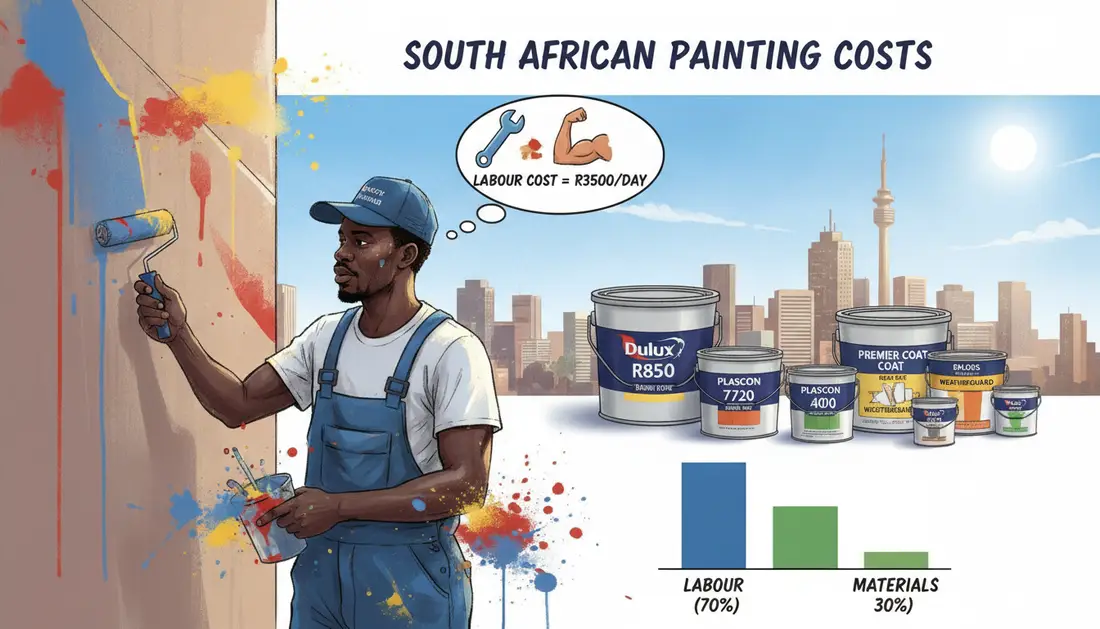
Current Market Trends for South African Home Renovations
Across South Africa, regional trends are reshaping how homeowners plan for renovation work.
Gauteng shows higher averages: expect about R800–R1,500 per room for professional interior services, depending on room size and surface condition.
Regional Price Variations
Urban areas command higher rates because demand, access and service availability push prices up; our painting guides explain regional differences. Rural areas tend to be cheaper but may have limited options for specialised surface work.
When you request quotes through our platform, you will see how rates vary by area and by the type of work required.
Economic Factors Impacting Costs
Rising raw materials and transport prices increase the overall bill for a quality job. The size of your house, the complexity of surfaces and the number of coats needed are all cost drivers.
“Confirm the exact type of paint and the number of coats in writing before work starts.”
- Compare quotes for interior and exterior work to spot regional differences.
- Check that professional painters list materials, time and guarantees in the quote.
- Use size, surface type and access as the basis for fair comparisons.
Analysing the Split Between Materials and Professional Labour
Deciding between material quality and time on site affects your final quote.
Material tiers have a clear impact on budgets. Budget cans sit around R60–R80 per litre, mid-range at R100–R150 per litre and premium ranges R180–R250 per litre. Higher-grade products usually cover more square metres per litre and often need fewer coats, which reduces time on site and the overall bill for services.
When you get quotes, ask contractors to specify the exact type and brand of product and the expected coverage per square metre. Confirm whether primer and top coats are included. That detail makes it easier to compare per square pricing between teams in South Africa and to judge long-term value.
Professional painters commonly recommend premium interior or exterior options for high-traffic rooms and exposed walls or roofs. While materials may raise the upfront price, they can lower rework and touch-up needs over time.

- 50/50 split: Materials and time often share the bill, but quality shifts the balance.
- Fewer coats: Premium materials can cut coats and save on time.
- Quotes: Insist on a written breakdown of products, coverage and services.
Why Surface Preparation Dominates the Project Timeline
The state of your walls drives most of the work before a single brush stroke is applied. Poor surfaces lengthen the schedule and raise the final bill.
Surface preparation commonly adds 10–20% to the total price. Cleaning, sanding and filling take time but stop defects from returning once the new coat cures.
Whether you are updating an interior room or restoring an exterior wall or roof, the surface type dictates how much labour is needed. The size of the area and the repairs required will show up in the quote per square metre you receive.
Skip these steps and you risk a poor finish that peels, stains or needs touch-ups sooner. Discuss the exact scope of preparation with your painter and get it in writing.

- Find contractors who list prep tasks and time estimates in their quote.
- Confirm whether primer, fillers and repairs are included.
- Ask for a breakdown per square metre so you can compare services and price.
| Common Prep Task | Typical time (per square metre) | Typical add to price |
|---|---|---|
| Cleaning & dust removal | 0.05–0.1 hr | +2–4% |
| Sanding and smoothing | 0.1–0.2 hr | +3–8% |
| Filling cracks & repairs | 0.15–0.4 hr | +5–12% |
| Priming (where required) | 0.05–0.15 hr | +2–6% |
Use this guide to check quotes from independent painters across South Africa. Investing time in preparation is the best way to secure a high-quality result that lasts.
Key Levers That Influence Your Final Quote
Small choices in surface finish and access can shift a final quote more than you expect. Recognising the main levers helps you compare offers and avoid surprises.
Impact of Surface Texture
Textured finishes are a major driver of price. Expect specialist work and additional materials when textures are involved.
Textured finishes typically range from R80–R250 per square metre, depending on complexity and coverage. That range affects both materials and time on site.
Accessibility and Height
High walls, a steep roof or confined areas need extra safety equipment and more time. Exterior work at height raises the effort and the final fee.
Colour Selection and Complexity
Switching from dark to light on an interior wall often requires more coats and primer. Multiple colours or intricate patterns add steps and extend the schedule.
“Always ask contractors to list special requirements for textured or hard-to-reach areas in the written quote.”
- Tell painters about high ceilings or tricky exterior areas when you request quotes.
- Ensure the final quote includes prep, coatings, materials and access requirements.
- Use this guide to weigh quality against price when comparing offers across South Africa.
Professional Services Versus DIY Approaches
Choosing a pro or tackling the job yourself changes the result and the time on site. In South Africa, professional teams deliver a higher finish for complex interior and exterior surfaces. They also manage roofs and high walls safely and quickly.
Professional painters report consistently high customer satisfaction. That reflects consistent prep, correct number of coats and use of appropriate materials. A skilled painter reduces rework and protects your house over the long term.
- Pros save time and minimise disruption to your home.
- Quotes often include warranties that guard against early failure.
- Costs per square should list materials, labour and expected coats.
- DIY may lower upfront price but can increase long‑term costs and repairs.
“Always confirm the scope, materials and guarantees in writing before work begins.”
Use our platform to request reliable quotes from independent contractors. Compare the written quote, check references and choose the option that balances price, quality and peace of mind.
Final Considerations for Your Upcoming Painting Project
A clear written quote that lists materials, coats and warranties will save you time and money later. Check that the document shows the per square breakdown and names the exact brands to confirm quality.
Request multiple quotes so you can compare price, workmanship and the number of coats recommended for interior walls or an exterior roof. Factor in surface repairs and safe access when you assess a final figure and the expected lifespan.
Before work begins, confirm the type of paint and any warranties in writing. For reliable local quotes, visit paintingpricepersquaremeter.co.za to request up to three independent estimates and choose the option that best protects your home.
FAQ
What generally costs more on a house job in South Africa — labour or paint?
Labour often takes the larger share of a quote for a full house job, especially where prep work, repairs and multiple coats are needed. High-quality paint raises material spend, but professional teams, access requirements and time on site usually make up the bigger portion of the final price.
How do regional price variations affect quotes across South Africa?
Major centres like Johannesburg, Cape Town and Durban usually show higher hourly rates and call-out fees than smaller towns. Travel, local demand, and building norms influence regional pricing, so always compare at least three contractor quotes from your area.
Which economic factors are currently driving painting prices in South Africa?
Exchange rates, fuel prices, and raw-material inflation affect paint prices and logistics. Labour supply and building activity also change contractor availability and rates. Expect periodic adjustments rather than fixed national tariffs.
How does material quality change the per-square-metre spend?
Budget emulsions cost less but need more coats and rework. Mid-range products provide better coverage and durability; premium brands (reputable paint brands) cost more up-front but can reduce repaint frequency and maintenance spend over years.
Why does surface preparation take so much time and money?
Prep includes cleaning, sanding, fixing cracks, rust treatment, and priming. Poor substrate work causes premature failure, so contractors quote for this essential labour. For older homes or damaged façades, prep can dominate the schedule and invoice.
How does surface texture affect my final quote?
Rough or highly textured walls need more material and slower application, increasing time and product use. Smooth plaster is quicker to coat. Ask contractors to inspect surfaces so they can price accurately for texture-related work.
What impact does access and height have on pricing?
Elevated work needs scaffolding, cherry-pickers or rope access, which adds equipment hire and safety costs. Single-storey homes are cheaper than multi-storey properties. Confirm how contractors will access all areas and whether scaffold costs are included.
Does colour selection change the number of coats required?
Yes. Strong or dark colours over light backgrounds often need extra coats or a colour-bias primer to achieve uniform coverage. Contractors may charge per coat or per square metre; clarify the number of coats included in the written quote.
When is it better to hire professionals rather than do it yourself?
Hire professionals for large areas, exterior façades, high-access jobs, or when structural repairs and warranties are required. Professionals deliver speed, correct preparation, and guarantees. DIY can suit small rooms and touch-ups if you have time and the right tools.
What should I check in writing before work starts?
Confirm total price, scope of work, number of coats, brands and product names, surface preparation details, access arrangements, start and completion dates, waste disposal, and warranty terms. Ensure the contractor is a registered business with local references.
How many quotes should I request and why?
Request up to three quotes, or up to five where available, to compare scope, product choices and timelines. Multiple quotes reveal market rates and help you spot under- or over-pricing. Independent contractors will make final site visits to confirm costs.
How do roof coatings or specialised exterior treatments influence the budget?
Roof coatings, waterproofing and anti-corrosion treatments require specialised materials and access methods, increasing both material and labour elements. These services often need health-and-safety measures and can be quoted separately from wall work.
Can contractors provide cost per square metre estimates?
Many contractors give per-square-metre rates for straightforward interior walls. For exteriors, textured surfaces or jobs with prep and repairs, site inspection is necessary for accurate per-metre pricing. Ask for breakdowns showing material and labour elements.
How long should a typical interior room take to complete?
A standard bedroom with good access and minimal prep typically takes one to two days for two coats, including drying time. Larger or more complex rooms, or those needing repairs, will take longer. Confirm the expected timeline in the quote.
What local brands are commonly recommended for durability in SA climates?
Reputable paint brands are popular in South Africa for their weather-resistant and interior ranges. Discuss product choices with contractors; the brand and product line influence coverage, warranty and long-term maintenance costs.
Related painting cost guides
Ready to compare?