
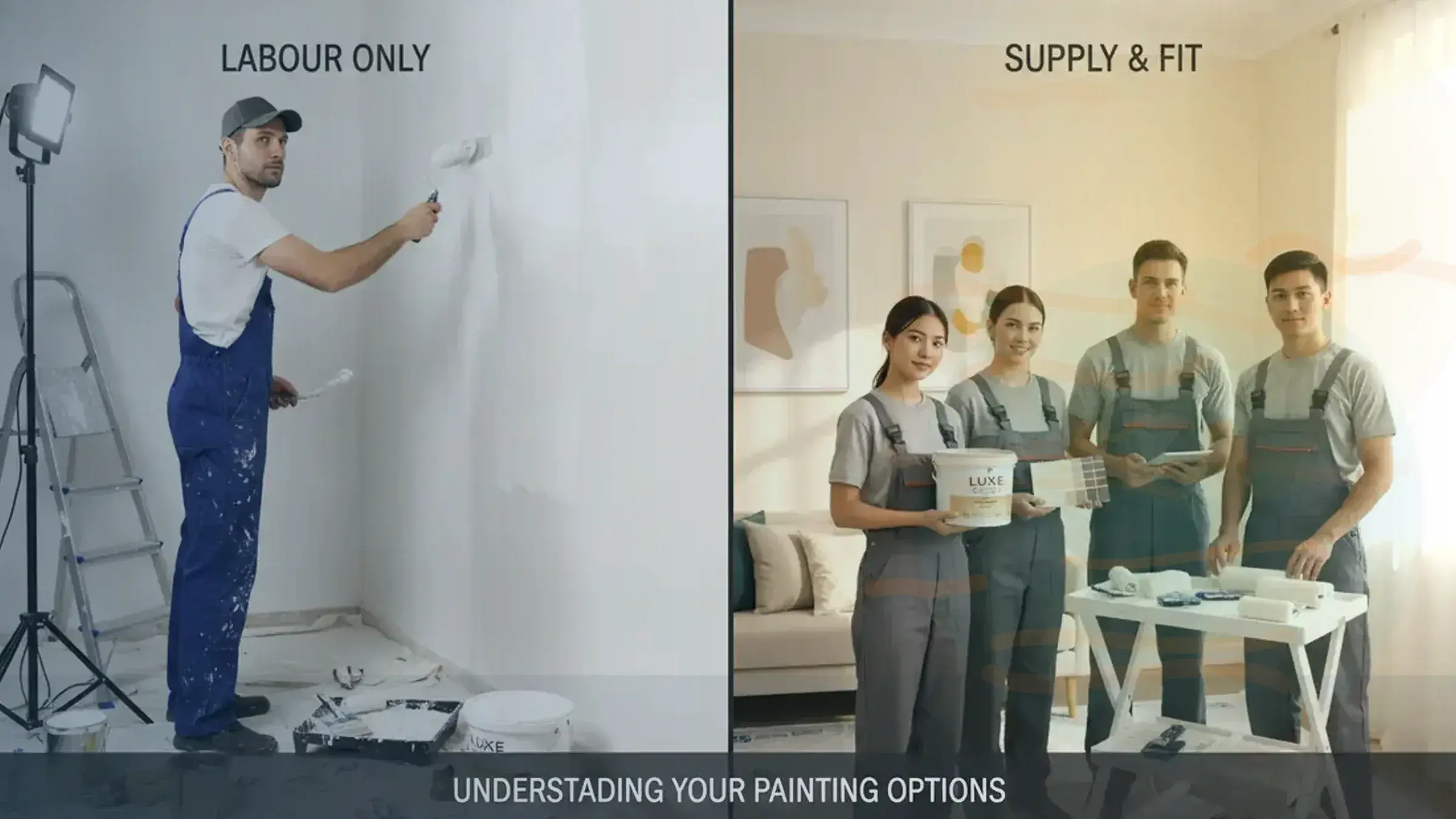
Labour-Only vs Supply-and-Fit Painting: Which Costs Less?
Trade discounts, markup, wastage risk, and warranty – the real maths behind supplying your own paint
Quick answer
Labour-only vs supply-and-fit painting compared – trade discounts, markup, wastage risk and warranty, with the real maths on supplying your own paint.
12 min read
On this page
Labour only vs supply and fit painting in South Africa can change the final price of a job dramatically, from about R63–R100 per m² for interior work (materials included) to roughly R50–R100 per m² for exterior labour services.
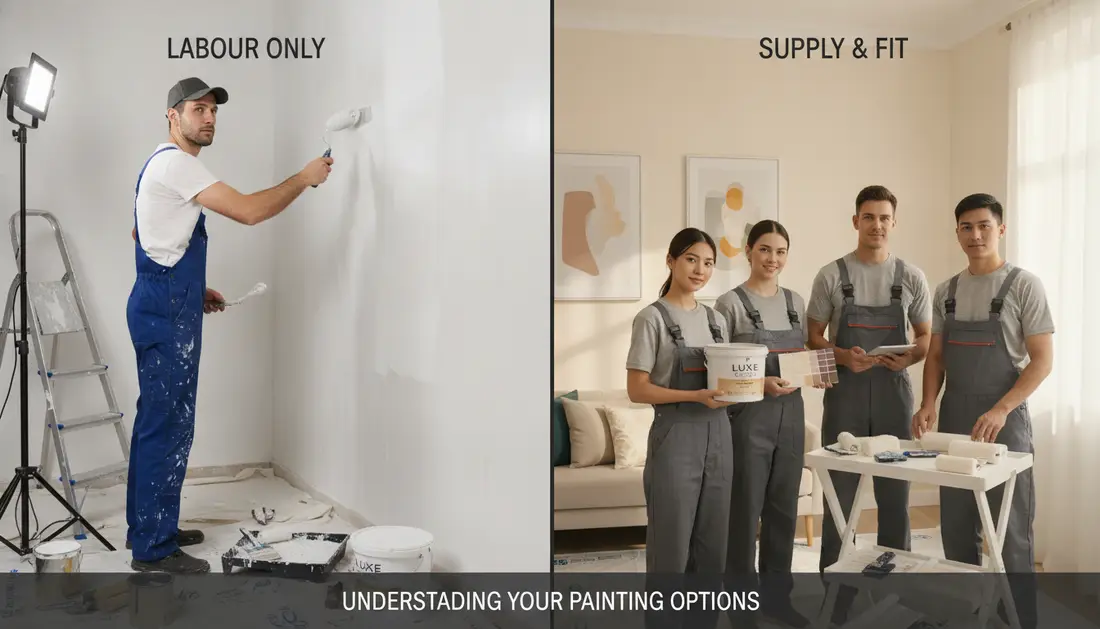
How do you decide whether to buy the paint yourself or let a contractor handle everything?
Through our platform, paintingpricepersquaremeter.co.za, you can compare trusted painting contractors and request up to three quotes. This helps you see the true cost and choose the right painter for your project.
Quickly check surface condition, prep work, access and warranty details when you get a quote. Reliable contractors provide references so you can verify past jobs before you commit.
Use this guide to understand price drivers, confirm what is included in writing, and avoid surprises on site. Making an informed choice saves you time and helps protect your budget.
Understanding the costs of labour only vs supply and fit painting in South Africa
Deciding whether to provide materials or hire a turnkey contractor changes what you pay per square metre; paint and materials pricing is the part you’d supply yourself.
Interior jobs that include paint and labour average about R81 per square metre. Typical interior prices range from R63 to R100 per square metre depending on surface condition, prep and paint type.
For exterior work, a labour-only quote averages about R75 per square metre — painting labour rates per m² breaks this down. Roof jobs vary more; expect R50–R100 per square metre depending on roof type and pitch.

“Compare up to three quotes to spot fair market prices and confirm what is written into the quote.”
- Size of your property and target area directly affect the final quote from contractors.
- Complexity, paint type and access will shift price per square metre.
- Always ask for references from the contractor to verify past jobs.
- Use our request process to receive up to 3 quotes and pick a service that fits budget and quality needs.
This simple guide helps you compare prices, check inclusions and avoid surprises on site; our other painting cost comparisons cover the rest.
Key variables influencing your final project quote
The state of your walls, access to high areas and decorative detail all shape the final price for a job. Knowing which factors matter helps you compare quotes from painting contractors in South Africa.
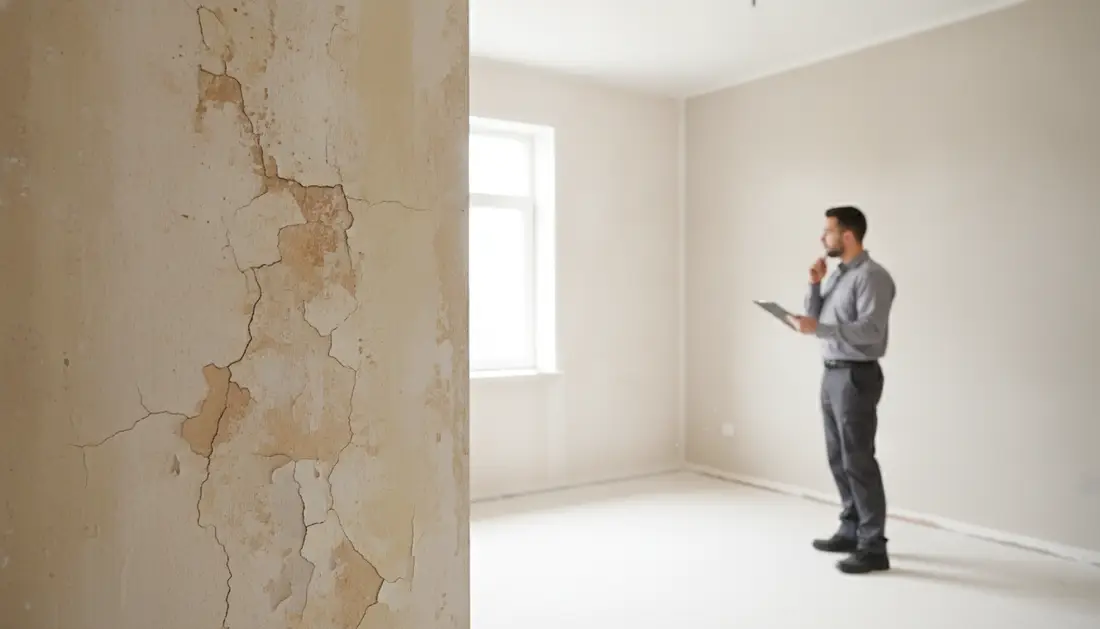
Surface condition and preparation
Preparation can account for 30–40% of the total cost when surfaces are poor; how the labour-paint split works shows the rest. Repairing cracks, treating damp or removing mouldy ceilings needs years of experience to ensure the paint adheres and lasts.
Tip: Tell contractors the current condition of walls, ceilings and roof so their quote reflects true prep work.
Intricacy and architectural detail
Elaborate cornices, small-pane windows or face-brick finishes take more time than large flat areas. That extra time increases the price per square metre and affects overall project time.
Access and height requirements
Walls over 8 metres require specialised equipment and at least two people to move ladders. This raises labour and safety costs for the contractor.
“Provide accurate details about property size and prep needs to get precise quotes.”
- Unfurnished houses are cheaper because less time is needed to protect furnishings.
- Professional painters must select the correct paint type for walls and roof to ensure quality results.
- Clear site details help contractors give a fair per square meter price.
Comparing the financial impact of supply models
Choosing who supplies the paint can shift your project cost more than you expect.
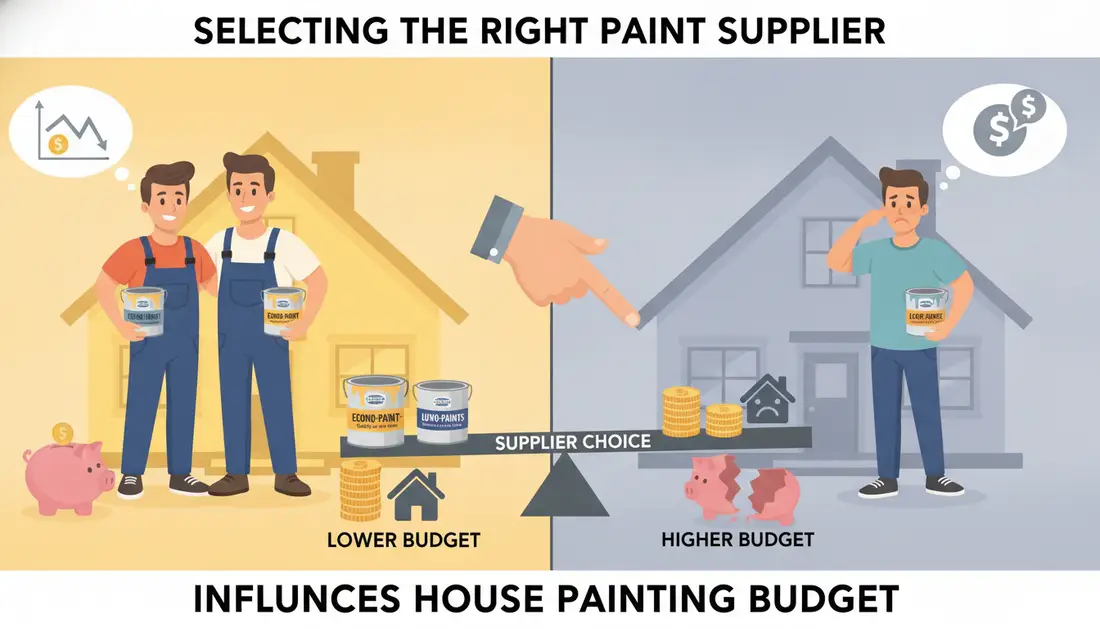
For a typical 120m² house you need roughly 30–40 litres for two coats, depending on surface porosity. Retail 5L tins range from about R350 to R1 800, while trade prices often give better value for bulk purchases.
Retail versus trade paint cost analysis
Below is a compact cost comparison for a 120m² project. Use this to compare quotes from contractors and to confirm what is included in writing.
| Item | Retail (5L) | Trade/Contractor |
|---|---|---|
| Estimated litres | 30–40 L | 30–40 L |
| Price per 5L | R350 – R1 800 | Often 10–30% lower |
| Likely total paint cost | R2 100 – R14 400 | Typical saving R200 – R3 000+ |
- Tip: A contractor often secures trade discounts and picks the right product for exterior or interior surfaces.
- Clarify in quotes whether the price includes paint, prep time, coats and warranty.
“Compare the value of supply-and-fit services against labour-only options to see what suits your property and budget.”
Assessing the risks and benefits of providing your own materials
Supplying your own paint can cut upfront cost, but it shifts risk to you. If the product does not suit the surface, a contractor may refuse warranty. That can expose you to extra expense later.

Experienced painters prefer brands they have used for years. That choice protects finish quality and reduces rework. If you buy the wrong type or too little, the work may stop while you source more product.
- Warranty risk: incorrect product can void guarantees from painting contractors.
- Quantity errors: buying too little raises cost through delays and extra labour.
- Professional standards: a good contractor brings preparation skills and proven application methods.
Tip: Let a contractor supply materials if you want access to trade pricing and consistent product choice. Always get warranty terms in writing. Ask for references to verify past projects where clients provided materials.
Property checklist for choosing the right service model
A clear property checklist helps you pick the service model that saves time and prevents costly rework. Use the short guide below to assess rooms, exterior areas and the roof before you contact contractors.
Evaluating interior project needs
Check walls and ceiling condition in each room. Small cracks or stains may need local repairs; large damaged areas need full preparation and primer.
Ask: will a contractor supply paint and materials, or will you manage procurement? Consider size and time you can commit.
Exterior and roof maintenance considerations
For exterior work look at height, access and roof condition. High façades or steep roofs increase safety needs and extend the project time.
When to choose a full service: a house with many rooms or detailed mouldings, or a roof that needs sealing. A contractor site assessment can confirm exact surfaces and scope.
“A short, honest checklist helps you request accurate quotes and avoid surprise costs.”
- Decide if the area needs touch-ups or a full overhaul before quoting.
- Prioritise long-term protection for exterior walls and roof to cut future costs.
- If you lack time, choose a service model that includes material procurement and site management.
- Request a site visit from painting contractors for an accurate project quote.
Navigating the quote request process for accurate pricing
Get a site visit first. A per square metre price can hide essential prep work and access costs. An in-person inspection of walls, ceiling and roof lets a contractor assess surface condition, required preparation and realistic time on site.
When you request quotes, ask for separate figures: one for labour-based work and one for a full supply-and-fit option. That side-by-side view shows the real difference in costs and who bears the risk for paint choice and warranty.
| What to include | Why it matters | How contractors report it |
|---|---|---|
| Project size (m²) and rooms | Determines paint litres and time | Area, coats required, total price per square metre |
| Surface condition and prep | Can add 20–40% to job costs | Itemised prep tasks, repair hours, primer needs |
| Access and roof height | Impacts safety, equipment hire and time | Scaffold or ladder costs, extra crew, timeline |
Use our platform to request up to three quotes from independent contractors across South Africa. Provide clear details about coat count, paint type preference and critical dates to get precise prices and realistic timelines.
“Request both quote types and a site visit to avoid surprises and compare true value.”
Securing your investment through professional contractor agreements
Agreeing scope, dates and warranties in writing prevents costly disputes later.
Before any work begins, get a clear contract that lists the scope, timeline and total price. A good agreement also names the paint type, warranty on the work and who takes responsibility for defects.
Supplying your own paint may seem cheaper, but it can increase labour costs if products are unsuitable. Experienced painters with years of experience stand by their finish and will offer written guarantees.
Check references and past jobs to confirm quality. Use our platform to request up to 3 quotes so you can compare price, terms and warranties from local contractors before you sign.
FAQ
What is the difference between labour-only and supply-and-fit painting in South Africa?
Labour-only means you buy paint and materials while the contractor provides workmanship, tools and labour costs. Supply-and-fit means the contractor sources paint, primers, brushes, rollers, scaffolding and applies them — you pay a combined price for materials plus labour. Check who supplies brushes, primer coats, masking, and waste removal before you agree.
Which option is usually cheaper per square metre for an interior repaint?
If you can buy trade-grade paint at a good price, labour-only often gives a lower total cost per square metre. However, supply-and-fit can be more cost-effective if the contractor has trade discounts, guarantees correct product selection and includes preparation, two coats and touch-ups in the quote.
How much should I expect to pay per square metre for exterior work?
Prices vary by region and surface condition. Expect a range rather than a single rate: basic repaint jobs might start from the lower end for simple walls, while extensive prep, primer and full restoration push the cost up. Always request up to three quotes — or up to five where available — to compare local contractors and product choices like reputable paint brands paints.
What surface condition issues most affect the final quote?
Peeling, efflorescence, damp, rust, cracks and poor previous finishes increase prep time and cost. Repairs such as sealing, sanding, filling and priming add to labour and materials. Ask contractors to list preparation tasks and include them in the written quote so you can compare like for like.
How does access and height affect price?
Work at height needs scaffolding, boom lifts or specialised harnesses, which raise costs. Access constraints — narrow passages, driveways or restricted parking — increase labour time and may require extra site set-up charges. Confirm access needs in the site visit and get those costs itemised in the quote.
Do contractors offer warranties and how long do they last?
Most reputable painting contractors provide workmanship warranties, often 1–5 years depending on scope and whether they supplied the paint. Manufacturer guarantees on paint cover product defects. Ensure warranty terms are written, include surface exclusions, and state who is responsible for touch-ups and rework.
Is it safe to supply my own paint to save money?
It can be, but it increases your responsibility for product choice, storage and suitability for the substrate. If you supply paint, confirm the contractor accepts it in writing, and that the product meets recommended technical specs for exterior or interior use, primer compatibility and required number of coats.
How many coats are normally required and does that change price?
Most jobs require at least two full coats plus priming on bare or repaired surfaces. High-coverage or specialised paints may reduce coats but cost more per litre. Contractors should state coat count and coverage per litre in the quote so you can compare paint efficiency versus price.
What should I check in a contractor’s quote to avoid surprises?
Look for an itemised breakdown: labour rate or hours, paint brand and litres, primer, number of coats, surface preparation, access equipment, scaffolding, masking, clean-up and waste disposal. Confirm start and completion dates, payment schedule, warranty and whether minor repairs are included.
How do I compare retail versus trade paint costs?
Retail prices are higher but convenient; trade prices and bulk discounts lower your material cost. Compare paint performance (durability, washability, UV resistance), coverage per litre and warranty. Contractors who supply paint may pass on trade discounts — ask for brand names and grade in the quote.
Will the painter remove old fixtures, fittings or wall coverings?
Some contractors include light removal like switch plates and curtain rails; others charge extra for tile or wallpaper stripping, removal of rotten wood or major repairs. Specify these tasks before the site visit so the quote reflects the full scope of work.
How long does a typical room repaint take from prep to completion?
A single standard-sized room often takes 1–3 days including preparation, priming and two topcoats, depending on drying times and ventilation. Larger projects, multiple rooms or extensive repairs extend timelines. Ask for a realistic schedule and milestones in the agreement.
Can I request multiple quotes through the platform and how many?
You may request up to three painting quotes, or up to five quote options where available. Independent contractors manage site visits, final pricing and timelines. Use multiple quotes to compare prices, product specs and contractor references.
What qualifications and checks should I look for in a painting contractor?
Look for experience, portfolio of similar projects, local references, public liability insurance, registration for tax where relevant and clear written quotes. Ask about team size, subcontractors, and whether they follow SABS guidelines and recommended paint application methods.
How are cost estimates adjusted for architectural detail and intricate work?
Intricate cornices, mouldings, timber joinery and decorative elements increase time and require specialist taping, cutting-in and small brushes. Contractors typically add hourly rates or a per-feature charge. Request photos or a site visit so those complexities are properly priced.
What are common hidden costs homeowners forget to budget for?
Expect additional charges for scaffolding, repairs to rotten timber, rust treatment, galvanised metal priming, re-pointing, lead paint remediation, specialist primers, night work access fees, and extended clean-up. Ask for an allowance for unforeseen work in the quote.
How does paint type affect long-term costs and maintenance?
Higher-quality paints cost more up front but last longer, resist fading and require fewer repaints. Exterior acrylics with UV blockers and mould inhibitors reduce maintenance; washable interior paints resist scuffing. Consider lifecycle cost, not just initial price, when choosing supplies.
Should body corporates and property managers use supply-and-fit or labour-only?
For large complexes, supply-and-fit often simplifies logistics and ensures uniform product use and warranty handling. Labour-only can work if the management buys bulk trade paint and handles distribution. Compare contractor capacity, storage and warranty handling before deciding.
What payment terms are typical and what payments should be avoided?
Typical terms include a deposit (often 10–30%), progress payments and a final payment on completion. Avoid paying full amount up front. Insist on a written contract, scope of work and retention clause for snagging issues before releasing the final payment.
Related painting cost guides
Ready to compare?