Epoxy vs Floor Paint: Which Does Your Floor Need?
Garage, stoep, or warehouse – durability, fuel resistance, and prep demands compared
Quick answer
Epoxy vs ordinary floor paint – durability, hot-tyre and fuel resistance, prep demands, and where each makes sense from garages to warehouses.
11 min read
On this page
Epoxy vs floor paint in South Africa is a test of value and long‑term price, and paintingpricepersquaremeter.co.za helps you compare costs quickly.
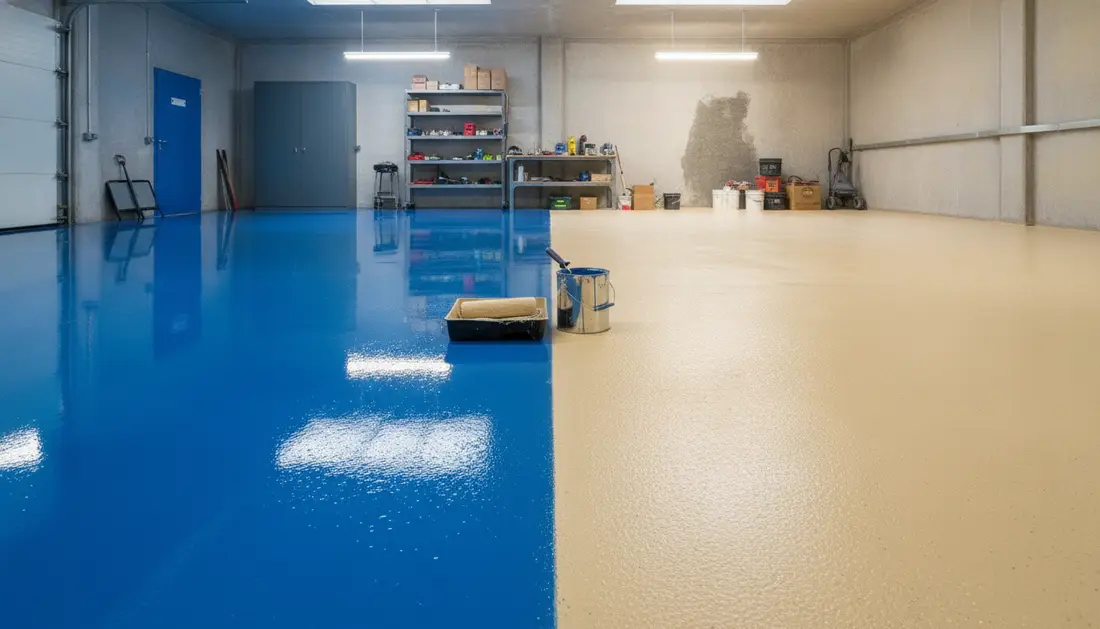
Choosing between a simple paint coat and a professional epoxy finish comes down to durability, preparation and total cost.
We help you see the real price factors: surface condition, prep work, labour, access and warranty terms.
Many homeowners struggle to decide for a domestic garage or a larger commercial workshop, and a wrong choice can add unexpected expense.
Use our quote request to connect with independent contractors who know South African climates and site needs.
By the end of this guide you will understand the installation steps, expected lifespan and what to confirm in writing so you receive fair value for your project.
Understanding the Difference Between Epoxy vs Floor Paint
Deciding which coating suits your garage space hinges on expected use, budget and long‑term upkeep, which floor painting rates per m² help you compare.
Defining high‑performance coatings
Defining Epoxy Coatings
Two‑part systems combine a polyamine hardener with a resin to chemically cure a hard, non‑porous surface.
That reaction produces a plastic‑like finish that resists chemicals, abrasions, oil and impact for many years.
“Professional systems are built for heavy traffic areas and commercial garages.”
Characteristics of standard floor paint
Characteristics of Floor Paint
Standard garage floor paint is usually a water‑based latex acrylic. It dries rather than cures and is less durable under heavy traffic.
Latex costs less up front — roughly R175 per litre — but typically lasts only 1–2 years in busy garages.
One‑part epoxy paint sits between these options: it adds resin to latex for better adhesion and can last 3–4 years.
- Two‑part coatings: cured bond, high durability, suited to workshops and commercial spaces.
- Latex acrylic: low cost, DIY friendly, limited lifespan in garages and similar spaces.
- Hybrid one‑part: improved adhesion, moderate longevity, useful where budget and performance must balance.
Why Surface Preparation is Critical for Success
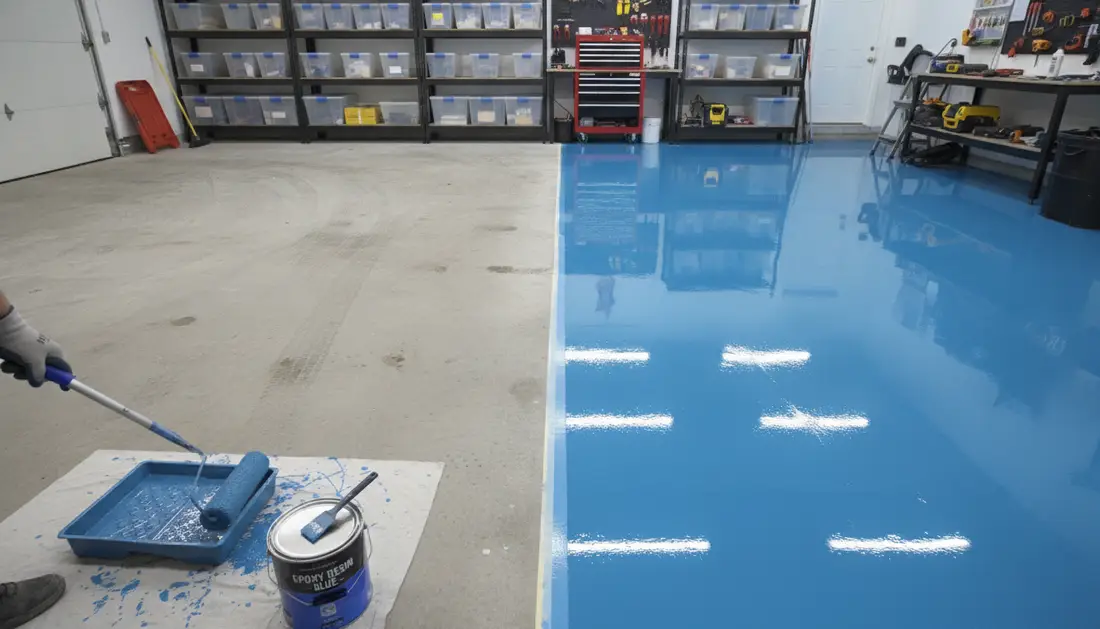
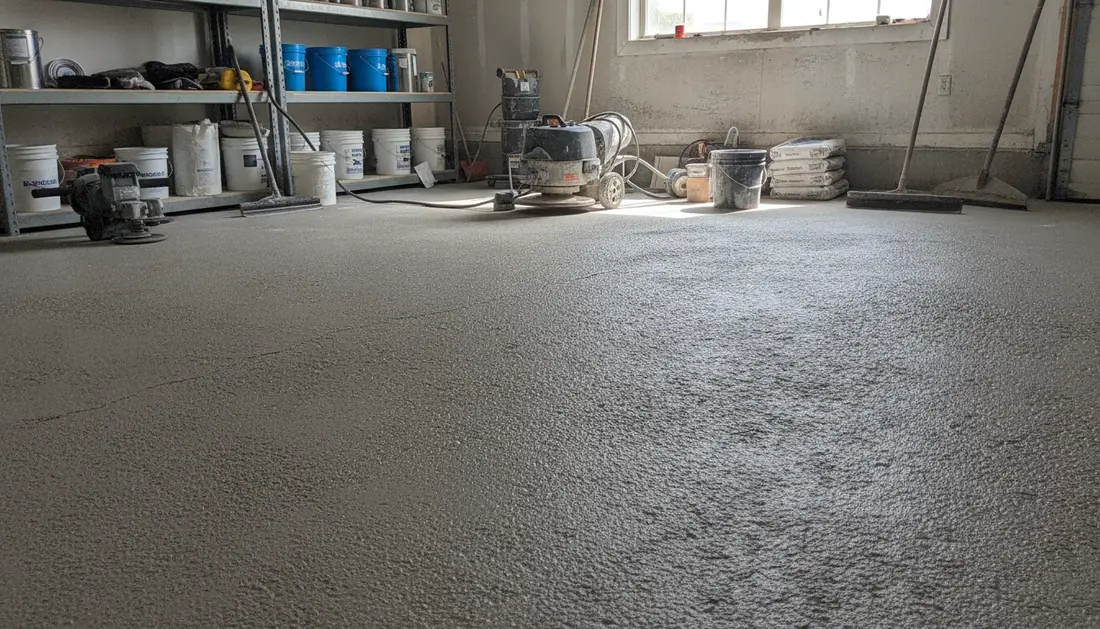
Surface prep determines whether a garage coating lasts months or many years — see preparing concrete floors for painting. Start with a clean, dry concrete slab. This gives any finish the best chance to bond.
Contractors use specialised tools to remove old residue and to etch the surface. Etching opens pores so the product can penetrate. A proper moisture test is vital. Trapped damp will make a new coating bubble within a few months.
Oil and grease must be removed completely. If stains remain, the product will not adhere and you will see peeling in a short time.
- Clean and degrease to remove oil.
- Moisture test to confirm suitability for application.
- Mechanical etch or shot-blast to open concrete pores.
| Prep Action | Typical time | Approx. cost (R) | Importance |
|---|---|---|---|
| Degrease and scrub | 1–3 hours | 200–800 | High |
| Moisture testing | 30–60 minutes | 300–600 | Critical |
| Mechanical etch/diamond grind | 2–6 hours | 1,200–3,500 | High |
“Preparation is the step that protects your investment and reduces recoat cost in future.”
Environmental Factors Affecting Coating Longevity
Rising moisture from beneath a concrete slab is a common cause of early failure in garage surfaces; our painting guides explain damp issues. Trapped damp pushes against any non‑breathable layer and causes blistering or peeling.
Managing Rising Moisture and Humidity
Test the slab before you choose a system. A moisture test will show if the base emits vapour that could ruin a finish within months.
High humidity during cure can stop a chemical bond forming correctly. That shortens the life of both DIY paint and professional epoxy systems.
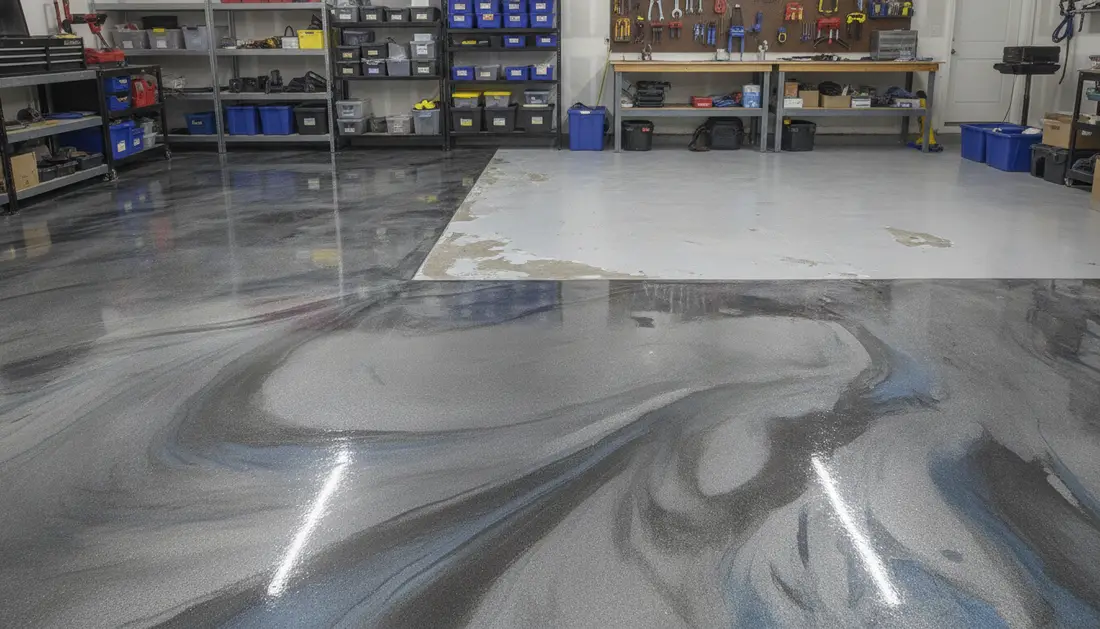
- Use moisture‑mitigating primers where tests show risk; installers often apply these to protect the top layer.
- Choose products suited to a coastal or inland climate; some coatings tolerate humidity better.
- Keep ventilation and avoid applying in wet seasons to aid proper curing.
| Factor | Effect | Typical action |
|---|---|---|
| Rising slab moisture | Blistering, delamination | Moisture testing; primer |
| High ambient humidity | Incomplete cure | Delay works; ventilate |
| Climate (coastal/inland) | Long‑term wear variance | Choose suitable system; professional advice |
“Protecting the concrete surface from environmental stress is key to keeping your garage clean and functional.”
Comparing Performance in Garages and Workshops
A garage used daily by a car faces different stresses than a busy workshop with chemicals and heavy tools. Match the surface to what you actually do in the space. This avoids costly repairs and short service life.
Hot Tyre Pickup Risks
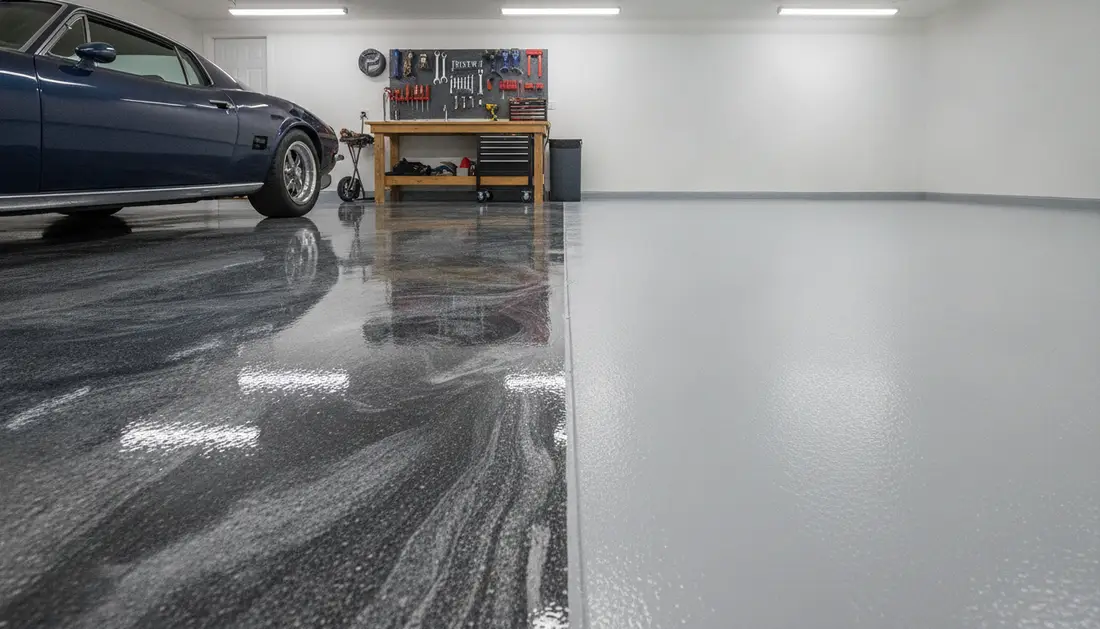
Hot tyres can reach 60–80°C and this heat will soften weaker coatings. That leads to lifting and peeling where cars sit regularly.
Professional systems are engineered to resist this heat. DIY options often fail within months when a warm car is parked on them.
Chemical and Stain Resistance
Workshops need a surface that tolerates solvents, oils and regular cleaning. Standard latex or acrylic will stain and wear under heavy use.
Higher‑performance systems provide a seamless, easy‑clean surface that keeps chemicals from penetrating concrete and improves long‑term durability.
Non-slip Safety Features
Non‑slip additives can be broadcast or mixed into the final coat to improve grip in oily or wet areas. This is vital where tools, water or oil are present.
- Garage parking: choose heat‑resistant options for tyre pickup.
- Workshop use: prioritise chemical resistance and easy cleaning.
- Safety: add texture where spills are likely.
“Balance your budget with the actual demands of the space to get value that lasts.”
Analysing the Long Term Value of Your Investment
Look at total lifetime cost, not only the initial quote, when you assess a new garage floor. A quality finish can avoid repeated work and hidden cost over time.
Higher upfront cost can mean lower running cost. Professional epoxy systems can last up to 20 years when installed correctly. That longevity reduces re‑coats and labour over a decade.
Standard paint often needs touch‑ups or full reapplication every few years. Repeated repairs add both material and labour expense. That raises the total cost of ownership.
| Option | Expected lifespan | Typical 10‑year cost (R) | Key benefit |
|---|---|---|---|
| Professional epoxy | 10–20 years | Higher initial, lower long‑term | Durability; resists oil and chemicals |
| One‑part/garage floor paint | 1–4 years | Lower initial, higher total | Cheap short‑term fix; frequent recoat |
| Mid‑range hybrid coating | 3–6 years | Moderate | Balance of cost and durability |
“Avoiding constant repairs saves time and money and keeps the garage clean and usable.”
- Compare true 10‑year cost, not just the quote today.
- Prioritise systems that protect concrete from oil, car tyre heat and stains.
- Ask contractors for written lifespans and maintenance guidance.
Identifying the Right Solution for Your Specific Needs
Start by deciding whether you want a quick cosmetic refresh or a durable surface that copes with daily use.
If you rent or only need storage, a simple floor paint can be a low-cost, short-term option. It is quick to apply and affordable.
For homeowners who park daily or do DIY, a professional epoxy garage floor is usually the better choice. It handles tyre heat, oils and heavy use for many years.
Consider traffic levels and chemical exposure before choosing a coating. Proper prep of your concrete is non-negotiable for both approaches.
- Quick update: cheaper, faster, may need recoat in months.
- High-performance: higher cost, longer life, needs professional application and equipment.
- Compare cost: evaluate true long‑term cost, not only initial quote.
| Need | Recommended option | Notes |
|---|---|---|
| Short-term, low budget | Garage floor paint | Fast application, may last months |
| Daily parking / workshop | Epoxy coating | Higher upfront cost, lasts years with correct prep |
| Light use, occasional storage | One‑part/latex option | Balanced cost and durability |
“Match the surface to use and confirm prep and warranty in writing.”
Securing Professional Guidance for Your Flooring Project
Professional input helps match product choice to real site conditions and use.
Securing expert guidance is the best way to avoid common DIY pitfalls and costly rework. Independent contractors will inspect your slab and recommend the right coating option for your garage or workshop.
Visit paintingpricepersquaremeter.co.za to read our guide and submit a quote request. You can receive up to three local quotes to compare price, scope and timelines.
Always confirm warranties, preparation steps and the full scope of work in writing before any painting or coating application begins. Using our platform gives you the pricing insight to choose a solution that lasts for many years.
FAQ
What is the main difference between an epoxy coating and standard garage floor paint?
Epoxy coatings are two-part resin systems that chemically cure to form a hard, durable surface. Standard garage floor paint is usually a single-component acrylic or latex product that dries but does not chemically bond as strongly. Epoxy gives greater chemical and abrasion resistance, while acrylic/latex paint is cheaper and easier to reapply.
Do I need special surface preparation before applying a resin coating or floor paint?
Yes. Both options require clean, dry, and sound concrete. For resin systems, you should diamond-grind or mechanically profile the slab to remove laitance, oil and loose material. For paint, thorough degreasing, etching or light scabbling is needed. Poor prep causes peeling, blistering and short life.
How long does each option last in a garage setting?
A quality resin system typically lasts several years—often 5–10 years under normal domestic use—if correctly prepared and applied. Standard garage paint usually needs redoing every 1–3 years, depending on traffic, chemicals and UV exposure. Longevity depends heavily on prep, thickness and usage.
What environmental factors affect the durability of coatings?
Moisture rising from the slab, high humidity during application, large temperature swings and UV exposure can all shorten service life. Moisture vapour can cause delamination, so carry out a moisture test and use vapour-tolerant primers where needed. Apply within manufacturer-recommended temperature and humidity windows.
Will hot tyres damage my newly coated garage surface?
Some coatings—particularly lower-grade acrylics—can show hot-tyre pickup marks when warm tyres are parked on them. Properly formulated high-performance resin systems resist this better. Check product datasheets for “hot tyre resistance” and consider a tougher topcoat if you park cars on the surface regularly.
How resistant are these coatings to oil, petrol and chemicals?
Two-part resin coatings offer superior chemical resistance and are much less likely to stain from oil or petrol. Acrylic and latex paints resist light spills but absorb and stain more easily. For workshops or heavy automotive use, choose a chemical-resistant resin system or use a protective sealer.
Can I add a non-slip texture to a hard coating?
Yes. Both resin systems and paints can incorporate anti-slip aggregates such as aluminium oxide or silica sand broadcast into the wet coat. Resin systems generally bond the aggregate better and last longer under traffic. Choose a coarseness that balances grip and ease of cleaning.
What are typical costs in South Africa for resin coatings versus garage paint?
Prices vary by region, surface condition and product. Expect paint to cost substantially less per square metre—often the lowest-cost option—while two-part resin systems cost more due to materials and surface prep. Request up to three independent quotes to compare materials, labour, prep, warranty and timelines.
Is it worth paying more for a professional installation?
For resin systems and high-traffic garages, yes. Professionals ensure correct profiling, moisture testing, mixing ratio and curing conditions. DIY can work for small, low-traffic areas with paint, but improper application of resin systems commonly causes failures that cost more to fix.
How long before I can use the garage after coating?
Dry times vary. Acrylic paints can be walkable in 24 hours and vehicle-ready in 48–72 hours. Resin systems often need 24–72 hours to be walkable and up to 7 days to reach full chemical resistance, depending on temperature and product. Confirm curing times with your contractor or product datasheet.
What should I confirm in writing when getting quotes for a garage coating?
Ask for a written scope that includes surface preparation steps, moisture testing, product brand and trade name, number of coats and coat thickness, labour cost, lead time, warranty terms and aftercare. Confirm whether edging, joints and drains are included and if any remedial work (crack repair) is extra.
Can coatings be applied over painted or previously sealed concrete?
You must remove loose paint and any incompatible sealers. Light, well-adhered paint might be reprofiled, but most professionals insist on a clean, sound substrate. Conduct adhesion tests and follow manufacturer guidance; in many cases mechanical removal or full profiling is needed.
Are there low-cost alternatives that still perform well?
High-quality acrylic-concrete paints and water-based epoxy-like coatings can offer a balance between cost and performance for light-duty garages. They still need good prep and periodic recoating. For heavier use, invest in a recognised two-part resin system for better long-term value.
Which coatings are easiest for DIY application?
Single-pack acrylic or water-based garage paints are the simplest for DIY: rollers, brushes and basic prep tools suffice. Two-part resin systems require precise mixing, controlled conditions and experience. If you plan DIY, choose products with clear instructions and test a small area first.
How do I maintain a coated garage floor to extend its life?
Keep the surface clean from grit and oil, remove spills quickly, use soft brooms or a wet mop, and avoid dragging heavy sharp items. Inspect and touch up edges and high-wear areas as needed. For resin surfaces, follow the manufacturer’s maintenance recommendations for cleaners and recoat intervals.
Related painting cost guides
Ready to compare?