
Plaster Repair and Painting Costs in South Africa
Hollow plaster, blown patches, skim coats, and Rhinolite repairs priced before the repaint goes on
Quick answer
R2 829–R4 071 project total15 m² · R150/m² repair
Plaster repair and painting costs in South Africa – hollow plaster, blown patches, skim coats and Rhinolite repairs priced before repainting starts.
Instant estimate
Plaster repair & painting calculator
Estimate plaster patching or re-skim, then repainting the repaired area.
12 min read
On this page
Plaster repair and painting cost South Africa is a critical budget consideration for homeowners, and our platform at paintingpricepersquaremeter.co.za provides the transparency you need.
Are you paying more than necessary for work on your walls, or missing key preparation that saves money long term?
Labour usually makes up about 60% of the total while materials account for the remaining 40%. Professional contractors often quote per square metre to give you clearer pricing and fairer estimates.
Use our pricing guidance to compare prices across suburbs and regions. Request up to 3 quotes to see how labour, materials, surface preparation, bonding and application techniques influence final price.
Our quote request process helps you judge value, quality and time so you can plan a project that protects structural integrity and improves interior finishes.
How much does plaster repair and painting cost in South Africa?
Quoting by the per square metre is standard practice for most trades; our South African painting glossary decodes the jargon. Contractors use it to make pricing clear so you can compare labour, materials and total price quickly.
Typical rates help you budget. Interior two-coat labour usually sits between R35 and R60 per square metre. Labour-only plastering ranges from about R70 to R120 per square metre, depending on complexity.
Use a detailed quote to check what is included. A reliable estimate will spell out materials, hours of labour, surface preparation and any extra work for damaged walls; the wider prep work cost guide puts plaster in context.
- Request quotes per square to compare prices across areas.
- Confirm whether fees cover preparation, priming, and final finishes.
- Bear in mind labour often makes the larger share of total project cost; materials fill the rest.
Our guide helps you weigh pricing, compare quotes and plan a home project that balances quality with value.
How bad is the plaster damage?
Start by inspecting each wall to see how extensive the surface damage is and whether hidden faults exist.
Typical repair prices range from R100 to R350 per square metre depending on damage complexity. Minor chips or hairline cracks need simple patching — what crack repair and painting costs covers them. Larger, uneven areas require more work, time and skilled labour.
Cement versus Gypsum
Cement is more economical for large areas and external walls; for a deliberate texture, see what textured-wall painting costs. Gypsum gives a smoother finish for interior walls where quality matters.
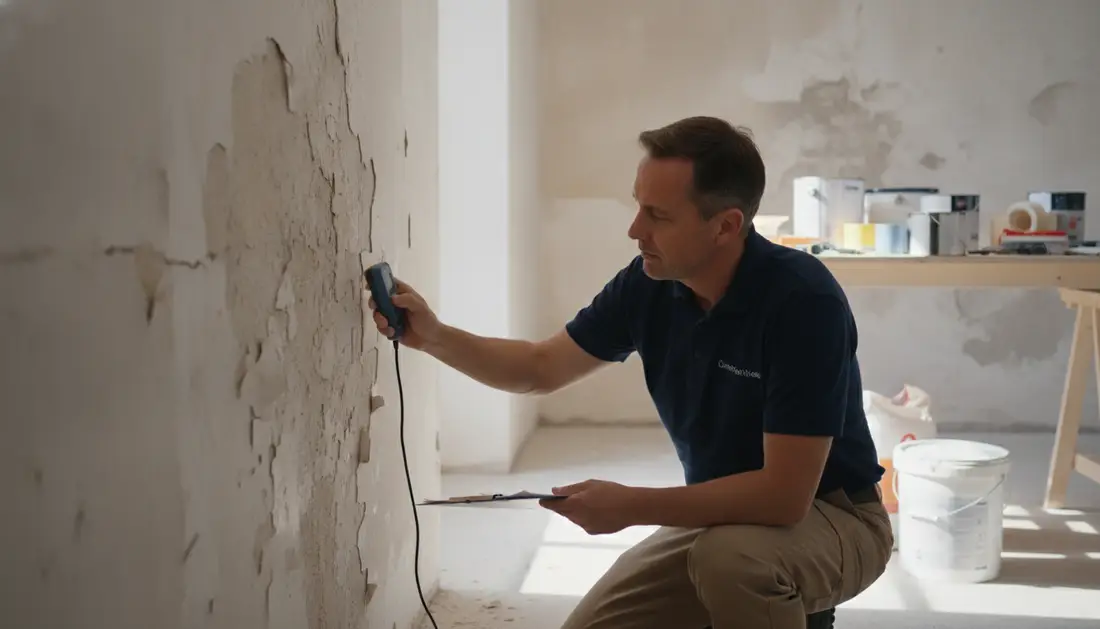
Identifying Structural Cracks
Look for long, horizontal or stair-step cracks and any movement at corners; telling hairline from structural cracks helps you judge severity. These often signal a structural issue that raises final prices and may need specialist services.
- Check substrate: damp, loose or hollow patches increase preparation time.
- Size matters: larger project areas usually reduce the per square rate.
- Ask for a clear quote that lists type of material, preparation and expected days of labour.
| Issue | Typical price (R/m²) | Common material | Impact on time |
|---|---|---|---|
| Minor surface chips | R100–R150 | Gypsum | 1–2 days |
| Large damaged areas | R200–R350 | Cement | 3–7 days |
| Structural crack repairs | Variable | Site-specific | May require specialist |
Essential Preparation Techniques for Quality Results
How long you leave new render to cure and whether you prime bare surfaces affect final adhesion more than brand choice.
Allow new plaster to cure for 21–28 days so moisture falls below 10%; our plaster-primer guide explains sealing bare plaster. Painting too soon traps damp and leads to peeling and costly repairs later.
Priming bare surfaces is non-negotiable. A quality primer seals the substrate and improves bonding of top coats on interior walls.

The practical checks to expect
- Confirm your quote includes bonding agents and specialist primers for bare plaster.
- Professional work covers sanding, dust removal and cleaning before any primer or paint is applied.
- Labour for preparation is a time investment that protects the finish and reduces future costs.
| Preparation step | Why it matters | Typical impact on schedule (days) |
|---|---|---|
| Curing new plaster | Reduces moisture to safe levels for adhesion | 21–28 days |
| Priming bare surface | Ensures bonding and prevents discolouration | 1 day |
| Sanding and cleaning | Creates smooth, dust-free surface for work | 0.5–1 day |
Check your quote carefully. Verify that costs for materials and labour cover bonding agents, primer and full surface preparation. That upfront clarity keeps quality high and reduces follow-up expenses.
What affects plaster repair and painting costs?
Skilled tradespeople and quality supplies determine most of what you pay on a refurbishment project. Labour typically accounts for around 60–70% of total expenses because experienced teams deliver lasting finishes and fewer call-backs.
Materials vary in price by type and brand. Premium gypsum or cement-based products and high-performance coatings cost more but reduce future repairs and add value to your home.
Equipment and overheads — scaffolding, access lifts and site setup — usually add 5–10% to the overall bill. Ask the contractor to itemise these items in your quote.
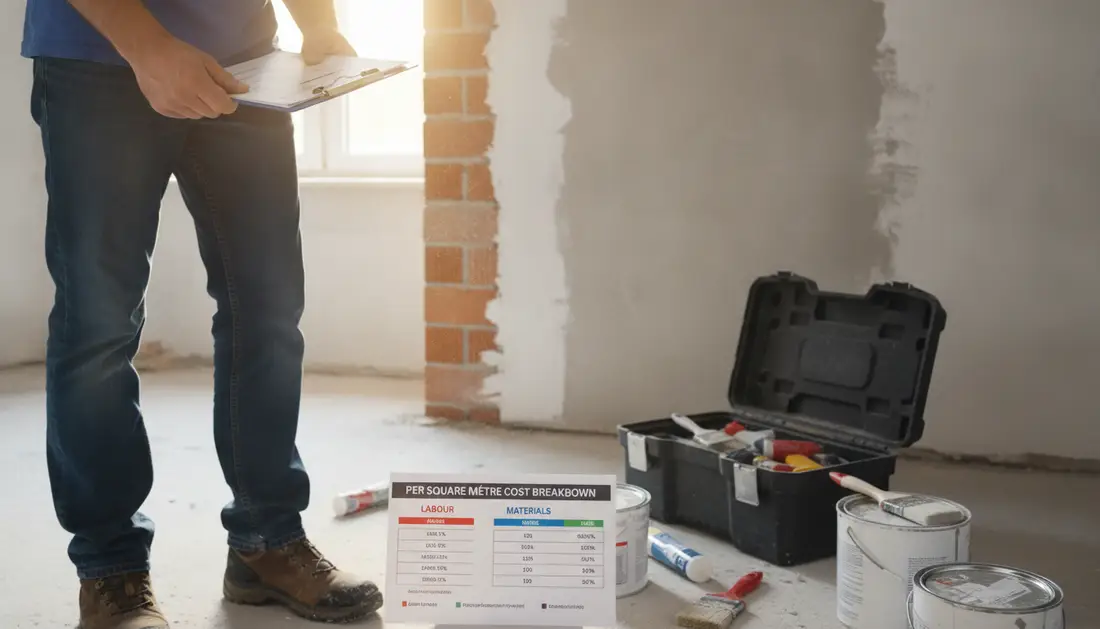
“Request per square metre pricing so you can compare labour and materials across quotes.”
- Get a clear per square metre or per square rate for labour and materials.
- Confirm site access, area size and expected days of work are included.
- Ensure surface preparation and specialist services are listed separately.
Compare quotes to see how labour rates and material markups differ by areas and project size. A detailed breakdown helps you judge quality, timing and overall value before you sign.
Regional Pricing Variations Across South Africa
Prices vary sharply between neighbourhoods, so where you live has a direct effect on per square metre estimates.
Affluent zones such as Sandton and the northern suburbs often carry a 10–15% premium. Contractors there face higher client expectations and may use more expensive materials and finishes.
Pretoria and the East Rand usually offer more competitive per square rates. Lower overheads in these areas can reduce the price without sacrificing quality of work.
- Market density and demand are key factors that shape pricing and prices by area.
- Travel, access and local building rules affect the final quote and labour allocation.
- Compare per square and square metre figures across multiple quotes to spot fair rates.
| Region | Typical pricing change | Common drivers |
|---|---|---|
| Northern suburbs (Sandton) | +10–15% | Higher quality finishes, premium materials |
| Pretoria & East Rand | -5–10% | Lower overheads, competitive services |
| Smaller towns & rural areas | Variable | Labour availability, travel on site |
Always request multiple quotes and confirm what the price covers for materials, labour and any special repairs to walls. That ensures you understand regional variations and get a fair market rate.
Professional Painting Standards and Product Selection
Professional standards focus on product selection, correct application and a clear specification in the quote. You should expect brands commonly used by south african teams such as reputable paint brands for interior and exterior work.
Selecting Premium Paint Brands
Choose a product line that matches the surface and exposure. Premium brands give better coverage, UV resistance and longer life. Ask your contractor which type and how many coats will be applied in the quote.
Application Techniques
Correct application matters more than a single brand. Sealers and bonding agents must be used on new or bare surfaces to ensure adhesion.
Multiple coats and proper drying times reduce future repainting. Check that labour for preparation is listed separately in any per square metre or per square quote.
Ensuring Long-term Durability
Long-term value comes from matching the material to the wall, using the right primer and applying coats in sequence. Higher upfront price for quality materials often lowers life-cycle costs.
“Confirm the exact brand, product line and number of coats in writing before work starts.”
| Item | Typical spec | Why it matters |
|---|---|---|
| Brand | reputable paint brands | Coverage, UV resistance |
| Sealer & primer | Site-appropriate bonding agent | Ensures adhesion to surface |
| Coats | 2–3 top coats | Durability and even finish |
Evaluating Quotes and Avoiding Common Pitfalls
Well-written estimates show exactly what will be done, the products used and how many days the project will take.
Use a written quote that itemises labour, materials and the preparation for any damaged plaster on your walls. That clarity helps you compare price and quality across the market.
Red flags include a headline price that is much lower than other estimates or pressure to start without documentation. These often mean corners will be cut.
Red Flags in Contractor Estimates
- Very low price versus market averages — likely inferior material or skipped preparation.
- No written scope, no product names or no timeline for curing and coat application.
- Requests for full payment upfront instead of a standard 20–30% deposit.
- Poor reputation in busy areas such as the northern suburbs or missing client references.
Compare quotes for the same scope: plaster type, primer, number of coats, days of labour and any special services for cracks or larger damaged areas.
“A clear, itemised quote protects your home and gives you confidence in the value of the work.”
Finalising Your Home Improvement Investment
Closing your project well means confirming scope, timeline and written guarantees.
Check three things: the surface spec, the material choice and the schedule. Ask for a clear note on any plaster work and what it includes.
Compare up to three written quotes. Focus on value, not just the headline cost. Quality teams save you money over time.
Use our platform to find independent contractors and request quotes — visit paintingpricepersquaremeter.co.za for guidance and connections.
Take time to verify credentials and compare detailed quotes to secure a durable, attractive finish for your walls.
FAQ
What is the typical price per square metre for plaster repair and painting in South Africa?
Prices vary widely by region and surface condition. A basic guideline is R80–R250 per m² for minor surface repairs plus painting, while extensive patching or replacement can push labour and materials to R300–R600 per m². Confirm whether quotes include primer, two topcoats, sanding, and waste disposal.
How do I get an accurate square measurement for quoting?
Measure painted wall area (width × height) and subtract openings such as windows and doors. For ceilings, measure the full plane. Ask contractors to do an on-site measure — they account for corners, reveal trims and uneven surfaces that affect material use and time.
What factors drive the final price on a quote?
Main drivers are surface condition (number and size of damaged areas), type of base (cement vs gypsum), access (scaffolding or ladders), quality of paint brand, number of coats, primer needs, and labour rates. Also check warranty, site clean-up and any additional treatments like damp-proofing.
Does the type of base (cement vs gypsum) change approach and pricing?
Yes. Cementitious bases often need stronger bonding primers and cement-based patching compounds; gypsum needs rapid-setting compounds and careful curing. Labour time and product choice differ, so expect a higher rate if special products or drying time are required.
How are structural cracks identified and charged?
Hairline cracks usually receive filling and reinforcement tape; deep or moving cracks may need stitching, resin injection or re-plastering. Contractors should report whether cracks are cosmetic or structural; structural fixes increase both material and labour costs and can require engineers.
What preparation steps are essential for a lasting finish?
Clear loose material, treat damp or mould, fill defects with appropriate compound, sand, apply a bonding primer, and allow correct curing. Proper prep prevents peeling and reduces repaint frequency, saving costs over time.
How long should priming and curing stages take before topcoats?
Primer drying can take 2–24 hours depending on product, humidity and temperature. After filler or new compound, allow full cure — often 24–72 hours. Always follow manufacturer instructions; rushed schedules can lead to poor adhesion and rework.
How much does labour typically contribute to the overall price?
Labour often forms 40–60% of the final invoice. Skilled tradespeople charge more but work faster and produce a better finish. Rates depend on location, with metro areas usually higher than smaller towns.
Do prices differ across regions such as northern suburbs versus coastal towns?
Yes. Northern-suburbs and major metros command higher labour and material mark-ups. Coastal areas may need anti-corrosive or specialised coatings due to salt air, adding to cost. Always request region-specific quotes.
Which paint brands do professionals commonly recommend in South Africa?
Trusted local and international brands include reputable paint brands and Tetrosyl. Premium brands offer better coverage and durability; discuss warranty and maintenance expectations with your contractor.
What application techniques affect durability and finish?
Brush and roller are standard for walls; airless spraying gives quicker, even coverage for large areas but needs masking. Key techniques: correct thinning, wet-edge work, full drying between coats and using recommended tools for each product.
How do I compare contractor quotes fairly?
Ask for itemised quotes showing materials, labour hours, primer and topcoat brands, number of coats, warranty terms and any exclusions. Compare like-for-like and request at least three independent quotes where possible.
What are common red flags in estimates?
Vague or low-ball prices, no breakdown of materials and labour, lack of a written warranty, cash-only offers without receipts, and pressure to sign immediately. Reputable contractors provide clear timelines and written terms.
Should I request written guarantees or maintenance advice?
Yes. Get warranties in writing for workmanship and products, and ask for aftercare guidance — cleaning, touch-up procedures and recommended repaint intervals. This helps protect your investment and supports future resale value.
Can I mix different quality paints to save money?
Mixing brands or downgrading topcoats can reduce upfront spend but risks uneven finish and reduced lifespan. If budget is tight, apply high-quality primer and a reputable mid-range topcoat rather than skimping on primer or preparation.
How long will a typical interior wall job take?
Small rooms (10–20 m²) often take 1–3 days including prep and drying. Larger projects or areas requiring repairs and curing can take 3–10 days. Contractors should provide a realistic timeline in writing.
Related painting cost guides
Ready to compare?