

Painting Quote Red Flags to Catch Before You Sign
Vague prep lines, missing paint brands, lump sums, and pressure tactics – read quotes like a pro
Quick answer
Painting quote red flags – vague prep wording, no paint brand or coat count, suspicious lump sums, oversized deposits and pressure tactics to catch.
11 min read
On this page
Painting quote red flags in South Africa help homeowners secure the best value for their home improvement investment, and you can compare offers quickly at paintingpricepersquaremeter.co.za.
Curious which common signs mean a contractor might not deliver? Spotting issues early saves time and money on your home project.

Our platform gives clear pricing guidance so you understand market costs before you commit. You may request up to 3 painting quotes from independent contractors to compare estimates and materials.
This short guide explains the contract process, what to confirm in writing, and how scope of work affects final costs. Use it to judge offers and protect your investment.
Key takeaways: Learn to spot poor estimates, verify materials and labour, and use our tools to compare contractors fairly.
Understanding the Value of Professional Painting Estimates
Clear, itemised estimates let you judge value and the likely quality of work. Use our pricing guidance and how to compare painting quotes to tell a rough cost from a formal quote before you sign.
Professional painters add real expertise to an interior or exterior project. They manage prep, timelines and material choices so the final result meets industry quality standards.
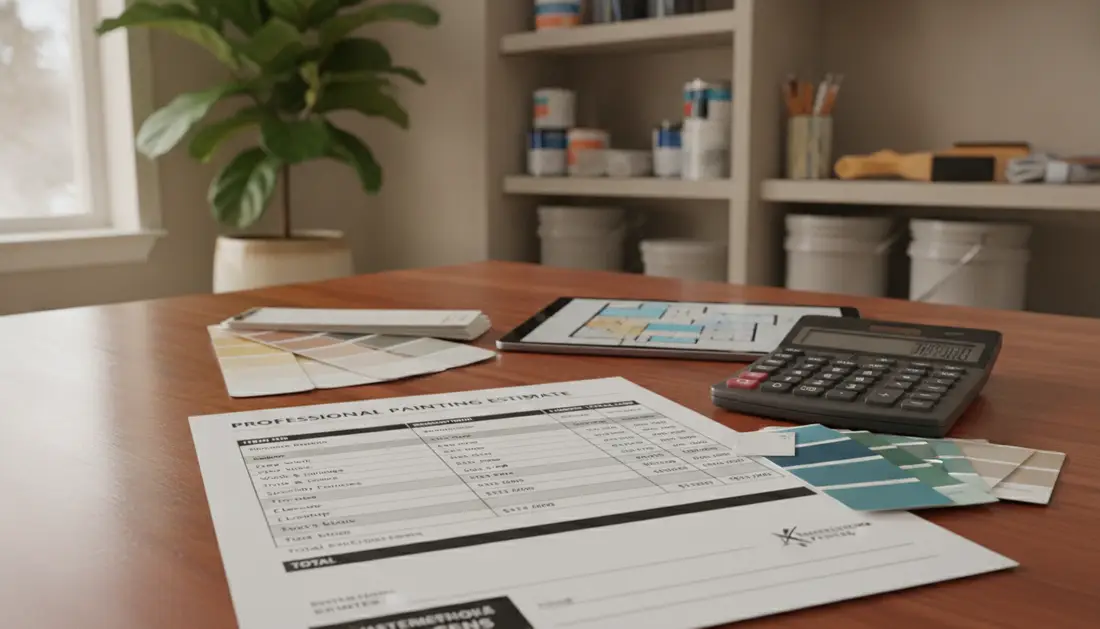
Recent data shows 29% of homeowners chose to hire professional painters in 2025, and 70% would hire them again. Eighty per cent of consumers will pay more for low‑ and zero‑VOC paint options. Your estimate should list specific paint types and materials.
- Our pricing guidance helps you spot a rough estimate versus a formal estimate.
- Clear communication between customer and contractor keeps the final price accurate.
- Choose a reputable painter to protect quality and build a long‑term relationship.
“An itemised estimate is your best defence against hidden costs.”
Essential Components of a Transparent Painting Quote
Clear documentation of materials, labour and timing protects you from surprises during a project. A transparent estimate should define exactly what work will be done, where, and how — clarity that your rights as a consumer support.
Start by checking the scope of work. The contract must list interior rooms and any exterior surfaces to be covered. It should note surface preparation tasks such as repairs and sanding so the paint will adhere properly.
The materials section should name the paint brand, finish and number of coats. Professional painters typically apply two coats for a durable, even finish. For exterior work, include local per-square-metre rates where relevant — these typically run a few hundred rand per square metre, which helps with benchmarking.
- Labour costs: hours the crew will spend on-site and the labour rate.
- Project timeline: start and completion dates to set expectations for clients and painter.
- Payment schedule: milestone payments linked to completed work, not full upfront payment.

“A detailed contract keeps the job on time and the finish consistent.”
Identifying Common Painting Quote Red Flags
Not all low prices mean a bargain; some signal corners will be cut on materials or labour. Before you sign, check simple details that show professionalism — including painter deposits and payment terms — and protect your home investment.
Warning Signs of Unprofessionalism
Look for clear contact details, a full scope of work and a transparent list of materials. A lack of these is a clear warning sign that the contractor may not be reliable; painting tips and advice cover what to expect.

- Unusually low estimates often mean poor materials or reduced labour quality.
- Vague descriptions that omit repairs or interior prep are a major red flag for the job.
- If contact information is missing, treat that as a serious warning sign.
- Pressure to sign a contract quickly is a common tactic to hide uncertain costs.
- Always request references; a lack of experience is a strong flag against hiring.
“A clear estimate that lists price, materials and repairs is your best defence.”
Comparing Quotes to Ensure Quality and Value
A simple comparison chart will highlight which proposal gives you quality without overpaying.

Use side-by-side comparison to judge materials, labour and the full scope of work. A structured process can improve your ability to assess professional painters by up to 30%.
Look beyond price. Check product brands, number of coats, prep work and access requirements. Good contractors state these clearly and set realistic expectations for finish and timeline.
- Verify references and online reviews to confirm past results and client satisfaction.
- Match scope items across estimates so you compare like for like.
- Prioritise clear communication—contractors who explain the process reduce surprises.
| Feature | Contractor A | Contractor B | Contractor C |
|---|---|---|---|
| Price (R) | 6 500 | 5 800 | 7 200 |
| Materials (brand & coats) | Durable brand, 2 coats | Value brand, 2 coats | Premium brand, 3 coats |
| Scope (interior/exterior) | Interior rooms, minor repairs | Interior only, no repairs | Interior & exterior, repairs included |
| Reviews & references | Good reviews, 5 refs | Mixed reviews, 2 refs | Excellent reviews, 8 refs |
Choose the estimate that balances price, materials and proven results—not just the lowest cost.
The Anatomy of a Deceptive or Vague Proposal
Beware offers that show odd pricing patterns or skimpy descriptions of materials and work. These often hide what you will actually pay and who will do the job.
Pricing pattern anomalies include missing labour rates, lump-sum figures with no brand names, or unit prices that don’t match the scope. These are the first sign of a problematic estimate.
Pricing Pattern Anomalies
Look for clear line items: materials, labour, access costs and time. If any part is vague, treat it as a flag for further questioning.
Expiring Discount Tactics
Contractors who push an “this week only” discount may be using pressure tactics to avoid scrutiny. Take time to compare estimates and confirm all prices in writing.
Vague vs Proper Documentation
A proper contract lists interior or exterior areas, product brands, number of coats and a payment schedule. For larger commercial work, a 30% deposit for materials is standard practice.
- Clear communication matters: you should understand the process and timeline in plain terms.
- Ensure the crew schedule and payment terms are written down to avoid surprises.
- Insist on a full cost breakdown to protect your business and home investment.
“A detailed contract with clear costs and timelines removes guesswork and protects your project.”
Verifying Contractor Credentials and Reputation
Before you sign, confirm the contractor’s licence, insurance and local references to protect your home investment.
A reputable team will share proof of insurance and a licence without hesitation. Ask for at least three references and recent reviews from clients in your area.
Check that the scope of work lists any necessary repairs, the materials to be used and timelines. A clear contract sets expectations for interior and exterior work and reduces disputes.
- Verify online reviews and direct references for similar projects and job quality.
- Watch for a lack of transparency about experience or crew — this is a strong flag.
- Never pay in full up front; confirm a fair payment schedule tied to milestones.
“Proof of licence, insurance and solid references is your simplest defense against poor workmanship.”
Taking these checks saves time and money and helps ensure your painting project finishes to expectation.
Securing Your Home Improvement Investment
You protect value when you compare detailed estimates and confirm contractor credentials.
Start with our platform to request up to 3 painting quotes from independent, independent contractors. This helps you check price, materials and expected labour for interior or exterior work.
Always insist on a written contract that lists the scope, payment schedule and any warranties. Ask for references and recent reviews so you can judge quality and past job performance.
Our platform guides you through fair costs and common red flags so you can proceed with confidence. Visit paintingpricepersquaremeter.co.za to access the full guide and request your quotes today.
FAQ
What are the top warning signs to watch for when reviewing a painting estimate?
Look for lack of detail on surfaces, materials and prep work; no start or finish dates; very low labour charges compared with local rates; requests for large deposits in cash; no written warranty or payment schedule; poor or missing references. These are common indicators of a contractor who may cut corners or change terms mid-job.
How should a professional estimate describe the scope of work and materials?
A clear estimate names each surface (walls, ceilings, timber, metal), the number of coats, specific product brands and sheens, primer use and surface preparation steps such as sanding, filler and rust treatment. It should also state expected quantities and paint coverage in square metres so you can compare costs fairly.
What labour costs and timelines are reasonable for a domestic interior job in South Africa?
Labour depends on complexity and access. Expect itemised labour per trade (prep, painting, finishing), daily crew rates and an overall project duration. Quotes should explain how access, scaffolding or additional trades (plastering, carpentry) affect time and cost. If the timeline is vague or unrealistically short, question it.
How can I spot pricing pattern anomalies that suggest a deceptive proposal?
Watch for unusually low line items offset by hefty contingencies, unspecified “miscellaneous” charges, or final totals that jump after site visit. Also be wary of big differences between multiple estimates without matching scope — that usually signals omitted tasks or low-grade materials.
Is an expiring discount a genuine incentive or a sales tactic?
Short-term discounts can be legitimate, but fast deadlines to “lock in” a low rate are often pressure tactics. Verify whether the reduced price omits services. Ask for the discounted quote in writing with the same scope and warranty as the standard price.
What constitutes proper documentation versus vague paperwork?
Proper paperwork includes a written contract with itemised scope, brand names, colour codes, surface preparation details, start/end dates, payment schedule tied to milestones, and a warranty period. Vague documents lack these elements and use general phrases like “all work as required.” Always insist on specifics.
How do I check a contractor’s credentials and reputation in South Africa?
Ask for references from recent local jobs and follow up. Check online reviews on reputable review platforms and local community groups. Verify CIDB or other trade affiliations where relevant, and confirm that the contractor carries public liability insurance and provides a tax invoice.
What payment terms are fair and safe for a home project?
Fair terms balance cashflow and protection: a modest deposit (commonly 10–30%) to secure materials, staged payments tied to milestones, and a final payment only after inspection and sign‑off. Avoid full payment upfront and be cautious with large cash-only requests.
Which warranties or guarantees should be included in the contract?
A written workmanship warranty covering peeling, flaking or significant defects for a clear period (often 1–5 years) is standard. Materials are usually covered by manufacturer warranties — the quote should state who is responsible for claims and how they’ll be handled.
How should I compare multiple proposals to ensure value and not just the lowest price?
Compare like for like: same brands, number of coats, prep steps and timelines. Use cost per square metre as a baseline but check exclusions. Factor in reputation, warranty length, and whether repairs and finishing touches are included. Sometimes a slightly higher price buys better durability and fewer call‑backs.
What questions should I ask during a site visit to clarify a quote?
Ask about surface defects that need repair, number of coats, primer requirements, drying times between coats, access and protection of floors and furniture, waste removal, and who will manage subcontractors. Confirm start and completion dates and how weather or access issues are handled.
When is it appropriate to accept deviations from a written estimate?
Only accept deviations that are documented as change orders with agreed costs and revised timelines. Never rely on verbal amendments. If unexpected repairs arise, require a written authorisation before work begins and keep all receipts for materials.
How much should I expect to pay per square metre for quality internal work across South Africa?
Prices vary by region, access and surface condition. A realistic range will account for quality paint brands, thorough prep and skilled labour. Ask for three local offers where possible and compare unit rates, included prep and warranty to judge value rather than basing decisions on headline numbers alone.
What are common contractor behaviours that signal unprofessionalism?
Frequent late arrivals, poor communication, refusal to provide references or insurance details, ambiguous pricing, pressuring for large cash deposits, and lack of a written contract all point to potential problems. Trustworthy teams provide clear timelines, itemised invoices and open lines of communication.
How can I protect my investment if something goes wrong after completion?
Keep the contract, invoices and any warranty documents. Report defects in writing immediately and request a remedial plan with dates. If the contractor fails to respond, use consumer protection channels like the National Consumer Commission, or seek mediation through a local industry association.
Should I request up to three quotes or more before deciding?
Requesting up to three independent offers is sensible for most homeowners; where available, up to five quotes can provide a broader market view. The goal is comparable proposals so you can judge quality, materials and warranty, not simply chase the lowest price.
Related painting cost guides
Ready to compare?