
Painter Deposits and Payment Terms in South Africa
Normal deposit ranges, progress payments, and the retention habits that protect both sides
Quick answer
Painter deposits and payment terms in South Africa – normal deposit ranges, progress payments on bigger jobs, retentions, and red-flag demands.
15 min read
On this page
Are you paying the right amount before any work starts? On our platform you can compare typical pricing and avoid overpaying.
Standard project deposits commonly sit between 30% and 50% of the total price. Reputable contractors should give a written contract that sets out payment terms and a clear warranty, backed by your consumer protection rights.
To protect your budget, always request an itemised quote and seek at least three quotes where possible. Compare labour, prep work, paint type and access costs before you agree a payment schedule.
Our pricing guidance helps you check local painting services and connect with independent painters who provide transparent quotes. Never pay 100% up front; a 30–50% payment is the usual industry standard to secure materials and labour.
Understanding the Painter Deposit South Africa Landscape
Local grading and insurance affect both the price and the risk on painting jobs around your home.
The Construction Industry Development Board (CIDB) grading helps you separate capable painting contractors from informal operators. A valid CIDB registration signals that a business meets industry standards and can be held accountable for its work.
Unqualified handymen often lack public liability cover and formal safety training — one of the painting quote red flags to watch. That gap can leave you liable for accidents or damage to your property.
When you compare quotes, weigh the cost against credentials; how our cost guidance works explains the process. A registered team in Cape Town generally carries insurance and follows safety protocols. That protection often costs a little more up front but reduces risk and long-term expense.
- Check CIDB registration to verify the contractor’s capability.
- Confirm insurance so your property is protected from accidental damage.
- Prefer verified professional painters for durable, quality work on your home.
Factors Influencing Your Painting Project Costs
Costs for a painting project hinge on surface condition, paint choice and the size of the area you need covered.
Surface preparation is often the biggest single cost; painting tips and advice cover the prep steps. Cleaning, patching, sanding and priming uneven walls and ceilings adds time and labour. Porous or dark surfaces may need an extra coat.
Surface Preparation and Paint Quality
Interior work typically ranges from R63 to R100 per square metre. Exterior painting and roof painting sit around R50–R100 per square metre.
Choosing high-quality reputable paint brands increases longevity but raises the initial price. The number coats required will affect material use and labour hours.
Labour and Regional Variations
Labour rates vary with location and contractor availability. Remote areas or high-demand suburbs can push prices up.
“Proper surface preparation is the most critical factor in achieving a professional finish.”
| Item | Typical range (R/m²) | Notes |
|---|---|---|
| Interior walls & ceilings | R63–R100 | Depends on prep and paint type |
| Exterior & roof | R50–R100 | Requires weather-resistant materials |
| Extra coats | Additional cost per coat | Darker colours or porous surfaces may need three coats |
- Confirm surface prep and number coats in writing.
- Obtain multiple quotes to compare labour and material costs.
Why Professional Vetting Matters
Vetting contractors protects your money and keeps your property safe while work happens.
Public liability insurance is essential. Cover typically ranges from R1 million to R5 million and reduces risk if damage or injury occurs during painting.
Verifying CIDB status is free and quick. You can check registration online to confirm a firm’s credentials before you accept a quote.
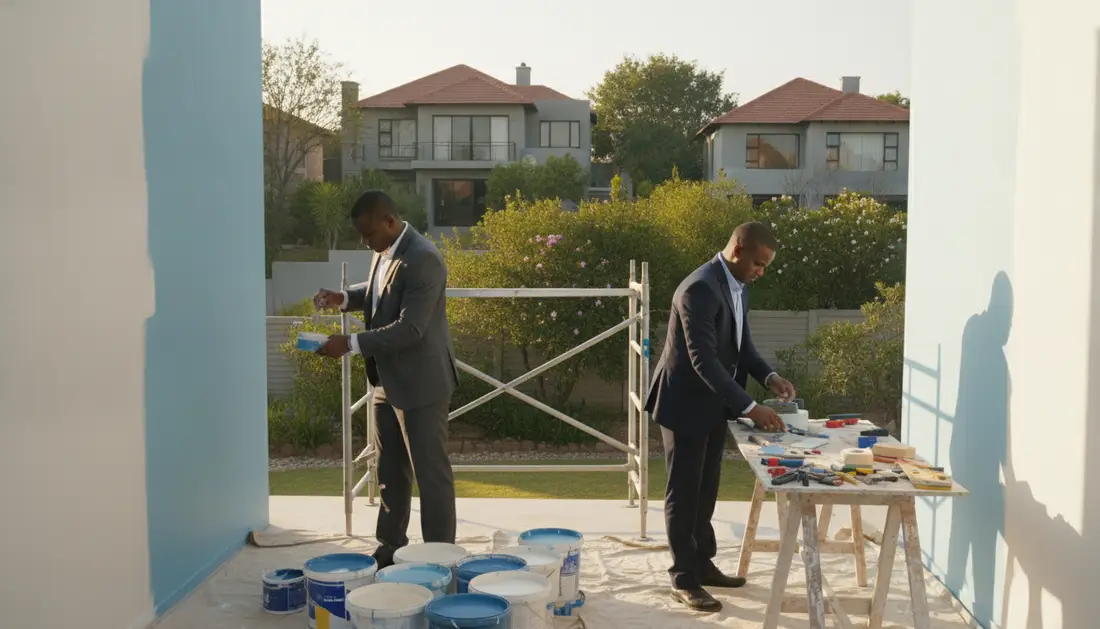
- Vetting professional painters ensures your property is covered by adequate insurance.
- Request proof of insurance and CIDB registration before any painting contractors start work.
- A handyman without formal cover can leave you liable for costly accidents.
- Our platform connects you to independent contractors, helping you request up to three quotes with confidence.
| Check | Why it matters | What to ask for |
|---|---|---|
| CIDB registration | Confirms formal standing | Registration number (verify online) |
| Public liability | Protects your property and third parties | Policy certificate showing R1m–R5m cover |
| References | Shows past quality of work | Recent contactable clients and photos |
Never feel pressured to accept a quote from anyone who cannot provide verifiable proof of registration and insurance. Take time to verify references so you can be confident in the service and the final work.
Essential Credentials for Registered Contractors
Before you sign a quote, confirm the contractor’s formal credentials and what they cover. These credentials protect your home and help you compare costs and quality.

CIDB Grading Explained
CIDB grading shows the maximum project size a contractor can legally take on. Grade 1 covers projects up to R200,000.
For larger or more complex work, choose a higher grade that matches the scope and area of your job. Always verify the registration on the CIDB website to ensure it is active.
Public Liability Insurance
Public liability is non-negotiable. It protects your house and walls from accidental damage during painting work.
Ask for a current policy certificate and confirm the cover limits. A verified policy reduces the risk and potential extra costs if something goes wrong.
Manufacturer Accreditations
Manufacturer-backed accreditations from reputable paint brands show that the contractor has training in specific paint types and application methods.
- Accredited applicators keep product warranties valid; many warranties last 7–10 years when applied to spec.
- A registered team should provide a written warranty rather than verbal promises from an unregistered handyman.
- Request a portfolio of recent interior and exterior work and proof of current insurance before you accept a quote.
Identifying Red Flags in Painting Quotes
A quote that looks much cheaper than the rest is often the single best warning sign to pause. If an estimate sits 30%–50% below average, it usually means corners will be cut on prep, materials or labour.
Never agree to 100% payment up front. Demanding full payment before any work begins is a classic sign of a fly-by-night operator who may disappear before finishing the work.
- Be wary of painting contractors who refuse to provide a written quote—verbal deals are hard to enforce.
- If someone pressures you to pay cash only to avoid tax, treat that as a major warning.
- A handyman without a physical address or landline is likely unreliable for your painting services.
- Suspiciously brief quotes that lack scope, coats, brand or prep detail often hide extra costs.
- A professional will supply a written warranty; a scammer avoids long-term commitment.
“Early identification of these red flags saves money and prevents mid-project abandonment.”
Standard Payment Structures and Deposit Norms
Payment structures for house painting usually balance upfront material costs with final quality checks.
Typical initial payments range to cover materials, scaffold hire and early labour mobilising. Across South Africa a common norm is to request between 30% and 50% of the total price for most professional projects.
Typical Deposit Percentages
Why this matters: an initial payment secures paint, confirms scheduling and shows commitment from both parties.
Final payment should be released only after the work is completed to your satisfaction and the site is cleaned. For large jobs consider milestone payments tied to clear stages.
- Ask that the quote itemises per square metre prices for interior and exterior work, including labour and type paint.
- Confirm the number coats for walls and ceilings in writing to avoid hidden costs.
- A reputable contractor will not demand 100% payment up front; treat that as a red flag like a handyman offering cash-only terms.
| Stage | Typical share | What it should cover |
|---|---|---|
| Initial | 30%–50% | Materials, scaffold, early labour |
| Progress / Milestone | 20%–40% | Midway work, significant completion points |
| Final | 10%–30% | Completion, cleaning, final inspection and warranty sign-off |
Protecting Your Investment Through Traceable Payments
Always make payments using methods that leave a clear paper trail. Use EFT or a credit card so you can show when and how much was paid for any painting work.
Never transfer funds into a personal account. Confirm the bank details on the invoice match the registered business name of the contractor before you authorise any payment.
Ask for a formal invoice and a receipt for every payment. A verified receipt proves the transaction and helps if you need to enforce a warranty or raise a dispute about the work.
- Keep all payment records linked to the quotes you received through our platform.
- Avoid cash-only requests — they remove your leverage if standards slip.
- Traceable payments strengthen your claim should remedial work be needed to protect your property and home value.
“A clear payment paper trail is the simplest safeguard for any painting service.”
Handling Unexpected Costs and Variations
Even the best quotes can miss issues that only show up once walls are stripped or scaffolding goes up.
Hidden damp, structural damage or extra surface preparation often change the painting cost. This is common on older homes and in coastal areas such as cape town.
Before work starts, agree a written process for variations. A clear variation order must state the new price, the reason, and how payment will be handled.
- A transparent contractor will notify you immediately and issue a written update to the original quote.
- Set aside a small contingency budget to cover unforeseen repairs.
- Never allow extra work to proceed without a signed variation order that protects the original warranty.
| Issue | Typical action | Effect on price |
|---|---|---|
| Hidden damp | Repair and re-prime | Moderate increase |
| Structural cracks | Patch and reinforce | Higher increase |
| Change of paint type | Documented variation | Depends on type |
“A signed variation order keeps both you and contractors aligned on scope and cost.”
The Importance of Written Contracts
A formal contract keeps every party aligned on materials, timing and the exact work to be done.
Write into the contract the full scope work for your house. Name the surfaces to be painted and the interior area covered.
Specify the exact brand and product name of the paint and the sheen level to be used on walls and ceilings. Note the number coats and the type paint for each surface.
Include clear payment terms: deposit percentage, milestone payments and the final payment trigger when work and cleaning are complete.
Warranty Terms
State the warranty duration and list conditions that keep it valid. A workmanship warranty should cover peeling, blistering and application faults.
Require proof that the contractor uses the agreed brand and application method to keep manufacturer warranties intact.
- Get the contract signed by both you and the contractors before any work begins.
- Keep a written variation process for any extra work or changed area.
- Use the contract as a legal reference if standards are not met.
| Contract item | What to include | Why it matters |
|---|---|---|
| Paint specification | Brand, product name, sheen, type | Ensures quality and consistent finish |
| Coats & scope | Number coats per surface, included surfaces | Prevents disputes over missed walls or ceilings |
| Warranty & payment terms | Warranty length, exclusions, payment schedule | Protects your home and links payment to completed work |
“A clear, signed contract is the best protection for your painting investment.”
Managing Contractor Relationships During the Project
Daily updates with your contractor prevent small snags becoming schedule-blocking problems.
Keep communication clear and frequent. Ask for short, dated progress notes on interior and exterior work so you can track labour and costs as the job proceeds.
Request recent jobs and photos to check the contractor’s current workload and the size and type of work they manage. This helps you judge whether their price and timing are realistic.
- If quality slips, raise it immediately — do not wait until final payment.
- Confirm the schedule and any variations in writing before extra work begins.
- Expect a clean site and respect for your home from any reliable handyman or contractor.
- Keep a record of all agreements, messages and payment receipts to protect your warranty and payment terms.
| Action | Why it matters | What to record |
|---|---|---|
| Daily check-in | Prevents delays and hidden costs | Short note, date and progress photos |
| Request recent jobs | Shows current workload and standard | Photos, client contact or site list |
| Sign variations | Keeps price and scope clear | Written variation order and new price |
By fostering a positive, evidence-based relationship you increase the chance of a smooth finish and a robust warranty for your home.
Securing Your Next Painting Project with Confidence
**,**Start strong by requesting itemised quotes that show per square costs, paint type and prep for every surface. Our platform, paintingpricepersquaremeter.co.za, connects you with pre-independent painting contractors ready to quote on interior, exterior and roof painting.
Compare at least three quotes so you can judge price against scope work, size of the area and recent jobs. Always verify credentials, insurance and a written warranty before you agree any payment schedule.
Choose professional painters who list brands, coats and expected costs for walls and other surfaces. Using our platform saves time and reduces the risk of hiring an unverified handyman. For projects in cape town and across south africa, clear quotes lead to better outcomes for your home.
FAQ
What is a normal deposit and payment terms for a house painting job?
Typical deposit levels range from 10% to 30% of the total quoted price, with the balance due on completion or in staged payments tied to milestones. Confirm the exact amounts, payment method, and a final inspection clause in writing. Avoid large upfront sums and request a receipt for every payment.
How does the deposit landscape vary across Cape Town and other regions?
Deposit norms reflect local demand and contractor cash flow. In higher-demand areas like Cape Town, deposits may trend toward the higher end of the range, while smaller towns often see lower upfronts. Always compare up to three quotes and consider contractor reputation and recent job references.
Which cost factors most affect the final painting price?
Key cost drivers are surface condition, paint quality, size of the area, number of coats, and access (scaffolding or lifts). Labour rates differ by region, and additional services such as roof painting, carpentry repair, or specialised coatings add to the total. Ask for per-square-metre or per-room rates in the quote.
How does surface preparation and paint quality influence cost and outcome?
Thorough preparation—filling cracks, sanding, priming and treating damp—takes time but prevents premature failure. Higher-grade paints cost more but cover better and last longer, reducing lifecycle costs. Ensure the quote lists preparation steps and the exact paint brand and type.
How significant are labour and regional variations in pricing?
Labour usually makes up a large portion of the quote. Urban centres typically carry higher labour rates. Accessibility, site safety and the need for additional workers or specialists will raise costs. Request a breakdown of labour versus materials to compare quotes fairly.
Why should I vet contractors before hiring?
Proper vetting reduces risk of delays, poor workmanship and claim disputes. Check references, recent jobs, written warranties, and whether the contractor supplies a clear scope of work. Confirm who handles site visits and final sign-off before you pay the last instalment.
What credentials should a registered contractor have?
Look for CIDB grading where applicable, current public liability insurance, and manufacturer accreditations for specific paint systems. These credentials indicate the contractor meets industry standards and can validate warranty claims.
What is CIDB grading and why does it matter?
CIDB grading categorises contractors by capability and project size. For larger or corporately managed properties, a higher CIDB grade offers assurance the team can handle scale and compliance requirements. Ask for proof of grading in the quote.
Do I need public liability insurance for a painting job?
Yes. Public liability insurance protects you if workers damage property or injure a third party. Request a copy of the insurance certificate and confirm it’s valid for the project duration.
What are manufacturer accreditations and why ask for them?
Manufacturer accreditations show the contractor is trained to apply specific paint systems and can support product warranties. Ask which brands are used and for accreditation proof if the job uses specialised coatings.
What red flags should I watch for in painting quotes?
Beware of very low prices, vague scopes, no written warranty, requests for large upfront cash payments, and refusal to provide references or recent job photos. Also avoid contractors who won’t show a fixed timeline or a clear payment schedule.
What payment structures are standard, and how should milestones be handled?
Standard structures include a small deposit, staged payments (for example after preparation and mid-job), and a final payment on completion and inspection. Tie payments to measurable milestones and keep payments traceable via bank transfer or card.
What is a typical deposit percentage?
Typical deposits fall between 10% and 30%. For larger, specialist or prolonged jobs, staged deposits that correspond with completed milestones are preferable. Never pay the full amount up front.
How can I protect my investment using traceable payments?
Use bank transfers, EFTs or card payments and get formal receipts. Avoid large cash payments. Traceable transactions help with dispute resolution and are often required by insurers and warranty providers.
How should unexpected costs and variations be managed?
Agree a variation process in writing: how changes are quoted, approved and priced. Ask for hourly rates for additional work and require signed change orders before extra work starts. This prevents disputes over scope creep.
Why is a written contract important for painting work?
A written contract defines scope, materials, timelines, payment terms, warranty and who is responsible for site clean-up. It protects both parties and provides a basis for remedies if issues arise.
What should a scope of work include?
The scope should list surfaces, number of coats, paint brands and colours, preparation tasks, access requirements, start and completion dates, and exclusions. Clear scope prevents misunderstandings about what is included.
What warranty terms should I expect?
Expect at least a 12-month workmanship warranty for standard domestic work. Manufacturer warranties vary by product. Get warranty details in writing, including what voids the warranty and how to claim repairs.
How can I manage contractor relationships during the project?
Maintain regular communication, schedule brief site meetings at key milestones, document instructions in writing, and approve variations formally. Prompt payments tied to milestones help maintain goodwill.
How do I secure my next painting project with confidence?
Compare up to three quotes, verify credentials, request a detailed written contract, use traceable payments and keep photos of works before, during and after. Ask for recent job references and confirm warranty and post-job support.
Related painting cost guides
Ready to compare?